Editor’s Note: This is the third article in a series on steam locomotives. Two articles in the spring 2026 edition featured the immense popularity and scale of Union Pacific’s Big Boy No. 4014 and the people working behind the scenes to preserve living railroad history while meeting today’s rigorous safety expectations.
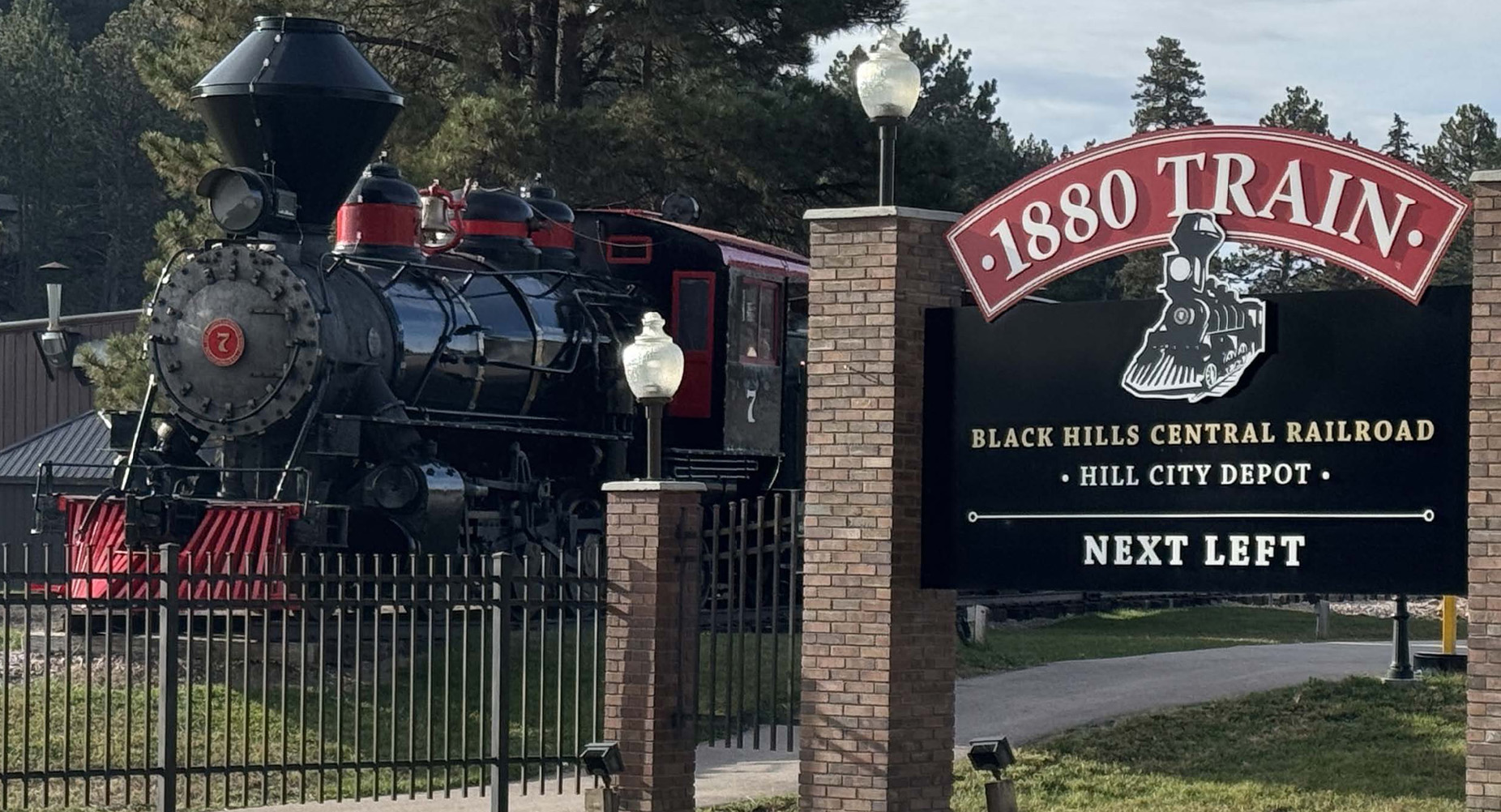
Black Hills Central Railroad’s Hill City Depot is the site of the engine house, the South Dakota State Railroad Museum, a gift shop, and a lunch counter. In the background is engine No. 7, which was retired in 2012 after decades of excursions and appearances in Hollywood productions.
Morning arrives quietly at Black Hills Central Railroad.
Before the first passengers gather at the depot and before the whistle echoes through pine and granite, there is only the low murmur of a boiler coming to life. Steel warms slowly. Valves tick. A faint ribbon of steam lifts into the cool South Dakota air.
In the cab, Mike Grimm, director of railroad operations, eases the locomotive awake with the calm of someone who has done this thousands of times, which he has. When the fire is right and the pressure steady, he looks up and smiles – not for the crowd, not for a camera, but for the simple fact that another day of steam is beginning on schedule.
Outside the yard as departure time nears, a growing number of passengers take in the surroundings of the Hill City depot. Some riders have crossed the country to be here; others live down the road and still come to watch. This intimacy defines Black Hills Central. Where giants like Union Pacific’s Big Boy No. 4014 inspire awe through scale and rarity, this line keeps history alive through rhythm and repetition – departure after departure, season after season.
Heritage railroading across North America is a larger industry than many may realize. Each year, roughly 9 million passengers ride tourist and museum trains, supporting an industry estimated at $1 billion annually and spanning about 1,900 miles of track owned or leased by heritage operators, according to estimates from the HeritageRail Alliance (HRA), the trade association for tourist railroads and railway museums.
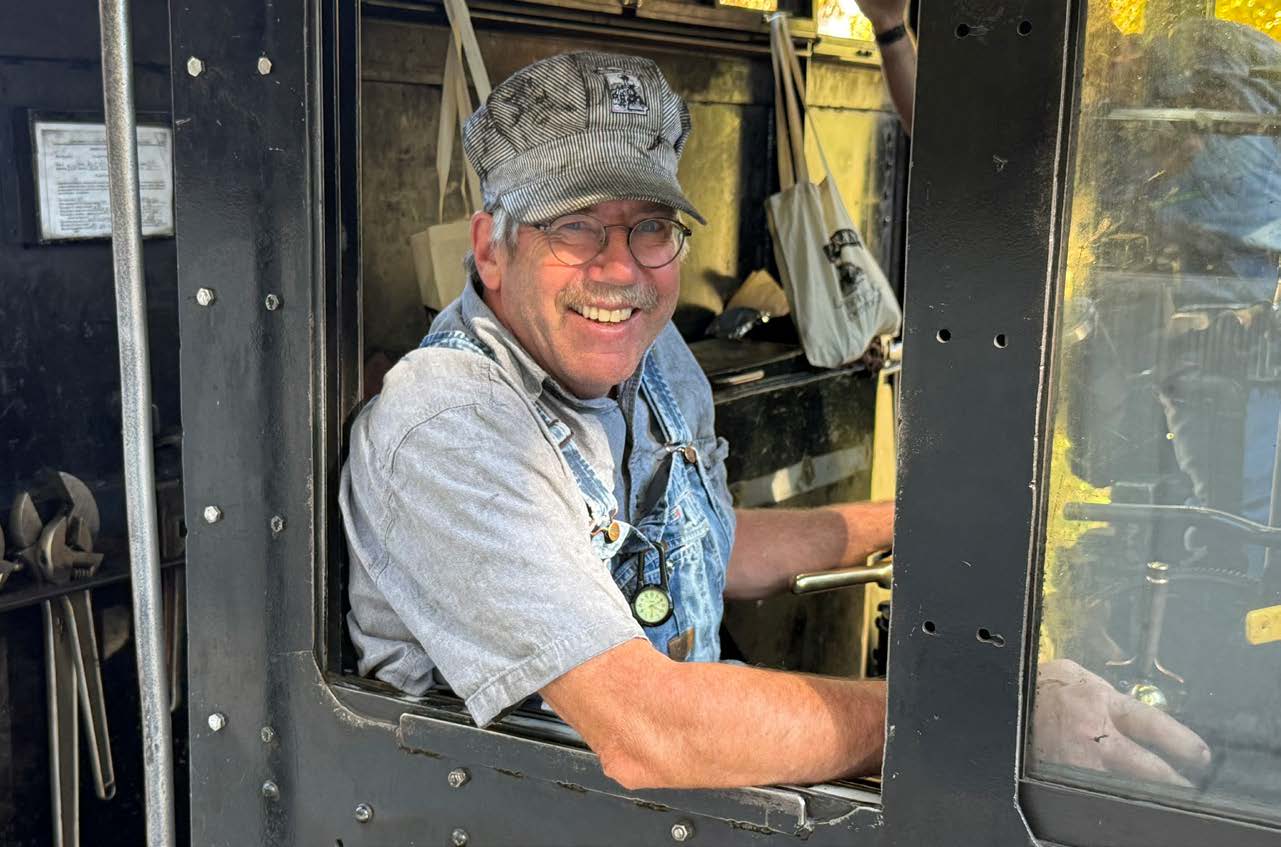
Mike Grimm, director of railroad operations,
sits in the cab of No. 110, one of two
operational steam locomotives at Black
Hills Central Railroad.
The Line That Refused to Quit
Operating between Hill City and Keystone, near Rapid City in western South Dakota, Black Hills Central, also known as the “1880 Train,” is listed on the National Register of Historic Places.
Its modern excursion service began on August 18, 1957, carrying 30,000 riders in the first year.
In the mid-1950s, William Heckman purchased the line and later gave it the nickname to reflect the experience of rail travel during the post-Civil War era.
In 1990, Robert and JoAnna Warder acquired the railroad and emphasized restoration, aligning colors, seating, and other details to the era it represents. They also rebuilt bridges that were destroyed by flooding in 1972, restoring the full route. The Warders’ daughter, Meg, recently sold the line to World Choice Investments.
On this morning, the train, guided by Grimm alongside fireman Jacob Garner, takes the first of three trips for the day, winding roughly 9½ miles through spruce, bur oak, and ponderosa pine. Along County Road 323, which parallels much of the route, people stand by their cars for a look, while the occasional backyard gathering waves as if greeting an old friend.
Passengers, of course, also feel the connection, though it can be a little bumpier at times.
The Pelletier family from Maine hopped aboard after visiting Mount Rushmore. Joe Pelletier said he’d taken train rides in North Carolina with his wife, but sons Cameron and Brett joined him on this ride.
“You’re doing something they did a long time ago,” Joe Pelletier said. "Just hearing about the history and how this developed was incredible.”
The depots in Hill City and Keystone anchor the experience. Hill City serves as the hub, home to the engine house, the South Dakota State Railroad Museum, a gift shop, and a lunch counter. Keystone offers a more intimate welcome with its depot/gift shop tucked into the tourist town near Mount Rushmore.
Seasonal traditions shape the calendar: Old West shootouts in summer, wine and Oktoberfest excursions in fall, and holiday trains glowing through winter darkness. Cab rides on regular excursions are a recent addition.
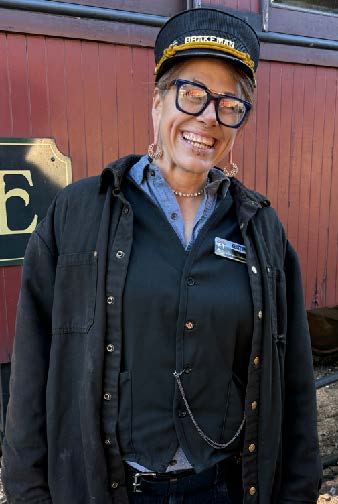
Kirston Hilpert
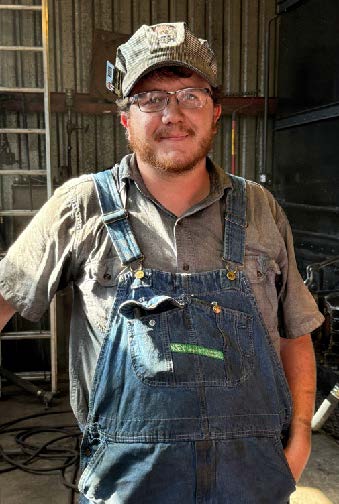
Marcus Myers
The People in the Cab
Even in ideal conditions, the work behind the experience can be demanding. While the cab was comfortable in the cool morning air, temperatures can climb to 130 degrees on hot days, forcing crews to pull open windows, perch on sills, and chase whatever breeze the Black Hills offers.
Black Hills Central depends on a railroad crew with a wide range of skills: eight full-time staff members, including four qualified engineers.
No one begins at the throttle.
New hires start with maintenance and morning startup, learning the rhythms of heat, pressure, and patience. They spend at least a year firing before even being considered for the engineer’s seat and only move forward when Grimm decides they are ready.
For Kirston Hilpert, one of the engineers and the staff scheduler, the path to the cab began long ago. Summers around steam tractors and threshing machines made live steam feel ordinary.
“I assumed all little kids went somewhere for the summer and got to play with steam stuff,” said Hilpert, who is Grimm’s niece.
While all engineers also handle other functions on the train – conductor, fireman, brakeman, and tour guide/narrator – Hilpert said engineering is the best part of the job.
But earning that responsibility took time – two seasons of fulltime work, followed by careful training and observation.
“There’s a lot that goes into it before you can engineer,” she said.
Marcus Myers, who is also part of the engineer rotation, grew up watching trains pass from a hillside before eventually joining the crew as a teenager. Years later, the passion has also become a responsibility.
“I was always fascinated by Mike,” he said. “I worked here through high school and was always asking Mike questions. I always liked machinery, and this interested me, and I really got into it.
“These huge steel titans are running for future generations to enjoy, and now I get to help keep them running. That’s special to me.”
For Myers, the reward comes each spring, when months of repairs finally meet the light at the end of the winter tunnel.
“You watch (the engines) run for the first time and see all that hard work pay off – and all the people waving and smiling.”
Cesar Meza, operations manager, is the other engineer and a significant part of the railroad’s next generation.
Grimm started at Black Hills Central in 1987, mowing grass. By 1994, he was running the engine house. After decades spent preserving the past, Grimm’s focus has shifted to ensuring the railroad’s future.
“The future is always on my mind,” he said. “We have a young, talented group. We’ve been grooming Kirston and Caesar, so the future is in very good hands.”
Machines That Still Work for a Living
Of the railroad’s five steam locomotives, two are operational, with No. 110 and No. 108 rotating through service every couple of weeks.
No. 108 and No. 110 are the only operating 2-6-6-2T Mallet locomotives, known for their two sets of driving wheels and built-in water tanks. Baldwin Locomotive Works built No. 108 in 1926 and No. 110 two years later. Each locomotive weighs more than 110 tons and typically hauls seven passenger cars, for a total train weight of about 250 tons. A full passenger load adds roughly 20 more tons.
A round trip consumes roughly 200 gallons of oil and 2,500 gallons of water. Sand is also used for traction and for cleaning boiler tubes.
The elder statesman is No. 7. Built in 1919 by Baldwin, the Prairie-type engine spent decades pulling excursion trains, even appearing in Hollywood productions before retiring in 2012, and is now on display in Hill City.
Diesel engine No. 63 is also used on winter trips.
What Passengers Don’t See
To passengers, steam is motion and memory. To the railroad, it is constant maintenance.
Locomotives begin warming nearly four hours before departure. After each operating day, crews inspect every engine from the pilot to the cab, checking the suspension, bearings, fasteners, and running gear for heat, wear, or movement. Problems are repaired immediately rather than deferred.
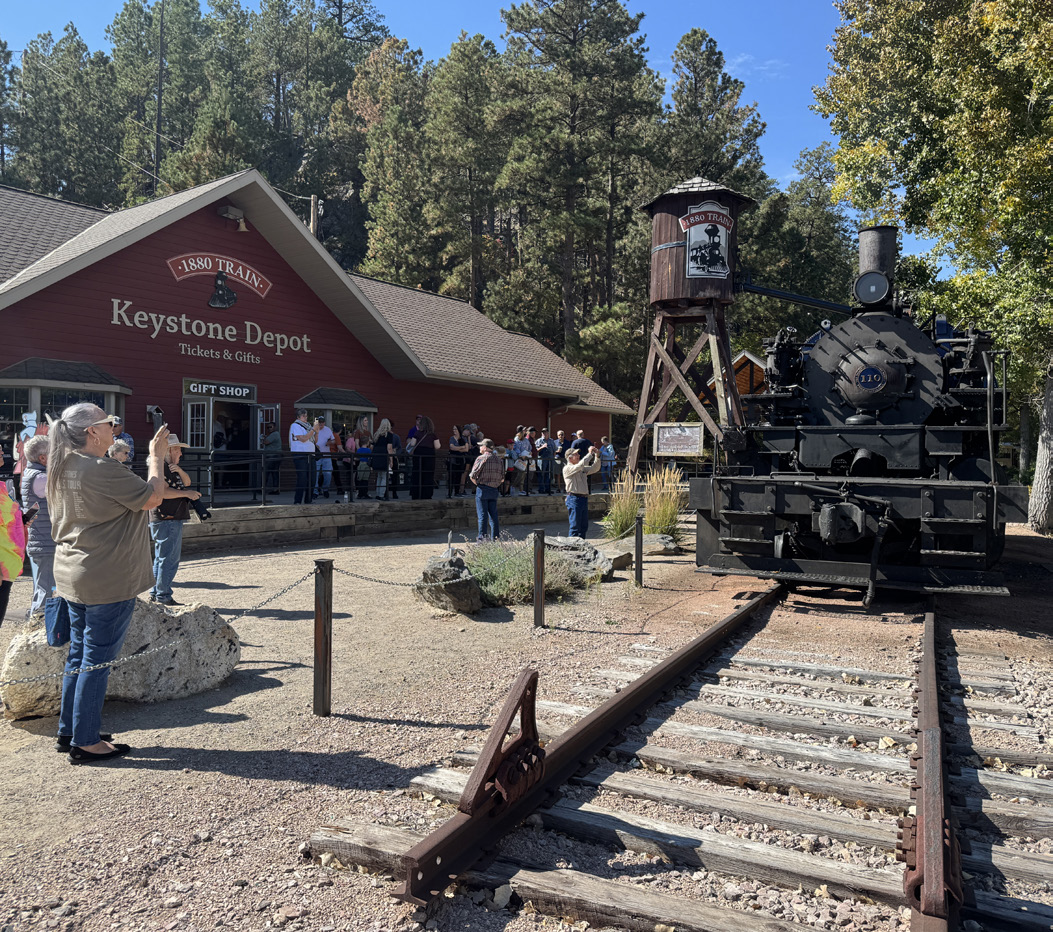
The Keystone Depot features a small gift shop.
“If we find something wrong, that’s the time to fix it, not the next morning,” Grimm said.
The heaviest maintenance work comes during the winter offseason. Passenger seats are rebuilt. Injectors, brake valves, compressors, governors, and piping are disassembled and restored. Major overhauls, including the retubing of No. 108, are scheduled months in advance to ensure reliability during the busy summer season.
Everything works toward one deadline: opening day around Mother’s Day, when the railroad resumes daily operations.
Some projects stretch across multiple years. The near-complete firebox replacement on No. 110 involved more than 1,000 staybolts and was completed piece by piece while the locomotive remained in service.
“These locomotives are in better shape now than they’ve been since shortly after they were new,” Grimm said.
Tourist Railroads That Carry the Load
What happens at Black Hills Central isn’t unique. Across North America, more than 200 museums and tourist railroads continue to operate trains, according to HRA estimates. Among the most popular are two very different lines.
The Strasburg Rail Road in Ronks, Pennsylvania, is often described as the oldest continuously operating railroad in the Western Hemisphere, and Colorado’s Durango & Silverton Narrow Gauge Railroad is widely regarded as the most popular steam railroad in the U.S.
Durango & Silverton: Steam at Scale
Built in the early 1880s as part of the Denver & Rio Grande system to haul silver and gold ore from the San Juan Mountains, the line survived the collapse of the mining economy. Its preservation safeguarded not only historic three-foot-gauge track but also the dramatic mountain corridor that now defines the passenger experience. The railroad was acquired by American Heritage Railways in 1998.
Today, Durango & Silverton operates multiple daily trains during peak season through canyons, forests, and high-country scenery largely unchanged since the 19th century, with a climb of more than 3,000 feet over its 45-mile route from Durango to Silverton. Because demand is so strong, trains often stretch to 15 cars, sometimes requiring double-headed steam locomotives to manage steep grades and heavy passenger loads.
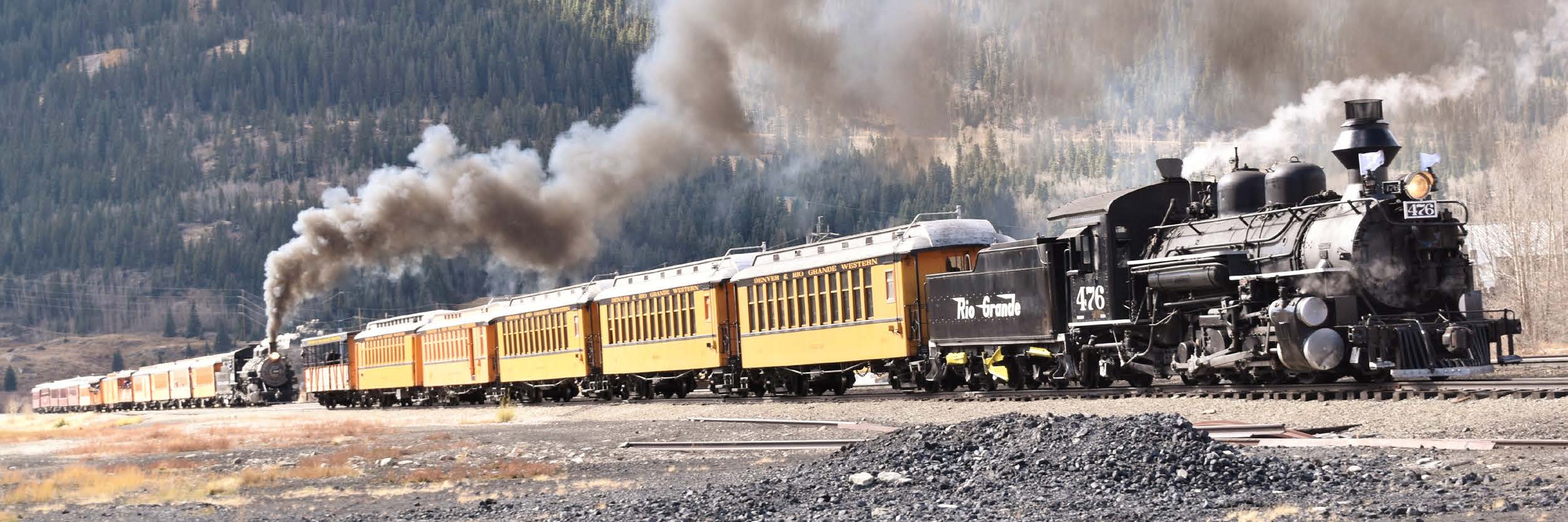
The Durango & Silverton route climbs more than 3,000 feet over the 45-mile trip. Demand is so strong that trains often stretch to 15 cars.
While Strasburg may carry more riders in some years, Durango’s national visibility, destination tourism draw, and immersive mountain journey sustain its reputation as the country’s most iconic steam excursion.
National Board Executive Director Joel Amato took the excursion in 2017. Visiting in the spring, he encountered snow in the high country and experienced firsthand the raw power and atmosphere that continue to draw visitors to historic steam railroads.
“There’s something unforgettable about riding behind steam while snow falls in the mountains,” Amato said. “We didn’t even make it all the way to Silverton before turning around, but seeing the boiler blowdown and feeling the locomotive working against the grade made the experience feel alive in a way no museum display ever could.”
Beyond the Durango to Silverton round trip, which lasts nine to 10 hours, the railroad also offers one-way shuttles, photo charters, and special experiences such as holiday trains, wineand- history events, and Polar Express® runs.
Strasburg: Steam as Everyday Work
If Durango & Silverton represents scale, Strasburg represents continuity.
Saved from abandonment in the late 1950s, Strasburg reinvented itself as both a tourist attraction and a working common-carrier freight line, operating over roughly 4½ miles.
Its roots stretch much deeper. Originally chartered in 1832 and opened in 1837, Strasburg underscores how closely its modern preservation mission is tied to the earliest era of American railroading.
Today, the railroad runs nearly year-round and carries close to 300,000 passengers annually, with every passenger train pulled by steam.
“We have four operational engines here … usually operating one or two at a time,” said Brendan Zeigler, Strasburg Rail Road vice president and chief mechanical officer, noting that the steady schedule reflects decades of investment in mechanical capability, skilled staff, and a business model built around daily steam operation rather than occasional display.
“From April to October, we’re pretty much running seven days a week.”
Seasonal excursions – from Santa’s Paradise Express to wine, dinner, and luxury Elegant Express trains – are top attractions.
The train ride is short in distance but rich in atmosphere, offering a quiet passage through the heart of Pennsylvania Dutch Country in Lancaster County. The train rolls past open fields, farmhouses, and working Amish farms where horsedrawn buggies share the rural landscape. The ride is intimate and accessible, with a round trip lasting about 45 minutes, including the turn at Leaman Place Junction.
More Than a Railroad
To visitors, Strasburg is a ride through Pennsylvania farmland. To the preservation world, it is something far larger. It’s a center of gravity for the survival of operating steam.
Behind the passenger platform sits a 33,000-square-foot mechanical complex where the work of keeping steam alive extends far beyond Strasburg’s own rails. Roughly 45 full-time mechanical employees, including three mechanical engineers and a dedicated quality-control manager, support a railroad workforce of more than 220 people, most of them part-time. In the shop, however, no one is part-time. The work demands continuity, precision, and experience that cannot be scheduled around weekends.
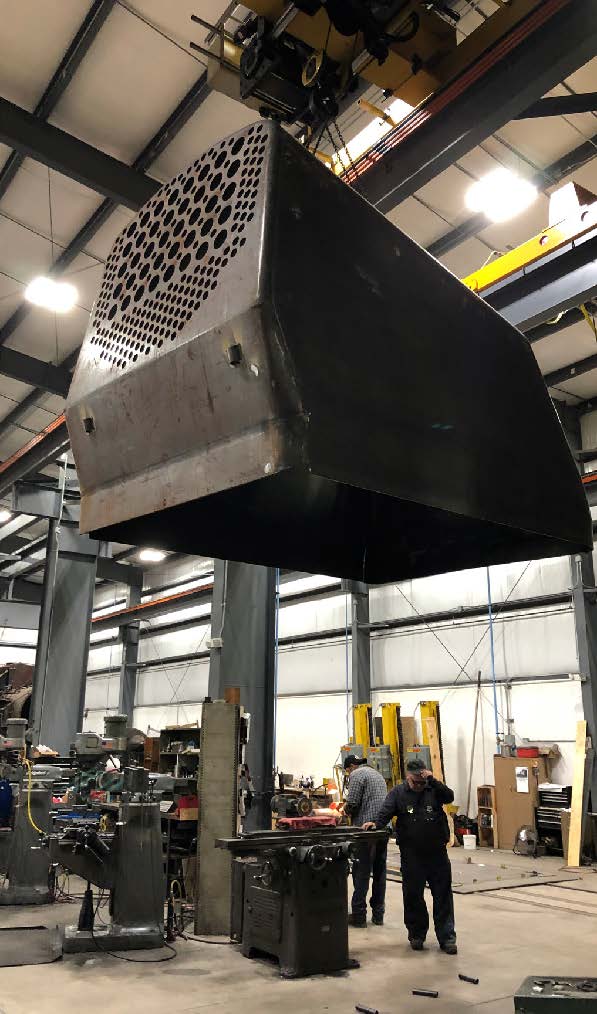
Inside Strasburg's 33,000-square-foot
mechanical complex, about 45 full-time
employees split their efforts between
maintaining the railroad's own fleet
and restoring, repairing, and fabricating
equipment for clients around the world.
That work is divided almost in half. About 50% of the mechanical department’s effort is devoted to maintaining Strasburg’s own locomotives and equipment. The other 50% serves clients across the U.S. and around the world, reflecting Strasburg’s status as both a National Board R stamp repair facility and an ASME S stamp boiler manufacturer.
“We do contract work for operations all around the country – actually all around the world,” Zeigler said.
At any given time, the shop may be handling around 40 projects, ranging from small, fabricated parts costing a few hundred dollars to multimillion-dollar locomotive restorations.
One of the greatest current efforts involves the restoration of Chesapeake & Ohio No. 614, a locomotive with a rare nickel-steel boiler, an experimental late-steam-era material intended to reduce weight while maintaining strength. When completed, it may become the only operating steam locomotive with a nickel-steel boiler.
Projects of that scale begin the same way every time: total disassembly, inspection, cataloging of repairs, fabrication, and careful reassembly. It’s a process not measured in weeks or months, but in years.
Old Skills, New Tools
Despite operating in the 21st century, Strasburg’s philosophy leans deliberately toward the 19th century.
“We try, to the greatest extent practical … to repair and rebuild equipment using historical methods whenever possible,” Zeigler said.
That means riveted construction, threaded staybolts, and traditional boilermaking techniques – skills largely vanished from modern industry.
Training reflects that mindset. While formal safety and regulatory instruction is required, most craft knowledge is passed down through peer-to-peer mentoring on the shop floor.
Nearly every replacement part used on a locomotive is designed and fabricated in-house, with engineering staff who also serve on National Board Inspection Code (NBIC) and ASME committees, linking daily preservation work directly to the codes governing pressure-vessel safety.
Innovation still plays a role, but often in unexpected ways. A 600-ton hydraulic wheel press, normally used to mount wheels on axles, has been adapted with custom tooling to stamp boilerplates – a modern solution to replicating components once formed on long-vanished industrial machinery.
In steam preservation, progress does not replace tradition. It enables it.
Building the Future of Steam
Strasburg’s capabilities now extend beyond restoration into new boiler construction under its ASME S stamp, a rare qualification for a railroad shop.
Three new boilers are scheduled for fabrication, ranging from small, welded vessels to hybrid riveted-and-welded designs that blend modern engineering with historic practice. Larger boilers can take more than a year to complete.
Industry trends increasingly favor fully welded construction, yet Strasburg continues to emphasize traditional riveting and legacy techniques whenever feasible; thus, it occupies a distinct niche not only by running steam but also by enabling others to run it, making Strasburg part of the infrastructure of preservation itself.
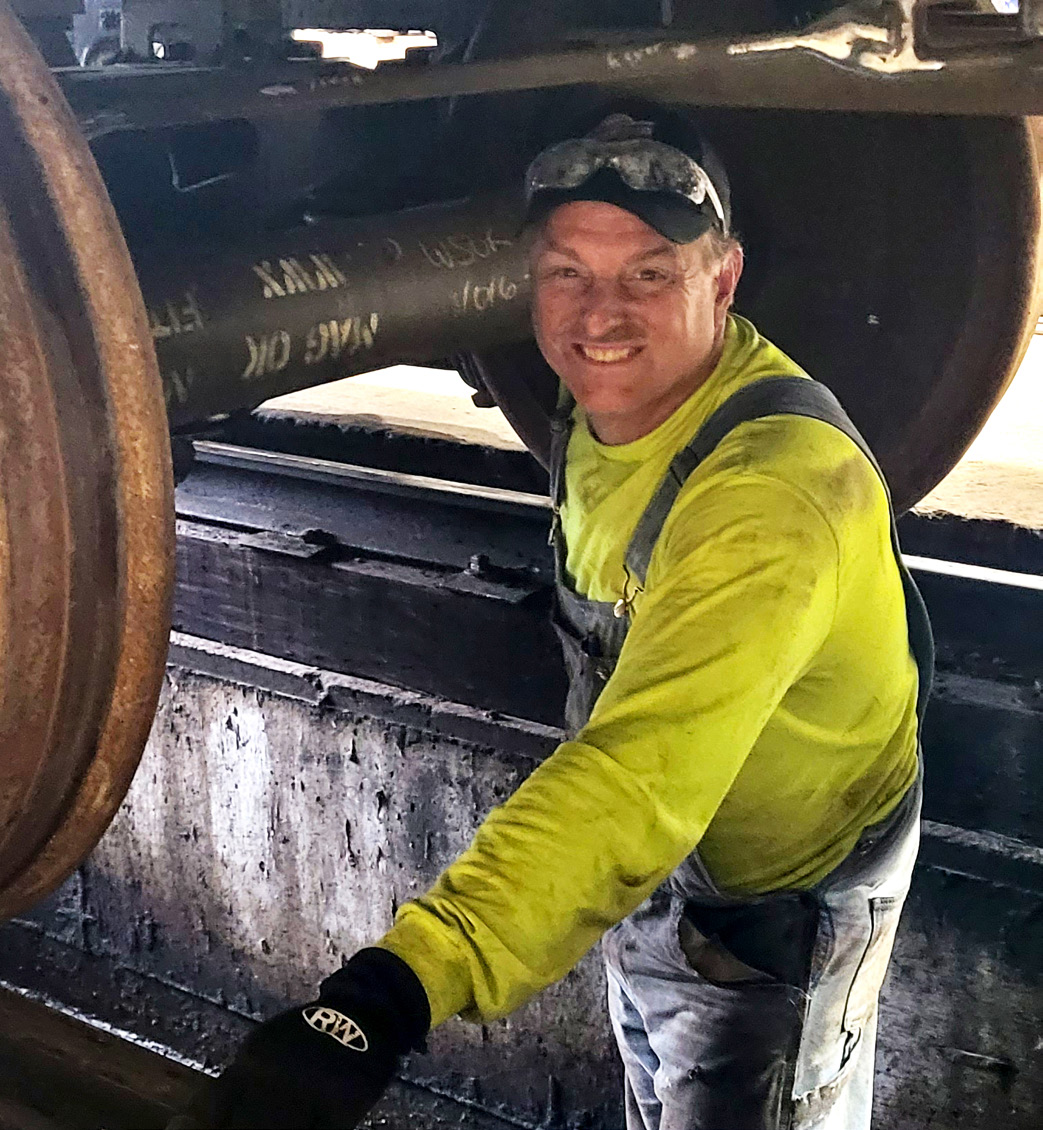
Mike Wahl is the project manager for the
restoration of No. 1385 and a Mid-Continent
member for more than 25 years. Photo by
Rhonda Roehrig
A Story of Resurrection
In North Freedom, Wisconsin, about 40 miles north of Madison, the Mid-Continent Railway Museum has spent the better part of two decades bringing a legend back to life.
Chicago & North Western No. 1385, a locomotive once known for its mainline excursions and circus trains, is nearing the end of a restoration journey as ambitious as any underway in steam preservation today.
Mid-Continent is best described as an outdoor living museum, dedicated to recreating the small-town short-line experience. Founded in 1959 by a group of volunteers, the museum now operates over 4.2 miles of former Chicago & North Western track and welcomes about 20,000 visitors each year. From its earliest days, Mid-Continent has been built and sustained by its members.
That spirit of volunteer commitment is inseparable from the story of No. 1385.
Built in March 1907 by American Locomotive Works, No. 1385 served the C&NW for nearly half a century before its retirement in 1956. Five years later, 26 Mid-Continent members each loaned the museum $100 to purchase the locomotive at scrap value.
“It was our first operating steam locomotive,” said Mike Wahl, project manager for the restoration and a Mid-Continent member for more than 25 years. “Our museum members scraped together the money to buy it, and it ran throughout the years.”
Through the 1980s and 1990s, No. 1385 logged thousands of miles on the C&NW mainline, touring Wisconsin, Iowa, Minnesota, and Illinois. It became especially well known for pulling the Great Circus Train.
“You say ‘Chicago & North Western 1385’ in the rail community, and people know exactly what locomotive you’re talking about,” Wahl said. “That recognition comes from the amount of time it spent out on the main line, very much like what Union Pacific is doing today with Big Boy.”
The train was pulled from service on July 1, 1998, for what were expected to be manageable boiler repairs. Once work began, however, the scope expanded dramatically.
“As we got into the boiler, we found the issues were far more extensive than originally believed,” said Wahl, who is a member of the NBIC Task Group Historical Boilers. “And the funding simply wasn’t there to do the work.”
For years, No. 1385 sat sidelined at the museum, waiting. Momentum returned in 2011, when the Wagner Foundation issued a challenge grant that reignited the restoration effort. Since then, the project has grown into a $3 million, 15-year rebuild involving more than 30 external contractors and a volunteer workforce that typically numbers 12-15 on many weekends.
One of the most consequential decisions of the restoration was to replace the original riveted boiler with a welded boiler, a choice rooted in long-term viability.
“Technology drove the decision,” Wahl said. “As we get further and further from the steam era, the number of people who know how to build and maintain riveted boilers continues to dwindle.”
While riveted construction defined early steam practice, it was labor-intensive. As the steam era was coming to an end, welded boilers were being produced and tested, also making the choice both historically defensible and practical.
“The big difference today is that the knowledge base to build and repair welded boilers is far more available,” Wahl said.
With three diesel engines and no active steam locomotives currently operating at Mid-Continent, the return of No. 1385 will mark a defining moment. The first test firing occurred in December 2025, attracting a sizable crowd despite the locomotive remaining stationary. Testing and break-in trips are targeted for this season, with Labor Day as the realistic goal, Wahl said. Once testing is completed, boiler jacking will need to be completed before revenue trips bring steam railroading back to Mid-Continent.
“When it comes back, it’ll be a big celebration,” Wahl said. “Not just for the museum, but for everyone who has memories tied to this engine.”
Why Steam Faded – And Why It’s Back
For more than a century, steam locomotives powered the rise of our country’s railroads. Their dominance, however, ended quickly.
The transition began in the late 1930s, accelerated after World War II, and was largely completed by about 1960. Diesel locomotives proved cheaper to operate, easier to maintain, and more reliable.
“It was just a tide of diesel,” said Aaron Isaacs, editor at the HRA and a railroad historian. “There was no stopping it.”
Even as steam disappeared from daily service, pieces of it quietly survived and now thrive. What diesel replaced economically, steam regained emotionally.
Wahl said that this is in part due to their workings being visible – rods moving, valves lifting, steam escaping, motion translated directly into power.
“There’s the sound, the smell, and the motion,” Wahl said. “You can see everything working. It’s like a 4-D experience. It creates lifelong memories, and you don’t hear that about diesels.”
Across the country, tourist railroads, museums, and restoration groups have rebuilt operational infrastructure, supported by a demand strong enough to sustain it.
“Heritage railroading is a living, breathing example of the way things used to be,” Zeigler said. “And there are more operating steam locomotives now than at any time since the end of the steam era.”
For many, the connection begins in childhood, with the universal “choo-choo” that still defines trains in public imagination.
“There’s something about a steam whistle,” Isaacs said. “Families with small children are really what economically support museums and tourist railroads. Kids love big machines that move, and some of us never grow out of it.”
Hilpert gave a sly smile when asked about the appeal.
“It’s the closest you’re going to get to hanging out with a fire-breathing dragon.”
The Future
With Big Boy No. 4014 touring the country to mark the nation’s 250th anniversary, its operation is more than a celebration of history. It is proof, as are other steam locomotives making their daily treks, that rigorous modern safety, disciplined training, and human dedication can carry steam power into the future. Because, in the end, steam’s survival has never been guaranteed.
“The biggest issue we face is the disappearance of traditional skill sets,” Zeigler said.
Yet signs of resilience are apparent.
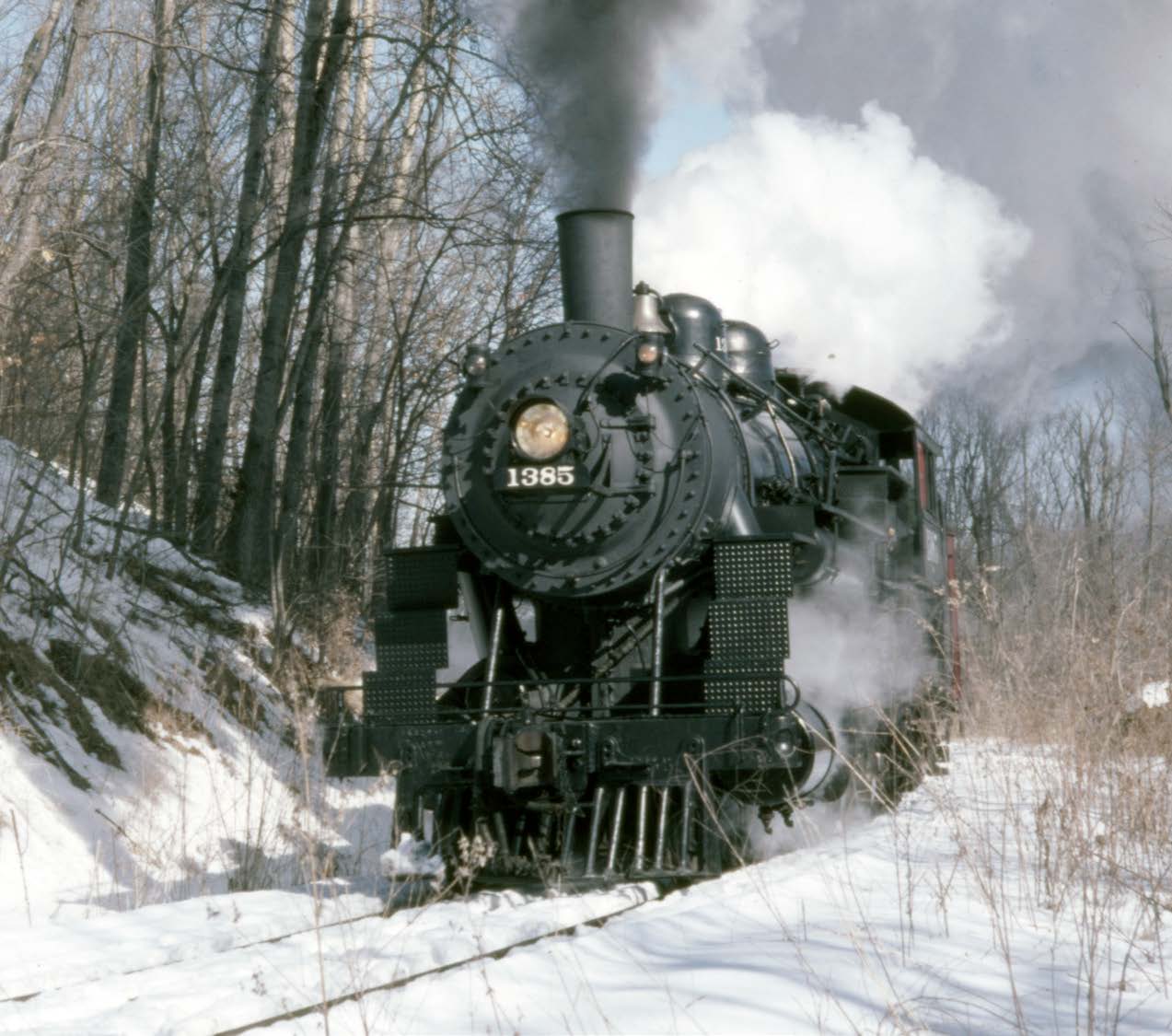
No. 1385 is shown during a museum excursion
in 1982. The engine was removed from service
in 1998 and testing and break-in trips are
expected this year. Photo by Jeff Kneipper
“If you come to Durango (also an R stamp facility) and walk into our shop, the majority of the people you’re going to see are young,” said Mike Ramsey, who spent 25 years with the Federal Railroad Administration and now serves as safety and compliance manager for American Heritage Railways. “They want to be here. They love learning this stuff. They want to be part of it.”
“At a recent work weekend, four of our 12 volunteers were under 30,” Wahl said.
At Strasburg, Zeigler said the goal is to create an environment where employees stay for a lifetime, even if they arrive with no prior experience.
“The best employees don’t necessarily come here with steam knowledge,” he said. “They have curiosity, work ethic, and the desire to learn.”
Those traits may be the most renewable resource the industry has.