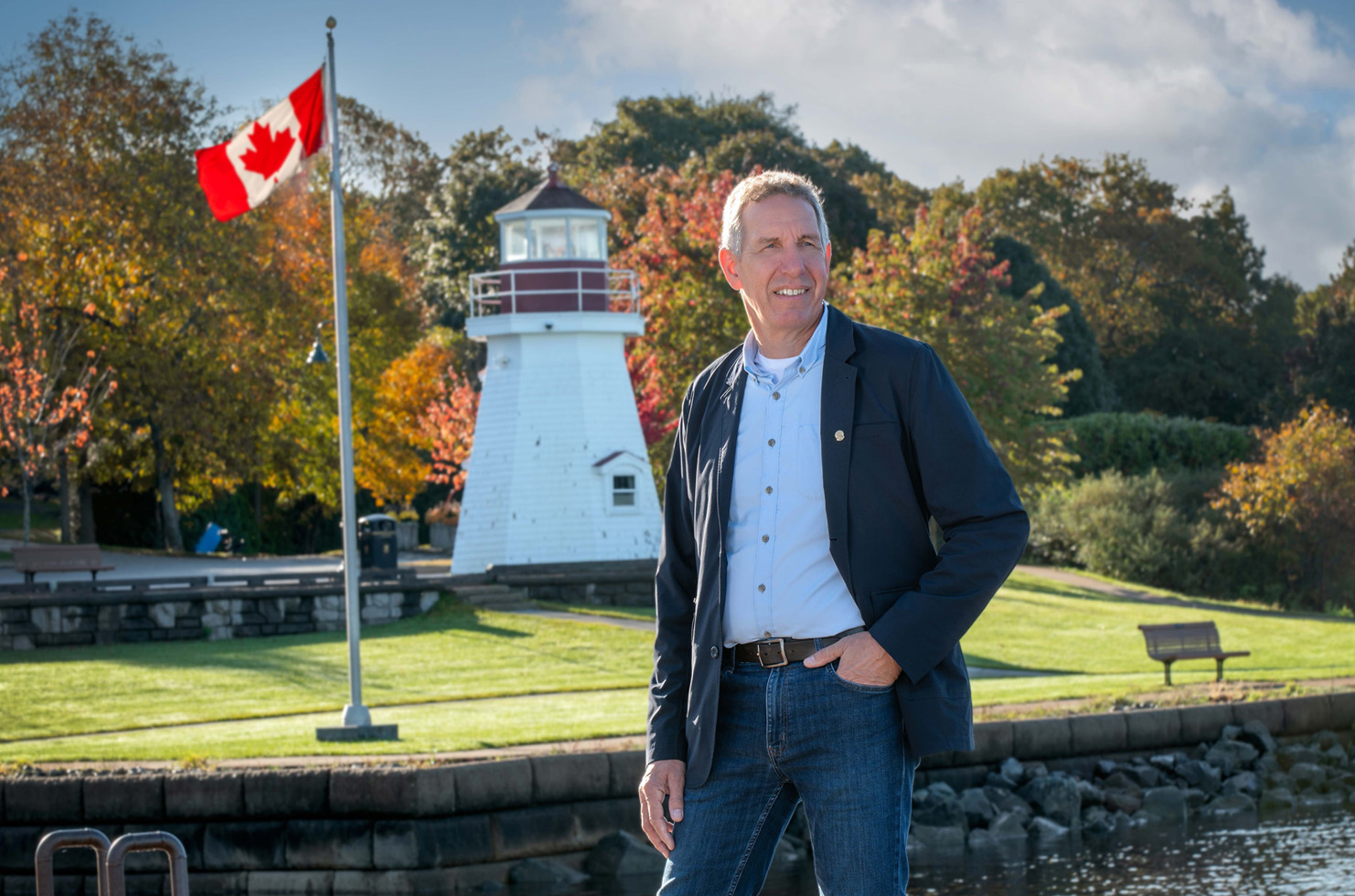
New Brunswick Chief Eben Creaser is the first National Board Chair to represent a Canadian jurisdiction. Photo by Tim Pfinder
As the First Vice Chair, Eben Creaser assumed the role of the Chair of the National Board's Board of Trustees on Sept. 1, 2025, when Robby Troutt retired with eight months remaining in his term. First elected to the BOT as Member at Large in 2016 and elected First Vice Chair in May 2025, Chief Creaser brought with him more than four decades of industrial boiler and pressure vessel experience, a deep commitment to public service, and a lifelong appreciation for the values of hard work, integrity, and safety.
Officially elected Chair during the October 2025 Members meeting to finish Troutt’s term, Creaser ran unopposed and was reelected to a full three-year term on May 12, 2026, during the 94th General Meeting in Denver, Colorado. Creaser said he made the most of what he called the “battlefield promotion phase” of his tenure.
Born in Schefferville, Quebec, a remote mining community where his father operated a hydroelectric dam, Creaser learned early the importance of responsibility and selfreliance. His family later relocated to New Brunswick, where he developed a love for the outdoors and the maritime culture that continues to shape his life today. Creaser and Sheena spend much of their free time at their seaside cottage in St. Martins or sailing on the waters of the Saint John River system near their home, finding a balance between the quiet of the ocean and rivers and a career spent around some of the region's largest industrial facilities.
Beginning his career with the provincial power utility in 1981 as a power engineer and industrial mechanic, Creaser entered the inspection profession in 1999, joining New Brunswick as a field boiler inspector. He quickly immersed himself in NBBI training and professional development, preparing for a leadership role that became reality when he was appointed chief inspector in 2009. Today, he oversees a team of 14 inspectors responsible for both BPV and gas installations, inspecting 30,000 regulated objects at facilities that include Canada’s largest oil refinery and a nuclear power plant. Creaser holds AI and IS Commissions and B, N, NS, and R Endorsements.
A strong advocate for training, certification, and professional engagement, Creaser has served on numerous committees and task groups. He believes NBBI's greatest strength lies in educating people and in how this supports NBBI’s worldwide reputation for safety, integrity, and technical excellence.
Creaser recently met with us to discuss what he sees as priorities and his vision for NBBI's future as Chair:
BULLETIN: Now that you’ve been elected to a full term as Chair of the Board of Trustees, what does this moment mean to you personally and professionally?
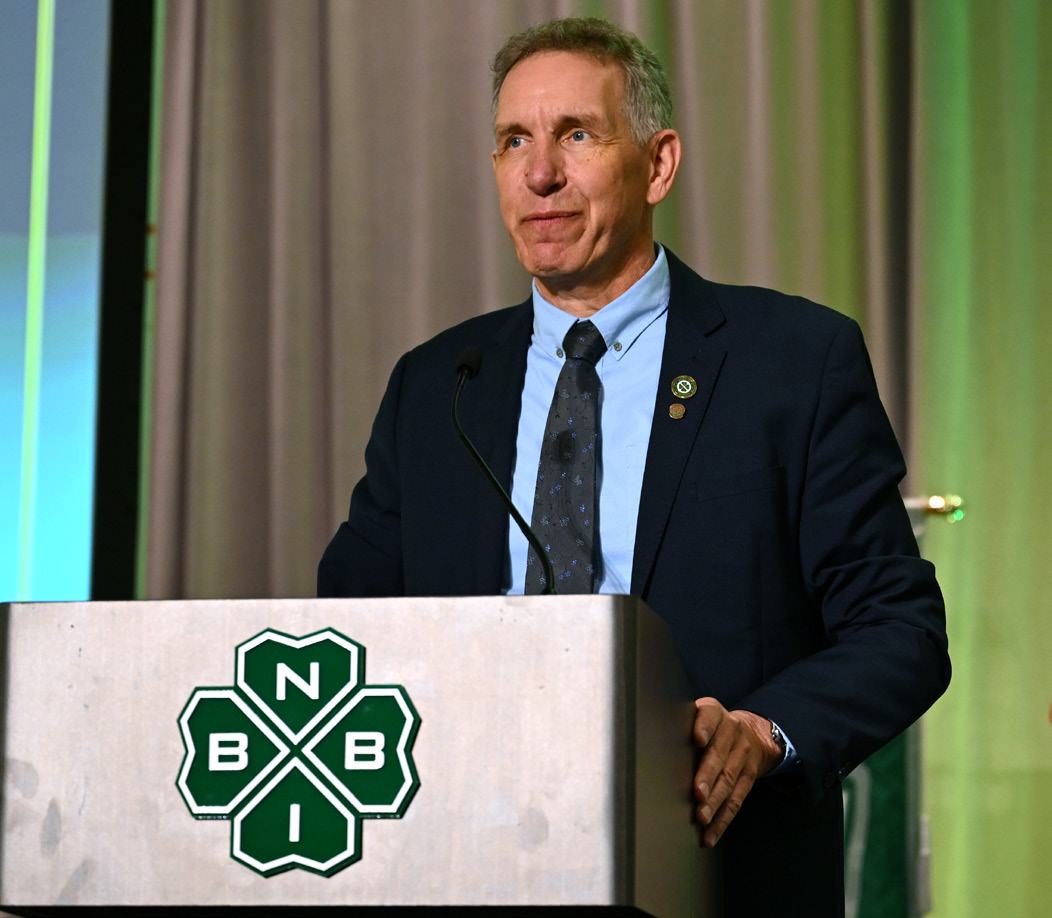
Creaser joined the Board of Trustees in 2016
as a Member At Large, then became First
Vice Chair in May 2025 before becoming
Chair four months later, replacing the
retiring Rob Troutt and fulfilling the
remainder of his term. He was reelected
unanimously on May 12 at the 94th
General Meeting in Denver.
CREASER: It is honestly a very humbling experience. When I look around the room at our membership, I see people who are every bit as capable as I am and, in many cases, like myself, have dedicated their entire careers to serving this industry. To know that those individuals have placed their trust in me to help lead this organization, which has protected life and property for more than a century, is something I do not take lightly.
Professionally, the National Board is one of the most respected organizations in the boiler and pressure vessel world. The reputation that has been built over generations is something very special. Anyone who knows anything about boilers and pressure vessels knows who the National Board is. They know what a National Board Commission means, and they understand the integrity and professionalism behind it.
To be entrusted with helping guide this organization forward is a tremendous honor.
I have been involved with the National Board for most of my inspection career. I have served on committees, task groups, and the Board of Trustees, and I have watched the organization evolve through different leaders and different challenges. Becoming Chair feels less like reaching a destination and more like stepping up and accepting responsibility to help steward something that is very important to all of us.
BULLETIN: You have served on the BOT since 2016 and under four Chairs. What did you learn from them?
CREASER: I learned something from each one of them. Throughout my career, I have always tried to pay attention to people whose leadership styles I admire and ask myself what I can learn from them. Sometimes it is how they communicate or how they build consensus. Sometimes it is simply how they carry themselves and how they represented the organization.
One of the things that I have learned is that there is no single formula for leadership. Each Chair that I have served with brought their own approach to the role. Most importantly, all understood that leadership is about service and helping the organization accomplish its goals rather than making the role about yourself. I will always remember John Burpee for his careful, reserved approach to the role; Joel Amato has always been an outgoing and a strong promoter of our organization; Chris Cantrell was always very organized and prepared; and Robby Troutt brought a members-first focus and passion to the role.
There are several other people who deserve honorable mention beyond the former Chairs who taught me a lot about the National Board. My former chief and mentor, Dale Ross, and the former chief of the neighboring jurisdiction of Prince Edward Island, Ken Hynes, were both a huge help to me when I first got started. I also want to mention some fellow BOT members like Tony Oda, Milton Washington, Donnie LaSage, Rick Strum, and Matt Samsone, to name a few, who I served with over the years, also influenced or contributed something to the way I think about leadership, governance, and service.
I’ve also learned over the years from my own experiences and from things that, in hindsight, I could have addressed or handled differently. I plan to draw from all my experiences and try to incorporate the learnings in my approach to the role.
BULLETIN: You stepped into the role after Robby Troutt’s retirement. What did you learn during those months that will help guide your leadership moving forward?
CREASER: One of the biggest lessons was gaining a deeper appreciation for the National Board’s relationships with outside organizations. I had always understood those relationships existed, but stepping into the Chair’s role showed me just how interconnected we are with organizations such as ASME, Authorized Inspection Agencies, insurance companies, and other industry partners. I’m learning that the Chair’s role extends beyond serving the needs of our members. It also involves representing NBBI and maintaining and strengthening relationships with outside organizations because these relationships are essential to the success of our programs and our mission, as well as our industry partners.
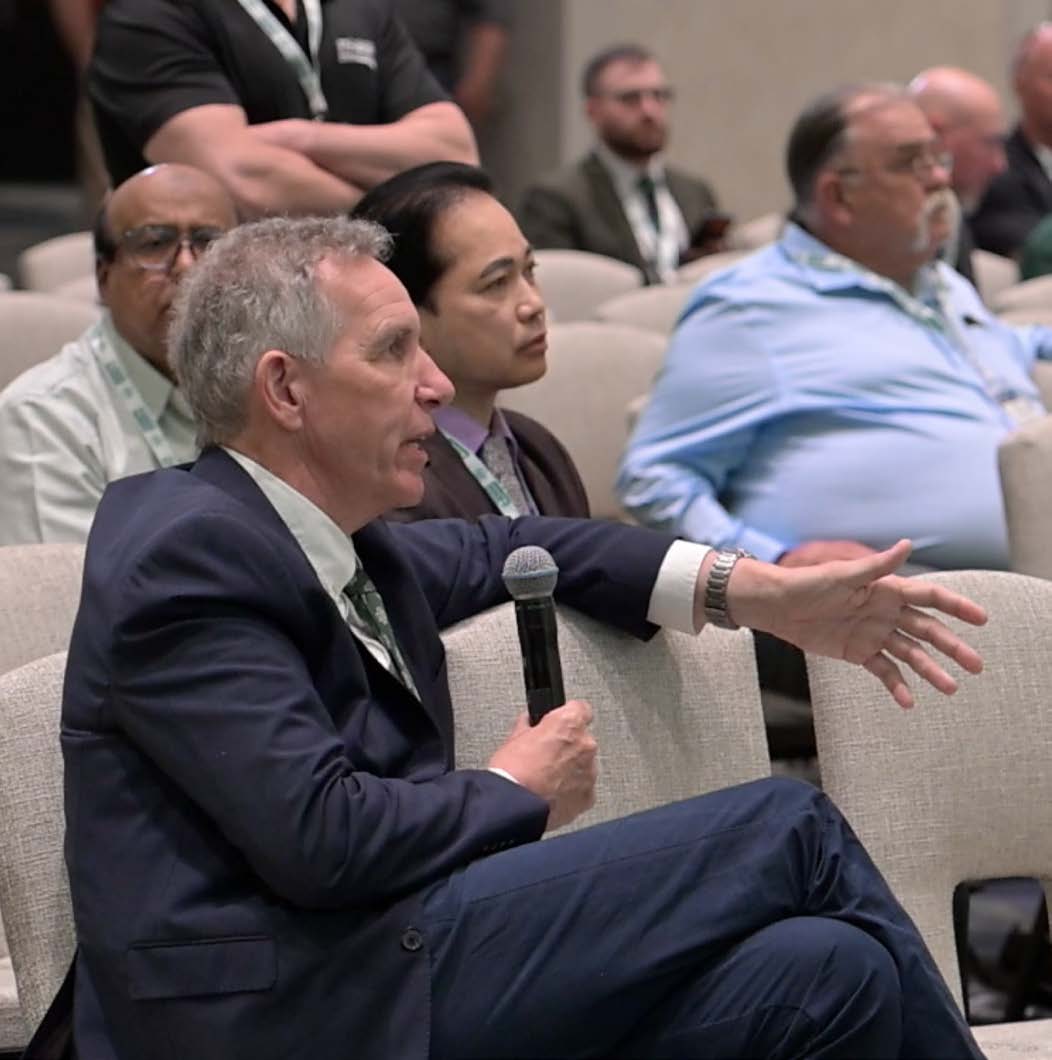
Creaser takes part in the Technical Discussion
during the 94th General Meeting. He said of
being elected Chair: “To know that those
individuals have placed their trust in me
to help lead an organization that has
protected life and property for more than
a century is something I do not take lightly.”
BULLETIN: Has anything come as a surprise to you in this role?
CREASER: Yes, I’ve been a bit surprised by the level of visibility from outside our organization that comes with the role. I have always viewed myself as a working inspector, regulator, and member, so it has taken some adjustment to realize how important the Chair role is as a representative of the organization. It has reinforced the importance of professionalism and the responsibility that comes with serving in this position.
BULLETIN: How do you think your perspective as chief boiler inspector for New Brunswick shapes the way you approach this role?
CREASER: New Brunswick is a relatively small jurisdiction, but it is home to several large, complex industries, including nuclear power, oil refining, liquefied natural gas, and pulp and paper. As a result, I have gained experience across a wide range of industries and regulatory environments. I have also worked closely with the National Board and managed New Brunswick’s ASME AIA program throughout my career. The combination of this broad practical experience, responsibility for regulatory oversight, and experience interacting with international organizations provides a unique perspective that may help in navigating challenges facing our industry.
BULLETIN: What do you hope the National Board accomplishes during your tenure? What goals have you set for the next three years?
CREASER: First and foremost, as BOT Chair, I come to this role with the perspective that I am a temporary caretaker of a 100-plus-year-old foundational institution in the BPV industry. Working together with my fellow BOT members and Executive Director Amato, we will work to meet the needs of our members, the organization, our industry partners, and stakeholders. At the same time, we will continue to support, promote, and grow NBBI’s world-class programs, building upon our impeccable industry reputation.
Keeping this in mind, there are a few things I would like to get accomplished or see the completion of ongoing projects. The first is to continue advancing and completing the development and implementation of JRS Inspect. The National Board has invested significant time, effort, and resources in developing this platform, which will transform the way many jurisdictions and our industry partners (AIAs) manage inspections and inspection information. We have already seen strong adoption among jurisdictions. We will need to continue our efforts to achieve broader participation and continued progress toward reaching a sustainable, costrecovery model, ensuring program viability and delivering value well into the future.
JRS Inspect is already helping jurisdictions modernize their inspection programs, and future JRS modules such as JRS Register and JRS Certify will create an integrated system that will connect new construction, registration, certification, and inservice inspection. Over time, we will create an integrated, efficient and consistent flow of information throughout the entire lifecycle of pressure equipment. JRS will continue to be a significant investment and an important NBBI program that will position the National Board and our stakeholders for longterm success in the decades to come.
Another thing I would like to see us do is to expand our outreach, promotion, and improve access to our online training. We offer world-class, affordable online training, but I think there are opportunities to make it easier for people and organizations beyond our traditional, existing audience to access it. Whether someone works in an oil refinery, a chemical plant, or another industrial setting, individuals and allied organizations should be aware of our training and be able to easily view our course offerings, register, and begin learning with ease and without barriers.
Something else I've been thinking about for quite a while and would like to explore is the possibility of creating a new personal, professional qualification – a qualification that individuals could earn that is not tied to an individual's employer, as is the case with commissions and Certified Individuals. I believe that there may be interest from individuals working as engineers or working in the asset integrity sector related to power utilities, oil and gas, chemical and refining, or potentially in the NDE industry who would be interested in taking our training, especially if they could earn a National Board qualification. There are many talented people around the world who would benefit from National Board training but do not work for jurisdictions or Authorized Inspection Agencies. Finding a way to recognize those individuals could significantly expand the National Board's influence and impact.
I would like to see us make some meaningful progress in these areas and believe these initiatives support our vision and mission and will help position our organization for longterm success.
BULLETIN: You mentioned training, which is no surprise, as you have always been a strong advocate for NBBI's training programs. Where do you see opportunities to expand or strengthen those programs?
CREASER: Our training is one of the most important things that the National Board does. Our students become experts and promoters of BPV safety and of the National Board. I believe the training we develop and deliver is the greatest contribution to BPV safety there is. Every inspector we train, every professional we educate, and every person we help to better understand pressure equipment hazards through training contributes to safer workplaces and safer communities.
The opportunity I see is reaching a broader audience. Today, almost all our courses are utilized primarily by inspectors employed by jurisdictions and Authorized Inspection Agencies. Those audiences will always remain important, but there are also operators, engineers, maintenance professionals, reliability specialists, students, and many others who could all benefit from this knowledge.
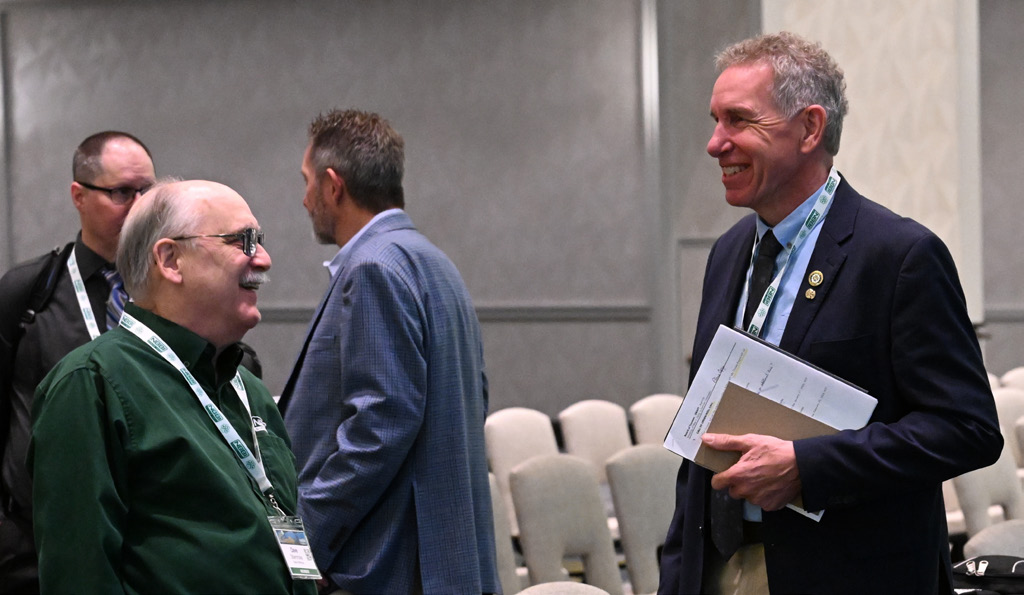
Creaser talks with Michigan Chief Dave Stenrose
during a break at the 94th General Meeting.
The content already exists. We have excellent instructors and an outstanding catalog of more than 100 online courses. The challenge is making our training resources easier to access and ensuring people know that they are available. If someone working in a refinery or manufacturing facility wants to learn more about boilers, pressure vessels, repairs, alterations, or overpressure protection, we should be the first place they look, and we should make it as easy as possible for anyone interested to obtain that knowledge.
Every additional person we educate strengthens the culture of safety throughout the industry, and with our online and virtual course offerings, we can provide this knowledge to anyone with an internet connection around the world.
BULLETIN: Securing the next generation of inspectors has been a much-discussed challenge. How does the National Board help meet this demand?
CREASER: This won't be a surprise, but the answer in my view begins with education and training.
I think there is a benefit in creating opportunities for people to enter the profession who may not have followed the traditional path. There are skilled tradespeople, engineers, operators, maintenance personnel, and countless others working throughout the industry who already possess many of the skills needed to succeed in this field.
The National Board can help by providing training, credentials, and professional development opportunities that make the profession more accessible. We need to give people a pathway to learn, demonstrate competency, and continue growing throughout their careers.
I also believe there is a tremendous opportunity to develop new qualifications that introduce individuals to boiler and pressure vessel safety before they ever become inspectors. By expanding our reach and creating more entry points into the profession, we can help ensure the next generation is ready to carry this important work forward.
BULLETIN: How do you see the role of the National Board evolving as the industry adapts to new technologies and changing workforce dynamics?
CREASER: The National Board has always evolved, and that must continue.
On the technology side, I think we're already seeing exciting developments. JRS is a good example. The ability to connect information from new construction, registration, certification, and inservice inspection into a single ecosystem has enormous potential. The future will involve better use of data, improved information sharing, and ultimately more efficient processes.
At the same time, technology alone is not the biggest challenge. The workforce challenge is equally important. Many of the people who built this profession are retiring. Historically, we drew many inspectors from the military and from traditional industrial career paths. Those pipelines still exist, but they are changing.
We and our industry partners are looking at the future and having conversations about the need to identify new pathways into the profession. We need to expose more people to the work we do and help them understand the opportunities available to them. Training, certification, and professional development will be critical parts of that effort.
The National Board is uniquely positioned to help lead that conversation because education has always been one of our greatest strengths.
BULLETIN: The National Board continues to expand its international collaboration, including work with Argentina and INTI. How do you see this outreach evolving?
CREASER: I believe there is a significant opportunity for growth. Around the world, organizations and individuals can benefit from the National Board’s expertise in training, certification, and pressure equipment safety. Rather than trying to export an entire regulatory framework, we can start by focusing on sharing knowledge and qualifications with individuals and helping people improve safety in their own jurisdictions. That approach can strengthen relationships, expand awareness of our programs, and create opportunities for broader adoption of National Board and ASME principles.
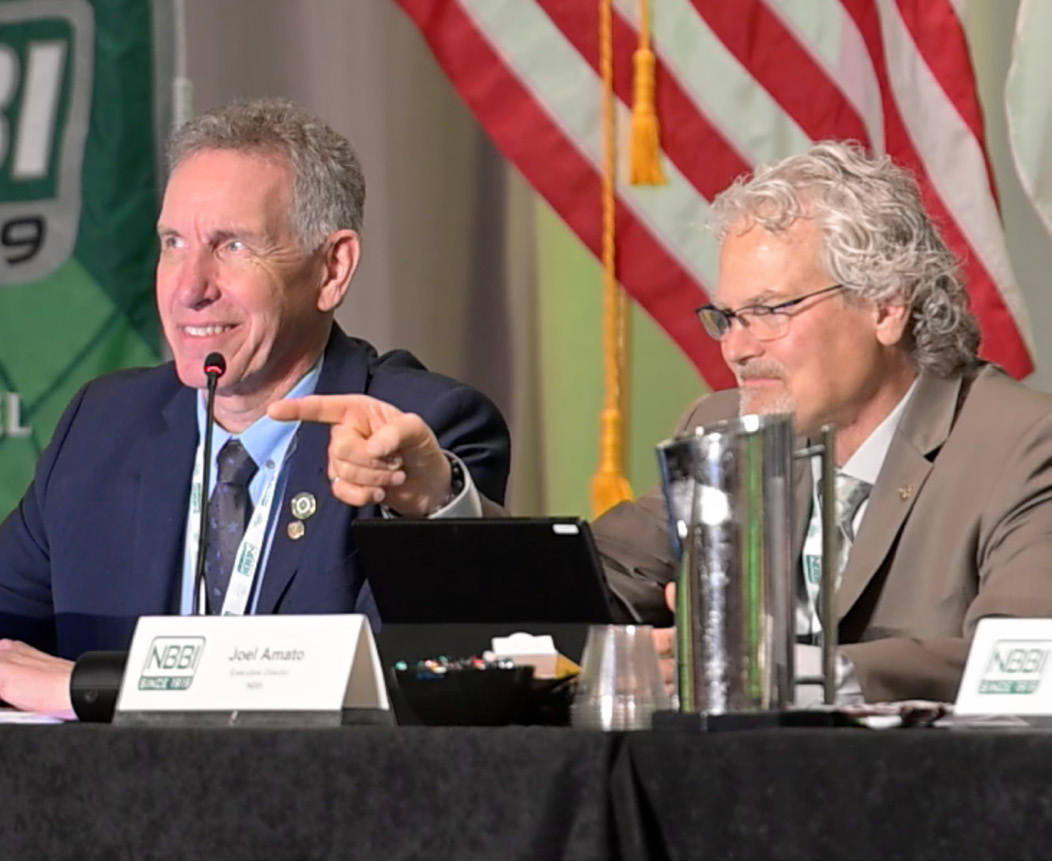
Creaser and NBBI Executive Director Joel Amato
share a light moment during the Members'
Meeting at the 94th General Meeting.
BULLETIN: You are the first Canadian to serve as Chair of the National Board's Board of Trustees. What does that mean to you?
CREASER: On a personal level, it is certainly an honor. But I think the significance extends beyond me.
For many years, the National Board has been an international organization in practice, even if people sometimes viewed it primarily through a U.S. lens. Canadian jurisdictions have been members of the National Board from very early on, and today, NBBI works closely with organizations and stakeholders around the world.
I think having a Canadian as Chair signals that the National Board is open to diverse perspectives and recognizes that pressure equipment safety is a global concern. Different countries may have different regulatory systems, but the challenges we face are often very similar. Everyone wants and benefits from safe equipment, competent personnel, and effective oversight.
I also believe it helps reinforce the idea that there is value in looking beyond our traditional boundaries. As the National Board continues to build international relationships, having leadership that understands different regulatory environments and perspectives, I believe, will be beneficial.
BULLETIN: What would you like National Board members to know about the way you intend to approach the role of Chair of the Board of Trustees?
CREASER: I always say, “Everything I know about boilers and pressure vessel safety I learned at the National Board." That's something which I'll always be very grateful for. I'm going to do my best to lead and represent our members honorably and draw on my experience and lessons learned from those I’ve served with who came before me.
I’ll be relying on the wisdom and experience of my fellow BOT members, actively engaging our Advisory Committee, and working closely with Joel and his staff at NBBI to ensure that when decisions are made, they are well-informed and take into consideration the needs of Members, our stakeholders, and the BPV industry. I've said this to a few people already, and perhaps this best answers your question:
“Maybe I won't be the best BOT Chair there ever was, but it won't be for lack of trying.”