As Inservice Inspectors, we know that a big part of our job is to inspect equipment that may be prone to corrosion of one form or another.
Various types of corrosion are discussed in National Board Inspection Code (NBIC) Part 2, Inspection, for that reason. Although other parties usually conduct piping inspections, an Inservice Inspector nevertheless should be interested in the condition of piping associated with boilers and other pressure vessel equipment.
One type of corrosion that can escape detection until it is too late is flow-assisted corrosion or flow-accelerated corrosion, also known as FAC. It is usually classified as erosion corrosion, but erosion corrosion is not always FAC. Erosion corrosion occurs when a pit, burr, or other flow upset or impedance causes local turbulence in a pipe, resulting in the protective film on the surface being removed. From this point, the corrosive fluid and fluid motion accelerate the loss of metal. FAC occurs when the normally poorly soluble oxide or magnetite is dissolved and removed by chemical processes together with fluid flow, thus exposing the metal anew. This means new oxides are formed from the piping material, and the cycle continues, thereby eroding the pipe over time.
FAC is a continuing problem that can and has caused death and injury at both fossil-fired and nuclear power plants. One of the most infamous incidents occurred on December 9, 1986, at Virginia Electric and Power Company’s Surry Nuclear Plant near Jamestown. Unit 2’s 18-inch feedwater piping failed catastrophically, leading to the release of hot feedwater that immediately flashed to steam and engulfed nearby personnel. The failure occurred in an elbow in the 18-inch suction line to the feed pump. A fragment of the elbow, roughly 2 feet by 3 feet, was blown off, completely severing the line. This resulted in four fatalities and four additional injured workers – two of whom suffered serious injuries.
In 2004, FAC caused an accident at the Mihama Nuclear Plant in Japan, killing five workers. Other fatalities due to FAC occurring at power plants include two each at fossil plants, Iatan in Kansas in 2007 and Pleasant Prairie in Wisconsin in 1995. The Mihama plant failure was in a 22-inch pipe feeding the deaerator. The Iatan failure was in a three-inch superheater attemperator line fed from a boiler feed pump. The Pleasant Prairie line was in the piping feeding the economizer.
All these failures occurred in carbon steel piping containing clean water at temperatures from the upper 200°F range to 450°F in a reducing (oxygenfree) water environment.
Let’s consider why this type of corrosion is present in carbon steel piping and components. Typically, with the proper feedwater treatment, carbon steel components in oxygen-free water develop a protective layer on the waterwetted surfaces called magnetite or Fe3O4. If this film is on the piping, then further reaction between the water and the steel is minimized or does not occur. The resulting wall thickness is maintained. (See Figure 1)
There are basically two types of FAC: single-phase FAC found in piping full of water and two-phase FAC found in lines with a mixture of steam and water. The problem occurs when turbulent or high-velocity flow of water is present, and the temperature is under about 450° to 500°F, depending on whether it is single-phase or two-phase. For single-phase systems, iron compounds and hydrogen from the carbon steel diffuse through the porous magnetite layers and into the flow stream. The excessive flow eventually carries the magnetite away and exposes the carbon steel to the high velocity water. The magnetite starts forming on the carbon steel again, but any magnetite that forms eventually is similarly carried away, and the process repeats. Since the iron in the magnetite comes from the pipe wall, the wall thins. (See Figure 2)
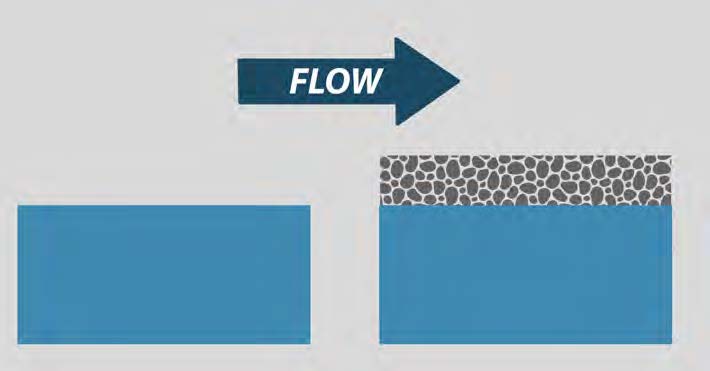
Figure 1: At left is the metal surface when water
is first introduced. On the right is the same metal
with the protective iron oxide (magnetite).
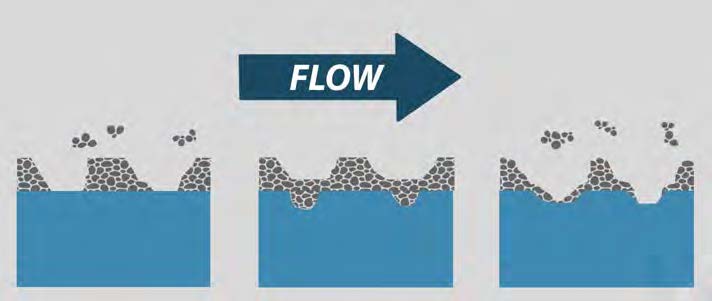
Figure 2: As water flows over the magnetite,
some of it is removed until finally the base metal
is reached as in the image on the left. The
magnetite begins to form on the newly exposed
metal as shown in the middle image, but then
the flow carries it away and leaves the meatal
exposed again and the whole process repeats.
For two phase flow, the magnetite is not mechanically removed, as much as the oxide is dissolved in the flowing fluid. Once it is removed from the surface, it either is prevented from reforming or the rate of reforming does not allow a thick enough layer of protection to form. FAC is not found in piping with flowing dry or superheated steam.
Another factor is water chemistry. The aforementioned accidents have occurred in systems that employ hydrazine or hydrazine-type compounds as an oxygen scavenger. Most other feedwater systems are not treated with oxygen scavengers and contain some level of oxygen. Some oxygen in the water allows a very strong layer of magnetite with porosity tending to be plugged with less soluble oxides, and thus FAC does not occur. Another big factor is the pH. When the pH is lower, the magnetite protective layer can be dissolved. The ideal pH value is about 10 or slightly lower.
One factor that can minimize FAC in piping is the piping or component metallurgy. Higher molybdenum, copper and especially chromium content in the material can reduce the rate of erosion due to FAC significantly.
The single-phase FAC is characterized by a metal surface that looks like a desert with waves of dunes. It appears scalloped or looks like fish scales. Lower velocity FAC surfaces may appear similar to orange peels. The two-phase FAC appears as “tiger striping,” with plateaus and valleys.
The conditions for FAC to occur are found in numerous locations in power plant piping. For single-phase FAC, the most likely locations include low pressure piping at 90 degree elbows, conical reducers or expanders in the feedwater to the deaerator, low pressure drain pump discharge, low pressure feedwater outlet piping, elbows and tees in deaerator discharge piping, condensate booster pump piping, feed pump suction and discharge piping, feedwater piping, and feed pump balancing drum and drum leak off piping. The regulating valves, orifices, and thermowells found in feedwater piping may also be subject to FAC. For two-phase flow, FAC can occur in deaerators, valves, reducers, and tees in low and high pressure feedwater heater drain piping.
For heat recovery steam generators, the locations where single-phase FAC is prone to occur are in high pressure feedwater heater tube sheets, economizer inlet header and tubes, and intermediate and low pressure evaporators. Two-phase FAC can occur in steam separating equipment in low pressure evaporators, intermediate pressure evaporator tubes, and deaerator shells.
Depending on the jurisdiction where this equipment is located, an Inservice Inspector might or might not be involved with the examination of piping and components prone to FAC. However, it should not be unreasonable to inquire about any ultrasonic examination results of piping or components prone to FAC that might be available. Plants should identify areas of concern for FAC and have an inspection program in place to periodically check thickness or to internally inspect piping or components at critical locations. Their inspection program should be continually adjusted based on conditions found and reevaluated when operating parameters are changed.
An inspector may also wish to examine records for the water chemistry in the various locations in the boiler system to check to see parameters such as pH. There should be evidence of water treatment specialists suggesting a plan for feedwater and condensate treatment and the plant or facility following that plan.
With knowledge of what FAC is, the water conditions that cause it, and where it can occur in piping and components, the inspector can inform the power plant owner of potential FAC issues and ensure the owner has a plan to detect any problems before they become an issue.