EDITOR’S NOTE: This article is the first in a series that intends to describe the need for mandated NDE proficiency guidelines to reduce the consequences of poor documentation, false calls, and considerable waste in the procurement and execution of NDE services.
TECHNICAL PERSPECTIVE
The National Board Inspection Code (NBIC) points to the original code of construction, as it should, for many things, which is appropriate, especially for repairs and alterations. NBIC Part 2, Inspection, recognizes the original codes of construction but also leaves much of the responsibility on the owner, user, inspector, and jurisdiction.
As early as 1954, ASME was discussing the use of ultrasonic testing (UT) as a substitute for radiograph testing (RT). By 1969, ASME had approved Code Case 1444, permitting the use of UT for RT specifically for only the final closing seam of Section VIII Div. 1 & 2 vessels under certain circumstances. In 1996, ASME Section VIII issued Code Case 2235, further shifting the requirement of RT to being more open to other evolving technologies and allowing “volumetric examination,” which essentially meant radiography and advanced UT or phased array. Since then, all the construction codes and the NBIC have followed suit to allow volumetric examination.
While I agree with these changes, they have also introduced some major issues that this article will highlight, especially in inservice inspection, including fitness-for-service, and integrated life management of systems.
I visited EPRI a few months ago, and one of the presentations focused on the need for NDE proficiency. By the third slide, alarm bells went off in my head as I recalled a conversation I had at a small AIA review in January 2019. The owner, an NDE professional, had brought up the same concerns as it deals with phased array; the only difference was that EPRI was showing me research and stats to back up these concerns. After returning from the trip to EPRI, I started calling people I trust who are involved in fitness-for-service and integrated life management of systems, voicing concerns on the reliability of data we are using to make important decisions, and to my surprise, they all agreed this is a huge issue and needs to be addressed.
This article is a must-read for anyone involved in fitness-for-service, risk-based inspection (RBI), integrated life management of systems, and any inservice inspection activities that utilize advanced UT methods. We as an industry are counting on these advanced UT methods to provide meaningful results, but as this article will point out, due to lack of training and outside proficiency requirements, at least 40% of the time decisions are made based on bad data that can affect equipment reliability, lead to down time and loss of income, but most importantly loss of life! This is a topic we all need to understand and should be talking about.
Gary Scribner, NBBI Assistant Executive Director-Technical
Failures of high-energy systems can cause injuries, fatalities, and costly outages – not because the risks are unknown, but because the components most vulnerable to damage are too often misidentified, misunderstood, or improperly examined. As power plants age, operating lifetimes extend, and inspection practices struggle to keep pace, the reliability of inservice nondestructive examination (NDE) has become a critical weak link in integrated life management. Identifying the components or features in systems that pose the highest risk to inservice damage development is a cornerstone of an integrated life management philosophy. [1, 2]
Furthermore, for systems operating in the time-dependent (creep) regime, it is often not well understood that the lifetime is finite and can range from thousands to millions of hours. This variability in performance means that some features will require carefully tailored life management while others will not likely require a significant expenditure of resources within the lifetime of the plant. Examples of emerging issues pointing to this reality are detailed in an article in the 2025 fall edition of the BULLETIN. [3]
The integrated life management of systems is currently challenged by several factors, including the following:
- No formal recognition of a design lifetime. Several interpretations in the ASME Boiler and Pressure Vessel Code (ASME BPVC) Section I and ASME B31.1 reinforce the fact that there is no expected life that can be inferred for components designed to either code operating at low or high temperature. Furthermore, there is no formal procedure for the design of components subjected to cyclic loads (fatigue). Such realities are predicated on a simple designby- rule approach that has not evolved significantly since the 1960s and relies on a set of simple empirical formulae which assume an inherent level of conservatism. It should be emphasized that most components or features that may be at risk of failure within the expected lifetime of the system have been designed, fabricated, and constructed to the previously mentioned codes.
- An aging/retiring workforce. Experienced personnel familiar with life management activities are retiring, and these positions may be backfilled with less-experienced personnel or eliminated due to cost-cutting measures. For new or less experienced personnel hired into the power generation industry, there are significant gaps in knowledge and training, including:
- What life management tasks are necessary to perform, including operating data review, preferred or relevant method(s) of examination, and why they should be applied based on degradation mechanisms, review of fabrication records, and so forth.
- Selection of a competent service provider, including how best to assess capability as opposed to a fixation on “lowest cost” services driven by biased procurement practices.
- The review of data obtained by contracted services and judging whether these provide meaningful insight informing an integrated life management strategy.
- Life extension of aging assets once scheduled for retirement. This reality has been acknowledged by many owner-users as the plants in question provide critical capacity that is not easily replaced by other energy sources. Solar and wind, for example, are non-dispatchable energy sources. Secondly, the aging asset fleet in the U.S. is primarily constituted of coal-fired, repurposed coal-to-gas, or gas boilers, which remain economically viable, but are approaching or exceeding an average of 50 years in operation. Because a sizeable population of these aging assets were just recently on a glidepath to retirement, there are considerable challenges in life extension, including:
- Component examination, replacement, upgrades, and other activities that have likely been significantly reduced or neglected leading up to the expected retirement date.
- The best performing staff have left the site, been repositioned elsewhere in the company, or moved on.
- New assets are being built with systems implementing modern materials that are more complex than their traditional counterparts. Furthermore, many of the features in these systems lack proper engineering and design, as the primary driver of new plant procurement is cost and schedule rather than quality, reliability, or safety. This is evidenced by an increasing acknowledgement from Engineer, Procurement, and Construction (EPC) organizations and Original Equipment Manufacturers (OEMs) that ASME BPVC is viewed as “the” standard as opposed to a “minimum” standard. Organizations involved in new construction are increasingly unable to (re)design critical features like tee intersections using modern approaches, a fact that is worrisome given the hundreds of cracks or leaks in high energy piping systems documented alone by EPRI. [3, 4]
The realities described above substantially increase the need for a well-informed and integrated life management approach that leverages targeted and knowledgeable inservice examination. Furthermore, the risk to future safety and plant performance is a compelling concern given the overall lack of a concerted effort among industry stakeholders to raise the bar.
This article will provide a high-level perspective on what EPRI has observed, the alarming state of the industry, and what needs to be done to rectify these challenges. Future articles will provide additional details on how proficiency programs can reduce uncertainty and what should be done to address the present variability in NDE outcomes.
Overview of Recent Inservice NDE Experience
An all-too-common presumption is that the NDE technician’s documentation is error-free and/or properly reviewed by a competent engineer. Recent experience illustrates that neither of these assumptions are correct, and that a lack of rigorous review by either the organization performing and/or contracting the NDE is a serious gap in an integrated life management approach. Additional examples exist in which a professional engineer (PE) is documented as having reviewed a final report, and obvious or significant errors are documented. Such realities are leading to a significant and unforeseen risk to personnel safety or legal ramifications if a future failure occurs.
Poor Documentation
In response to an emerging industry issue, EPRI launched a collaborative supplemental project in 2022 to investigate steam leaks occurring relatively early in life (greater than 35,000 hours) in high-temperature tee intersections. [3-5]
A major challenge in this project was that not all tees could be immediately replaced or even subjected to the required NDE, as the quantity of tees in a single fleet could be in the hundreds. Because of this, one of the major tasks in the project was to determine how to screen a population of tees to determine which ones should be prioritized for replacement and/or subjected to additional NDE and information gathering.
One critical input for screening and risk-ranking was obtaining geometric data. This action relied solely on field NDE, as available drawings or fabrication records routinely lacked the minimum information necessary to perform simplified screening calculations. The field-obtained data were informed by ultrasonic wall thickness measurements, diameter measurements, local details for weld profiles or OD-observed thickness transitions, photogrammetry (a process for determining geometric properties from photographic images), and most importantly, summarized documentation of these data using a simplified, purposely developed, easyto- use spreadsheet. The spreadsheet was made publicly available on request, and to date, EPRI has received measurements for about 400 tees. Ultrasonic wall thickness measurements identified as discrepant, meaning the data received is nonsensical given the difference with adjacent measurements and is thus primarily associated with transposition error or another type of documentation error, is associated with about 40% of the tees. Figure 1 shows an example of discrepant wall thickness readings that have been identified.
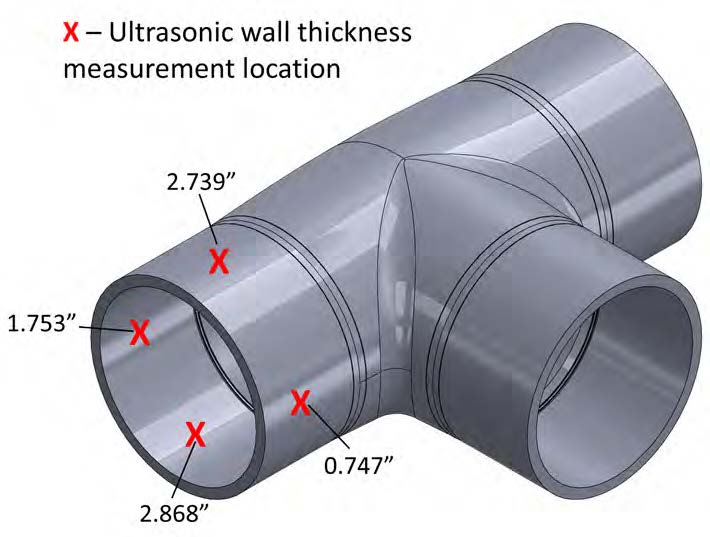
Figure 1: Discrepant wall thickness readings documented
for a tee intersection. The four readings are illustrated
for clarity. Note that about 35 readings are typically
collected to provide sufficient detail to screen these
geometries for risk of creep damage development.
The identification of discrepant data for the hundreds of assessed tees over the last three years is significant for at least two reasons:
- The type of thickness surveys specified for the tee surveys is prolific in the generation industry and commonly used to monitor components or features susceptible to general wall loss by flow-accelerated corrosion. There is growing concern about whether the 40% population of thickness measurements obtained through the tee study represents a larger population of at-risk data.
- Given that 40% of straightforward measurements are discrepant, it is impossible with any reasonable confidence to say that the results generated by far more complex techniques like phased array ultrasonic test (PAUT) examination are valid.
The uncertainty introduced by unreliable NDE data is considerable from a monetary perspective and detracts from the allocation of available Operations and Maintenance (O&M) funds to meaningful features or components in at-risk systems. For perspective, identifying discrepant results may require one or more subsequent evaluations to overcome the original contracted services.
The number of affected tees in the modern coal-fired and combined cycle fleet across the U.S. is unknown. However, for about 1,800 units, and if we assume there are about three tees per unit, this population would number about 5,000 tees. The current NDE statistics suggest 40% of results need to be revisited, and the cost per tee averages about $25,000 for scaffolding, insulation removal/reapplication, preparation, NDE services, etc. The cost to reassess and obtain vitally important data for risk-ranking is $50 million. This cost does not include future examinations using more sophisticated NDE techniques such as PAUT, repair, or replacement, and it is important to re-emphasize that this $50 million estimate is not an investment, but rather a waste. Such waste can be partially or entirely overcome through mandated proficiency programs enforced by post-construction codes like the National Board Inspection Code.
False Calls
In reference to NDE, a false call refers to a case in which the interpretation of the available data suggests that a service-related indication is present, but subsequent evaluation (e.g., metallography or one or more follow-up NDE attempts) reveals that no meaningful flaws are present that pose a risk to serviceability. One recent case study involves an owner-user who removed a main steam (MS) girth weld and a hot reheat (HRH) girth weld based on one service provider’s NDE results, only to find that the welds were clear and free of any service-related damage. [6] The sequence of events resulting in this unfortunate outcome is as follows:
- Inservice NDE was performed, and interpretation of the NDE data suggested that rejectable inservice indications were present. This prompted the removal of two welds. After removal, the NDE was repeated by EPRI and a second service provider, and EPRI performed metallurgical examination to critically evaluate the NDE findings.
- The results generated by EPRI and the second service provider revealed that no service-related damage was present. Any reported indications by the first service provider were determined to be fabrication flaws from the original welding process and were in no way affecting the serviceability of the removed welds. A recurring outcome for informed examination is the optimization of the techniques to detect and resolve service-related damage in the susceptible weld and heat-affected zones.
- Metallography confirmed the lack of service-related indications (see Figure 2). Subsequent destructive testing of each of the welds was performed as “feature cross-weld creep tests” to assess the entire thickness of each weld. These results showed that the time and location of failure were consistent with prior experience for welds that exhibited no inservice damage development. (See Figure 3)
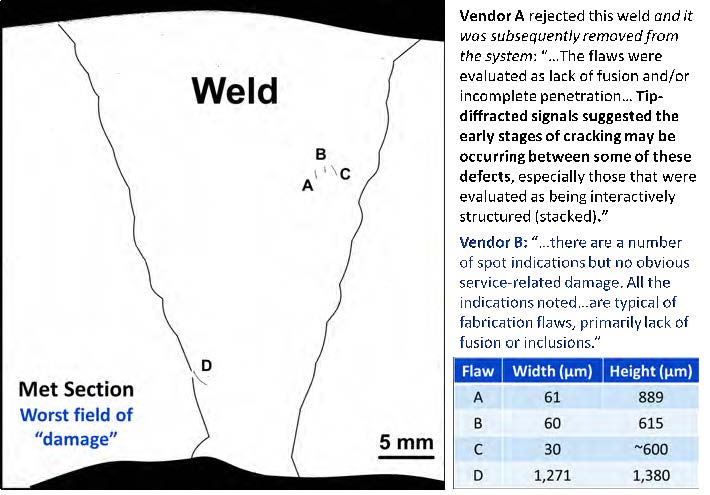
Figure 2: Metallography example from the EPRI report
“Nondestructive Examination of Capital Power
Grade 91 Welds.”[6]
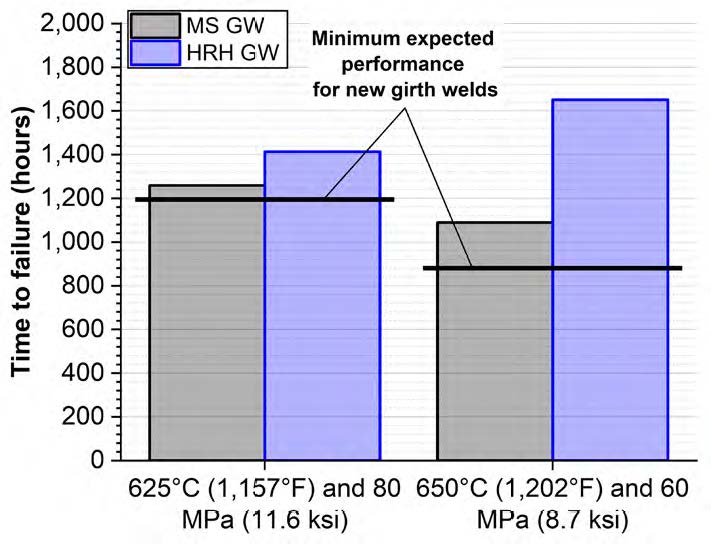
Figure 3: Evaluation of cross-weld creep performance of the
removed girth welds in the main steam (MS) and hot reheat
(HRH) systems assessed in the EPRI report "Nondestructive
Examination of Capital Power Grade 91 Welds.”[6]
In this example, the removal of the unaffected welds is not trivial. Countless examples like this require, on average, about $100,000 to $1 million to remove a short spool section and replace it with a new pup piece, perform two welds, execute post-weld heat treatment, examine each weld, re-insulate, and remove the scaffolding.
For some plants, this cost may consume most, if not all, of the O&M budget. Such waste places exam priorities for other affected components or systems at serious risk, given the reallocation of the available funding.
Current Rules for Inservice NDE and Why They are Insufficient
The concept of NDE proficiency is not new. The following information summarizes commonly used codes or standards that reference proficiency. Secondly, the data obtained by the nuclear industry’s NDE proficiency over the last several decades will be reviewed to show the impact proficiency can have on reducing uncertainty in self-performed or contracted NDE services.
NBIC Part 2, Inspection
The 2023 edition of NBIC Part 2, Section 4.2 (a) says, “The skill, experience, and integrity of the personnel performing these examinations are essential to obtain meaningful results.” Further, Paragraph 4.2 (c) states, “Personnel performing examination and test methods shall have proper training and certification, as required by the owner and acceptable to the Inspector and Jurisdiction, if required.” [7]
While these statements highlight the importance of skill, training, and certification with respect to the NDE performed, there is no mandated need to demonstrate proficiency on relevant components with relevant flaws similar to those that exist in power-generating plants.
ASME Section V
Article 1, Paragraph T-150 (b) of ASME Section V states, “The nondestructive examination methods and techniques included in this Section are applicable to most geometric configurations and materials encountered in fabrication under normal conditions. Whenever special configurations or materials require modified methods and techniques, the organization shall develop special procedures that are equivalent or superior to the methods and techniques described in this Code Section, and which are capable of producing interpretable examination results under the special conditions. Such special procedures may be modifications or combinations of methods described or referenced in this Code Section. A procedure demonstration shall be performed on a sample with at least one known discontinuity, or by other means acceptable to the referencing Code Section and to the Inspector. This will verify the technique is capable of detecting discontinuities under the special conditions equal to the capabilities of the method when used under more general conditions.” [8]
These statements reflect that:
- ASME Section V is only relevant for fabrication-related defects.
- For special configurations, e.g., beyond fabrication defects, special procedures need to be developed that are outside of the Section V recommendations.
- A demonstration (or similar) is required on a relevant sample to verify that the special procedures are capable of detecting defects in special configurations.
As such, it is clear that ASME Section V does not explicitly address inservice proficiency but implicitly emphasizes the importance of doing so.
ASME B31.1
Beginning with the 2007 edition, the ASME Code for Power Piping, ASME B31.1, included a mandatory Chapter VII on O&M. The intent of Chapter VII is to provide guidance on how to operate and maintain power piping once it is in service, as it is recognized in the first sentence of the latest (2024) edition of this chapter: “Safety is the overriding concern in design, operation, and maintenance of power piping.” [9]
Regarding NDE, paragraph 142.2.4 in Chapter VII states: “Qualified personnel shall perform nondestructive examinations (NDE), including visual inspections and leak tests (LT), in accordance with the requirements of para. 136.”
The referenced paragraph 136, however, is relevant only for new construction NDE and thus does not explicitly address inservice NDE.
ASME Section XI, Appendix VIII
NDE examiner proficiency is a cross-industry challenge. Following generic pipe cracking issues in Boiling Water Reactors (BWRs) in the early 1980s, in which multiple plants failed to detect intergranular stress corrosion cracking (IGSCC) despite repeated inspections, the nuclear industry transitioned toward more rigorous qualification standards. It became clear that existing standards, such as SNT-TC-1A and ASME Section XI, were insufficient as they lacked performance-based validation.
In response, the industry collaborated with Pacific Northwest Laboratory to develop a framework integrated into NUREG/CR-4882. [10] The resulting recommendation was a nationally coordinated process involving statistically designed "blind" performance demonstrations. These tests validate an examiner’s ability to detect and size flaws under realistic conditions. The necessity of this approach is underscored by historical data: initial pass rates for reactor pressure vessel welds were below 40%, proving that theoretical knowledge does not equate to field reliability.
Since the adoption of ASME Section XI, Appendix VIII, examination reliability has seen a transformational shift. Probability of Detection (POD) rose from approximately 40% in the early 1980s to 90% by 2001. (See Figure 4) [11, 12]
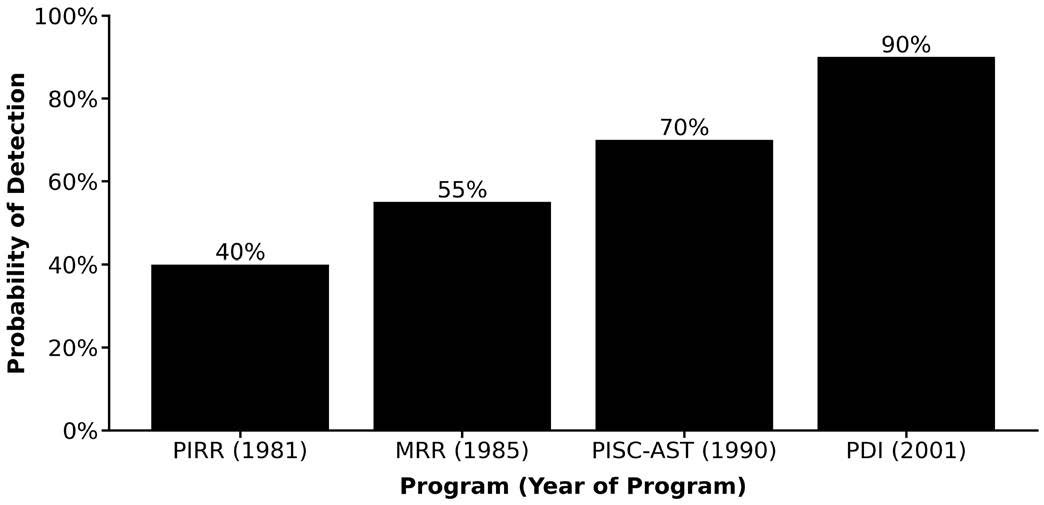
Figure 4: POD improvement versus program and the year each program was performed. PIRR: Piping Inspection Round Robbin, MRR: Mini Round Robin, PISC-AST: Program for the Inspection of Steel Components – Austenitic Steel Testing, PDI: Performance Demonstration Initiative.
By prioritizing measurable proficiency over prescriptive compliance, the industry has successfully reduced exam uncertainty, lowered financial risks, and established the safety foundation necessary for nuclear plant life extensions and future generation growth.
EPRI’s Approach to Non-Nuclear NDE Proficiency Assessment
Initiated in 2012, the EPRI NDE Proficiency Assessment Program provides a performance-based methodology for evaluating technician competency within the thermal generation fleet. The program currently focuses on the application of ultrasonic testing (UT) to common high-energy piping or boiler tube features and flaws, including butt welds, large diameter girth welds, and longitudinal seam welds.
Although the program does not focus on NDE theory or the participants’ training pedigree, it is grounded in hands-on practice and blind performance demonstrations using representative mockups and provider-based procedures. Key components include the incorporation of realistic mockup specimens, procedural validation, and standardized evaluation metrics. With respect to the test specimens, these incorporate natural and manufactured flaws, including cracking, lack of fusion, porosity, and creep damage. The procedural validation includes an EPRI review of the utility or service provider procedures and compares these with the essential variables and scope settings to establish a repeatable framework for the assessment expected to be applied in the field. Lastly, candidates are assessed on four critical criteria, including:
- Detection: Identifying all crack-like flaws.
- Characterization: Accurately identifying the type of flaw.
- Positioning: Locating flaws within tight tolerances.
- Discrimination: Minimizing "false calls."
To support high-fidelity fitness-for-service assessments, the EPRI program mandates stringent accuracy tolerances that often exceed traditional code minimum requirements. The program has successfully established a measurable benchmark for NDE quality, showing a significant upward trend for participants over the last decade, with initial pass rates increasing from 20% in 2011 to 70% in 2024. Five-year renewal assessments currently maintain a 100% pass rate, indicating that proficiency is sustained through continuous improvement. To date, this program has assessed 208 practitioners, a far fraction of those using similar PAUT procedures across the thermal fleet.
Conclusions
While NDE is an important part of an integrated life management strategy, not all regard this service as one that has a direct implication on the safety and reliability of high-temperature systems. The universal sourcing of NDE services on a cost basis places a diametrically opposing view to an informed and integrated life management strategy. Given the industry’s race-to-the-bottom in all aspects of life management, it is strongly recommended that proficiency be mandated for post-construction NDE activities.
The overall needs may range from basic documentation to thickness measurements using ultrasonic thickness gages to more sophisticated PAUT techniques to identify volumetric indications and/or evidence for inservice damage development. With the complexity of the techniques commonly used across industry to disposition component health, it is apparent that inservice examination activities and practitioners desperately need mandated proficiency program(s) to ensure that the generated results meet the intended need, e.g., to disposition the health of a feature or component and/or to reduce the uncertainty in future operation for a given system deemed to be at-risk to service-related damage development.
Future articles will provide information regarding the best practices of NDE proficiency programs, with statistics that show the improvements noted through the development and execution of a rigorous program and outline what such a program needs to include to reduce the risk of wasted O&M budgets.
REFERENCES
- Integrated Life Management of Grade 91 Steel Components: A Summary of Research Supporting the Electric Power Research Institute’s Well-Engineered Approach. EPRI, Palo Alto, CA: 2018. 3002012262.
- An Informed Perspective on the Adoption of Comprehensive Fitness-for-Service in an Integrated Life Management Strategy. EPRI, Palo Alto, CA: 2021. 3002020435.
- J. A. Siefert, I. J. Perrin, and T. Sambor. “Emerging Issues in the Power Generation Industry.” NBBI Bulletin 80 (3), Fall 2025, pp. 8 to 11.
- “Generation Industry Alert: Seamless Tee Intersections.” Accessed December 2025: <https://publicdownload.epri.com/PublicAttachmentDownload.svc/AttachmentId=83193>
- Integrated Life Management of Tee Intersections in High Temperature High Energy Piping Systems. EPRI, Palo Alto, CA: 2022. 3002025353.
- Nondestructive Examination of Capital Power Grade 91 Welds. EPRI, Palo Alto, CA: 2017. 3002011931.
- National Board Inspection Code, Part 2, Inspection. The National Board of Boiler and Pressure Vessel Inspectors, U.S.: 2023.
- ASME Section V Nondestructive Examination. The American Society of Mechanical Engineers, Little Falls, NJ: 2025.
- ASME B31.1: Power Piping. The American Society of Mechanical Engineers, Little Falls, NJ: 2024.
- NUREG/CR-4882, PNL-6179 R5: Qualification Process for Ultrasonic Testing in Nuclear Inservice Inspection Applications.
- EPRI Proposal for NDE Performance Demonstration Program for Reactor Pressure Vessel Welds
- NUREG/CR-7165, PNNL-19014, Rev. 2 - The Technical Basis Supporting ASME Code, Section XI, Appendix VIII: Performance Demonstration for Ultrasonic Examination Systems