While most of the devices tested at the National Board Pressure Relief Laboratory (PRL) successfully meet all testing requirements, some unfortunately fail.
When these failures occur, we are often asked to explain how and why the device failed. Determining the root cause of the failure is the applicant’s responsibility, but we do try to give as much information as possible to help customers troubleshoot issues.
Here’s a breakdown of the different failure modes we see at the laboratory, with some necessary background information and potential causes of the failure.
Set Pressure Failure
Set pressure failure is the most commonly observed type at the PRL. Set pressure issues make up nearly 50% of the failures, as shown below in Figure 1, which is a summary of test failure rates since the lab’s Pingue Drive location opened in May 1991. Set pressure failure occurs any time a valve’s measured set pressure is outside of the American Society of Mechanical Engineers Boiler and Pressure Vessel Code specified set pressure tolerance and is the same whether the valve opens above or below set pressure tolerance. Table 1 lists set pressure tolerances by ASME Code section.
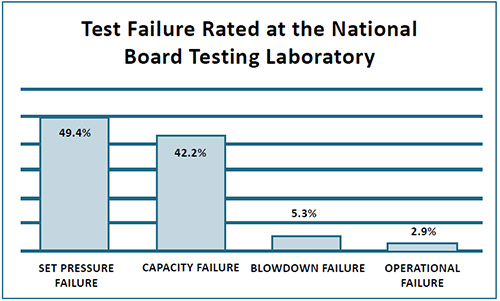
Figure 1: Test failure rates at the NBTL since May 1991
Per ASME PTC-25 requirements, each reclosing pressure relief device is cycled a minimum of three times, and the average of the three readings is used as the device’s set pressure. If the set pressure falls outside tolerance, additional readings may be taken, and a post-test calibration check will be performed on the test gage to ensure that the readings taken are accurate.
| Set Pressure Tolerance |
| Code Section (Designator) |
Tolerance |
| V (<70 psi) |
+/- 2 psi |
| V (70 psi - 300 psi) |
+/- 3% |
| V (301 psi - 1000 psi) |
+/- 10 psi |
| V (>1000 psi) |
+/- 1% |
| UV (<70 psi) |
+/- 2 psi |
| UV (>70 psi) |
+/- 3% |
| UV (Fire Protection) |
+/- 10% |
| UD (<40 psi) |
+/- 2 psi |
| UD (>40 psi) |
+/- 5% |
| HV (15 psi LP Boiler) |
+/- 2 psi |
| HV (<60 psi, Hot Water Heating) |
+/- 3 psi |
| HV (>60 psi, Hot Water Heating) |
+/- 5% |
| HV (T&P Valves) |
+/- 5% |
By definition, non-reclosing devices have only one cycle of increasing inlet pressure to meet the set pressure tolerance. If a non-reclosing device fails to open within the set pressure tolerance, the test gage will be checked for accuracy.
Another exception to the rule of three cycles is if a valve does not exhibit an opening characteristic of any kind, the test may be terminated once the inlet pressure on the device reaches a point at which it may become unsafe to continue increasing. This type of failure would also be classified as a set pressure failure.
Set pressure failures can stem from incorrect test gage mounting, neglecting to account for pressure due to static head pressure or water leg, or uncalibrated or inaccurate pressure gages. Insufficiently sized test equipment can also lead to issues with set pressure measurements at the applicant’s shop, as the limited volume of the test stand may not allow the device’s operation to be accurately tested.
Capacity Failure
The second most observed type, making up approximately 42% of failures, is capacity failure.
During laboratory testing, after successfully completing performance testing and establishing set pressure, devices are tested for relieving capacity at code specified overpressure (see Table 2). When a device fails to meet or exceed the required relieving capacity, it is classified as a capacity failure.
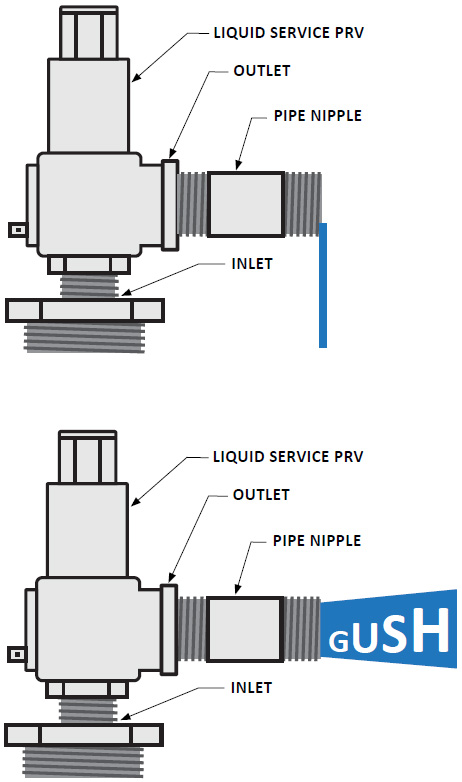
Figure 2: Set pressure vs. Full opening pressure for a liquid service valve.
A device’s ability to meet or exceed the stamped or rated relieving capacity is crucial to the safety of the equipment that the device would be protecting in service. In an overpressure scenario, the device must not only open at the required pressure but also relieve enough capacity to ensure that the pressure does not continue to increase. A device that only partially opens or does not relieve enough capacity to prevent further pressure increase can still lead to a disaster.
A capacity failure can occur in various ways. The first is that the device opens enough to measure a flow rate, but the flow rate is less than the rated relieving capacity. This type of failure can be caused by incorrect setting of adjustments or internal alignment issues that cause binding within the device. When this type of failure occurs, the device’s spindle lift will be measured, if possible. If the device’s spindle lift can’t be measured or the measurement does not indicate a partial opening, the flow meter used will be verified for accuracy.
Another type of capacity failure is when the device meets set pressure tolerance but never opens enough to measure a flow rate. This is commonly seen in liquid service valves, where the set pressure is often defined as first steady stream.
First steady stream refers to when the liquid discharged from the valve forms a vertical stream about as thick as a pencil. If the valve is operating correctly, it will continue to open from this point and exhibit a “pop” or “gush” when it reaches its fully open position. Figure 2 shows an example of set pressure and full opening on a liquid valve. If the valve’s adjusting ring is set incorrectly, the wrong spring has been installed, or there are internal alignment issues, the valve may not fully open within code specified overpressure. Low-volume test stands can also make it impossible to verify the full opening pressure in the shop.
Incorrectly stamped nameplate capacity can also be a cause for capacity failure. When a pressure relief device manufacturer, assembler, or VR organization applies the ASME Code symbol, NB, or VR stamp to a device’s nameplate, they are taking responsibility for the accuracy of the information on the nameplate.
If put into service, a device with an incorrect stamped capacity can be extremely dangerous. The user is counting on the device to meet its stamped relieving capacity in an overpressure condition. If that stamped capacity is not accurate, the device cannot be relied upon. Even if it is operating perfectly, an undersized device can never fully relieve an overpressure scenario that requires more capacity than it is physically capable of providing.
Blowdown Failure
Approximately 5% of failures that occur are blowdown failures.
Blowdown is the difference between a device’s opening and reclosing pressure. ASME Code has specific blowdown requirements for V- and HV- (15 psi low-pressure boiler) designated boiler safety valves. For V-designated valves, blowdown is never permitted to be less than 2 psi or 2% of the valve’s set pressure, whichever is greater. This is due to safety concerns with short blowdown combined with the V-designated valve’s lower overpressure inducing chatter or the rapid opening and slamming shut of the valve. If a V-designated valve has blowdown lower than the code required minimum, it is considered a blowdown failure.
For HV-designated valves for service on 15 psi low-pressure boilers, blowdown is limited to 2-4 psi. Blowdown outside of this band is considered a failure. Blowdown failures typically occur due to incorrect settings of adjusting rings. As with other failure types, insufficient test stand volume can prevent an accurate demonstration of a valve’s operation.
Operational Failure
A less common type of failure, but one that always raises questions, is operational failure.
While any failure could theoretically be considered an operational failure, this is the term applied to issues with a device’s operation that don’t fit into the other categories. Operational failures make up only about 3% of the total failures, and though they are infrequent, they do need some explanation.
One of the main types of operational failures is when a reclosing pressure relief device does not reclose at any point during testing. This can occur due to internal alignment issues, failure of the seat, or some other mechanical impingement of the device. One easily avoidable issue that can cause this is for the lifting nut to be left loose on a valve’s spindle. During overpressure, vibration induced in the valve’s internal components causes the nut to thread down the spindle until it contacts the top of the lifting lever. Once this occurs, the valve can no longer reclose.
Chatter, excessive flutter, or device instability can also be causes for a test to be considered an operational failure when they make it impossible to fully test set pressure, relieving capacity, or both.