 The passion of those who preserve and operate historical boilers is matched only by the commitment of those ensuring their safety.
Steam traction engines were instrumental in shaping the industrialized world from the mid-19th to early 20th centuries, powering the growth of agriculture, transportation, and industry. Today, enthusiasts work to keep these engines of a bygone era not just as museum pieces but as living artifacts that can still fire up and demonstrate the power of steam to the public. However, with this passion comes the critical responsibility of maintaining the safe operation of these engines.
This edition of the BULLETIN delves into the enduring popularity of historical engines and the dedication of those who preserve this history while safeguarding the equipment’s future. Equally important is the role of The National Board of Boiler and Pressure Vessel Inspectors (NBBI) in maintaining the safety and integrity of historical boilers.
Historical boilers, especially steam engines, are central to threshing shows, where they recreate the farming techniques widely used during that era. These shows are held throughout the country but are particularly popular in the Midwest.
History
Historical boilers, also known as hobby boilers, are steam boilers of riveted construction preserved, restored, or maintained primarily for educational, demonstration, or historical purposes. Steam locomotives and steam cars can also be considered historical boilers.
Thomas Aveling developed the first practical steam engine for agricultural use in 1859. His design involved mounting a portable steam engine on wheels, allowing it to be towed to various locations. Two years later, Aveling built a self-propelled version, effectively creating the first steam traction engine.
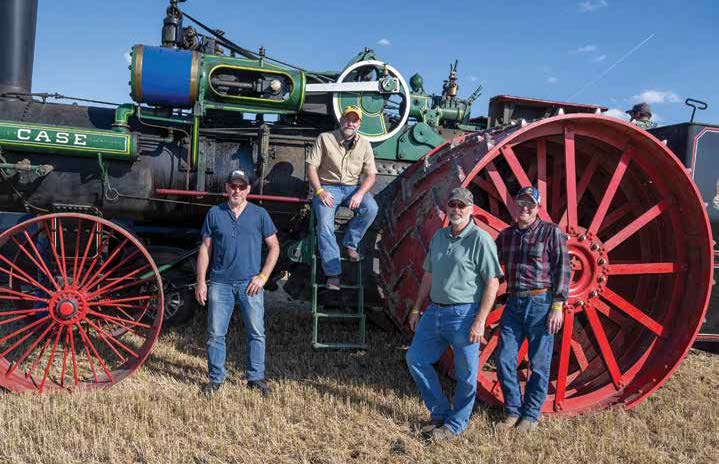
NBBI members Aaron Lorimor (South Dakota chief), Bob Bunte (Iowa chief), Howard Berny (Minnesota chief), and Trevor Seime (North Dakota chief) are shown with Kory Anderson's 150 HP Case steam traction engine in Andover, South Dakota. Seime is the chair of the NBBI's Task Group Historical Boilers.
While the engines were popular for their agricultural efficiency, they also came with significant risks. Before standardized construction and inspection codes were established, boiler explosions were all too common, often resulting in loss of life.
Formalized inspection programs were relatively rare before 1881. The lack of uniform construction standards and operator training contributed to the risks. A turning point came in 1914 with the publication of the first edition of the American Society of Mechanical Engineering Boiler and Pressure Vessel Code (ASME BPVC), which provided the first comprehensive set of standards for the design, construction, and inspection of boilers, including those used in steam traction engines. This helped reduce the frequency of explosions, but the heyday of these engines was nearing an end.
Their popularity declined in the 1920s and 1930s as internal combustion engines and tractors became more widespread, offering the next level of efficiency and ease of use.
That means most engines still around are over 100 years old.
“Historical boilers are a whole different animal,” said Joel Amato, NBBI executive director and former chief boiler inspector for Minnesota who’s done his share of historical boiler inspections. “Their construction and operation are unlike anything you’d see in modern boilers. They’re more akin to locomotive boilers, but even those have advanced over the years. These historical engines were built for a different time, with different standards, and we have to respect that when inspecting them.”
Uniqueness
Historical boilers are distinct in construction and operation, setting them apart from modern systems. Unlike contemporary boilers, historical boilers were built using rivets to join steel or iron plates, a method that was standard during their time. Today, “replacement boilers” can be riveted, a combination of riveted and welded, or fully welded.
A key feature was the steam dome, which served as a reservoir for steam to collect, allowing for more efficient steam release and contributing to the boiler’s performance.
These boilers were constructed with either wet or dry bottoms.
In wet bottom boilers, water surrounds the firebox, absorbing more heat and increasing overall efficiency by transferring more heat into the water to generate steam. This design often led to greater durability due to lower stress on the firebox metal, but these also are more difficult to clean and maintain.
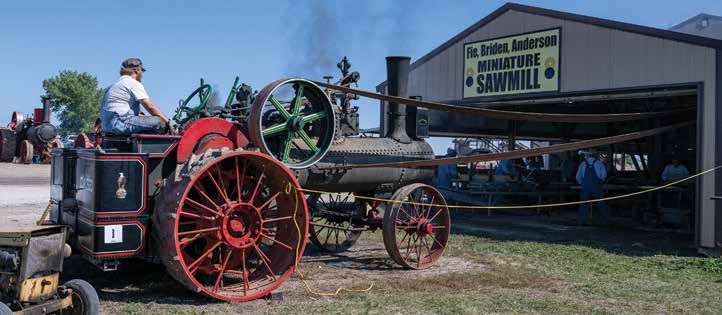
Justin Johnson runs a steam engine at the sawmill during the James Valley Threshing Show on September 6 in Andover, South Dakota. Historical boilers are unique in construction and operation. Many jurisdictions require inspections with several doing so on a yearly basis.
In dry bottom boilers, the firebox consists of four water legs that terminate at the bottom of the boiler, which can result in higher temperatures and potentially more wear on the metal over time. However, dry bottom designs allowed for faster steam production, making them more efficient in certain applications.
The choice between these designs depended on the specific needs of the application, balancing efficiency with durability for long-term use.
The operation of historical boilers requires manual labor and hands-on management. Operators manually fire the boilers, maintain the fuel supply (usually coal, wood, or straw), adjust the draft, and monitor the water level using feedwater pumps and injectors. A throttle regulates steam output, while a governor controls the speed of the steam engine by adjusting the steam entering the engine. Beyond signaling work or warnings, the whistle also serves as an informal pressure check. A clear, strong whistle indicates sufficient steam pressure. Boiler startup and shutdown are gradual processes to prevent wear and stress on the system.
Preparing a historical boiler for inspection also is a meticulous process. This includes cooling and depressurizing the system, draining the water, cleaning both the interior and exterior, inspecting tubes, checking safety devices, valves, stays, rivets, and seams, and performing a hydrostatic test to check for leaks or weaknesses.
Because historical boilers are often used only seasonally, mainly in summer and early fall, proper storage is crucial. This involves visual inspections of the interior and exterior, testing stay bolts, braces, and safety valves, inspecting the fire grate, ash pan, pressure gages, steam lines, blowdown and drain valves, fusible plugs, and checking for internal scale or corrosion. Proper maintenance during storage ensures the boiler’s longevity and operational readiness for future use.
The NBIC
The National Board Inspection Code (NBIC) was first published in 1946, and the last year it addressed riveted boilers was 1971. Historical boilers first got their own section in the 1998 (2000 Addenda) NBIC under non-mandatory Appendix C, which became Supplement 2 for the 2007 Edition. Now, they are addressed in Supplement 2 of both NBIC, Part 2, Inspection, and Part 3, Repairs and Alterations.
NBBI member jurisdictions are not required to adopt the NBIC. Jurisdictions that adopt the NBIC may do so in whole or in part, and they may also enforce additional rules or modifications specific to their region.
As much as things had improved, we couldn’t escape our past as on July 29, 2001, five people were killed and several others injured when a 110-horsepower Case steam traction engine exploded in Medina, Ohio. The incident occurred while the engine was making its way to the Medina County Fairgrounds, which was scheduled to start the next day.
Task Group Formed
Tom Dillon said he started attending NBIC committee meetings in 2004 when historical boilers were discussed in the Main Committee, Subcommittee, and Subgroup.
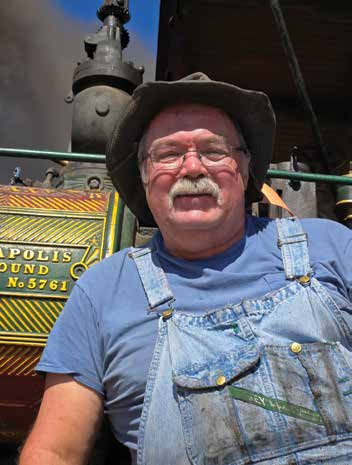
Tom Dillion is one of four original
members still on the NBIC Task
Group Historical Boilers.
Dillon, a 35-year veteran of the boiler industry, currently serves as vice chair of the task group, having previously held the position of chair. A former president of the Minnesota Steam Engine Association, Dillon also owns a 1907 Minneapolis 45 HP single tandem compound engine and has begun the restoration of a 12 HP Birdsall.
“After Medina, the National Board decided it had to do something,” Dillon said. “Now we’ve pretty much established inspection and repair standards for historical boilers.”
In 2009, the Task Group Historical Boilers was established. Dillon is one of four original members still active with the group. Frank Johnson, Dennis Rupert, and Mike Wahl are the others.
Eight of the 15 members of the task group are steam engine owners, according to Dillon.
“They’re a specialty boiler,” Amato said. “They have a unique locomotive-style design; they don’t have automatic controls. They needed to be separated into its own task group.”
Trevor Seime, chief boiler inspector for North Dakota and an at-large member of NBBI’s Board of Trustees, has been on the task group for four years, including the last three as chair.
“I’ve been attending steam shows since I was 10 years old and inspecting them since 2006, so (joining the task group) was a natural fit for me.”
The goal of the task group, according to Seime, is to ensure the safe operation of these engines by developing and maintaining the supplements in NBIC Part 2 and Part 3.
Inspections
Following the initial inspection of the historical boiler, the NBIC requires yearly inspection following a three-year cycle of inservice, visual, and hydrostatic pressure testing. After the third year, the cycle repeats. In addition, a UT (ultrasonic testing) inspection for thickness is required every five years with a few exceptions.
Jurisdictions that have adopted the NBIC have the right to alter the inspection intervals.
Given the unique nature of historical boilers, specialized training is essential.
“The average inspector doesn’t know what to look for or what they’re looking at,” Seime said. “Getting familiar with these boilers takes a lot of training.”
One way is learning on-site from inspectors who have experience with such inspections.
“I and the other inspector who has been here for a long time train new inspectors through the summer as we inspect traction engines, and we do it again in subsequent summers until they’re comfortable and they know how to properly inspect them,” Seime said.
Seime also emphasized the importance of schools such as the University of Rollag College of Steam Traction Engineering, held annually in Rollag, Minnesota. The two-and-a-half-day course offers both classroom and hands-on instruction, which is crucial for developing skills and building relationships with boiler owners.
North Dakota has four inspectors, and two, including Seime, have taken the course. He said he plans to send the other inspectors over the next two sessions.
Howard Berny, chief inspector of Minnesota, has nine inspectors and seven have attended steam school. He also is a graduate of the school.
“I encourage them all to attend. It is beneficial for them to see the engines in operating status, as opposed to the cold iron state they are in when we perform our hydrostatic or UT inspections,” said Berny, who’s been chief inspector for three years.
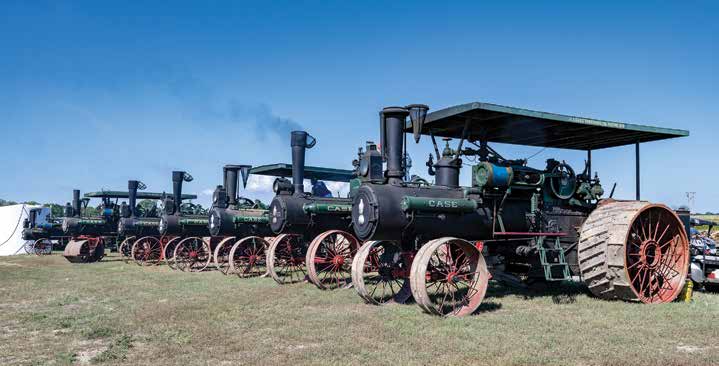
A line of Case steam engines prepares for the parade at the James Valley Threshing Show on September 6 in Andover, South Dakota. The National Board's Training Department recently released the online course, Inspection of Historical Boilers.
“If they can’t attend the steam school, I try to pair them with a senior inspector for their first year of historical inspections. I also perform ride-along visits to help fill in any gaps in their inspection techniques or reporting. Additionally, it is a departmental policy to send two inspectors when performing UT examinations to prevent miscommunication of the readings.”
South Dakota chief inspector Aaron Lorimor expects to attend steam school in 2025 along with his other inspector.
Amato, a former chair of the Task Group Historical Boilers, also said attending a steam school is essential.
“You can’t expect an inspector to know how to handle every type of boiler without proper training,” he said. “And the school is part of that training.”
“There are things about these old boilers that a new inspector is not necessarily going to know,” said Dr. Gerald Parker, Rollag steam school’s co-founder. “But they listen and learn, and we appreciate that.”
At Seime’s urging, the NBBI introduced the online course, Inspection of Historical Boilers, to enhance inspector training to enhance inspector training. This course, designed to supplement existing education, was launched this fall.
“This is another way to help train inspectors on the proper way to inspect these and try to improve the inspection process for both the inspectors and the owner/operators,” he said.
While many states have regulations, they vary significantly. For instance, Connecticut, Nebraska, North Carolina, North Dakota, Pennsylvania, and Wisconsin require annual inspections. In contrast, Illinois and Minnesota mandate inspections every two years, and Ohio and South Dakota every three years.
Some states, like Iowa, don’t mandate inspections for historical boilers but will perform them upon request by the owner or event organizers. Additionally, while Iowa doesn’t require formal education for operating historical boilers, Bob Bunte, the state’s chief inspector, plans to attend the Rollag steam school and is “looking for other educational opportunities.”
However, the absence of standardized regulations across jurisdictions continues to pose challenges. When steam engines are transported across state lines for threshers reunions, they often require re-inspection if their last inspection was conducted over a year ago. This inconsistency creates logistical issues.
While North Dakota, Minnesota, and South Dakota have reciprocity for historical boiler inspections – allowing an inspection in one state to be recognized by the others – Dillon envisions a future where uniform regulations are adopted by all jurisdictions, ensuring the safety and preservation of this cherished legacy for generations to come.
“That’s great,” Dillon said of the reciprocity among states. “But I just hope, in my lifetime, I see all jurisdictions following the same rules.”