When dealing with valves in steam service, a common cause of failure is steam cutting in the valve’s seating surfaces. This applies to shutoff, control, and pressure relief valves alike. To avoid these failures, it is important to understand what steam cutting is, how it occurs, and what steps can be taken to prevent it.
Steam cutting is the removal of material caused by the flow of steam, typically at high velocity through a small opening. Steam, especially superheated steam, is very aggressive and can rapidly eat away at material in its path. This is a concern in steam piping when any type of leak develops. The metal pipe wall will eventually be worn away by the high-velocity steam moving through the hole, and what started as a pinhole small enough to be nearly invisible will rapidly become a very large opening in the pipe wall. The same process can happen inside of valves. Every valve is held shut by contact at the seat. A smooth surface finish, along with sufficient seating force, creates a seal and prevents leakage through the valve. Leakage can begin due to several factors, however, and any leakage that starts will allow for the flow of steam past the seat and can begin the steam cutting process.
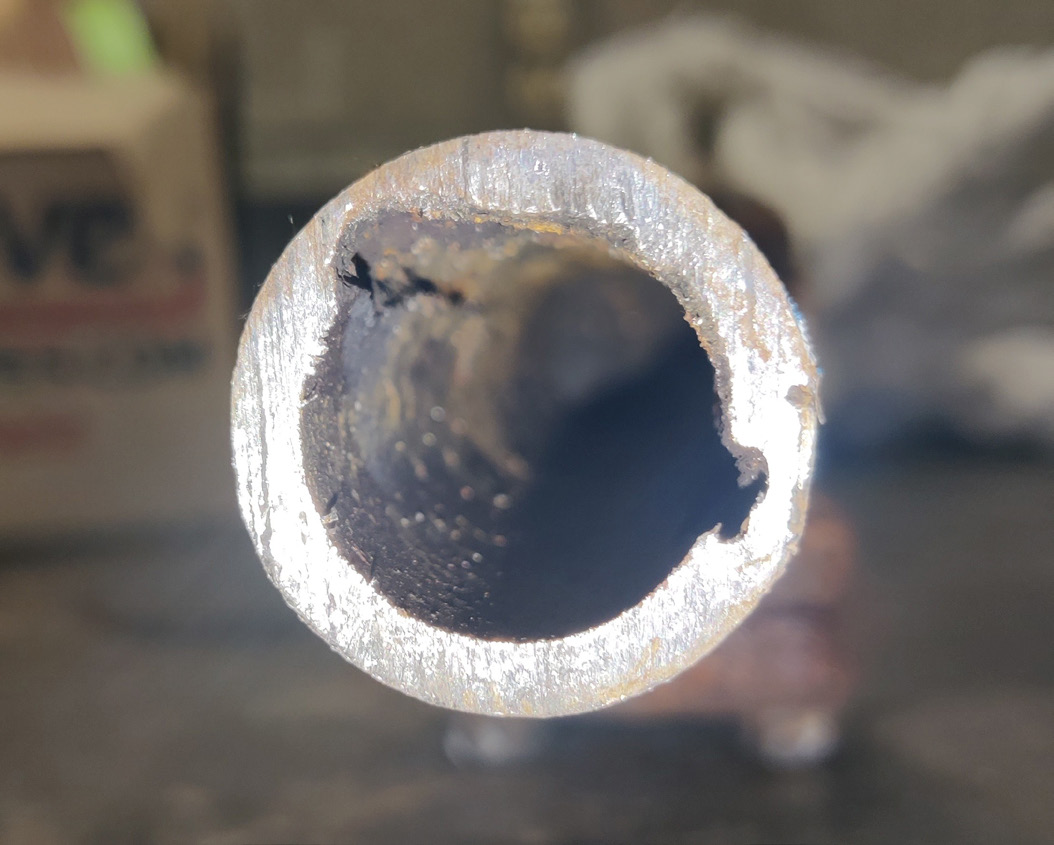
Damage to pipe wall
One way this can begin is when the seating surface of a valve sustains some small damage, such as a nick or scratch. While the initial damage can be very small, if it opens a pathway for steam to leak through, it can lead to steam cutting and, eventually, damage severe enough that valve parts or even the whole valve will need to be completely replaced. For safety valves, chatter poses a very serious problem for many reasons, and seat damage is one of them. If a valve’s performance is adversely affected by poor setting or adjustment, improper installation, or if the valve is oversized for its application, the valve can rapidly open and slam closed during operation. This is referred to as chatter, and it should be obvious how this can quickly lead to damage to the seating surface. Once the damage occurs and a leak path is created, the seats are at risk for steam cutting. Proper valve adjusting, setting, and testing, as well as correct sizing and installation, are critical for preventing chatter and eventual seat damage.
Uneven seating or sealing, as well as incomplete closure of steam valves, can also lead to steam cutting. When the sealing of a steam valve’s seat is not uniform, it allows for the possibility of pressure to overcome the uneven seating forces and create a small leak. Just as in the case where seat damage begins the steam-cutting process, the flow of steam through a small opening begins to remove material from the valve. As more material is removed, the leak becomes more significant, and the process is exacerbated. This is also referred to as wire drawing.
An incomplete closure has the same effect. When steam is allowed to flow through the drastically reduced area of the valve that has been incompletely closed, the flow of steam will wear away the material in the flow path. After time, enough material will be removed that sealing or complete closure will be impossible. Dirt or debris that gets trapped in the valve seat will lead to incomplete closure, and if the debris is not removed from the seat and leakage is allowed to continue, steam cutting will begin to occur. Strainers can help capture rust, dirt, or scale particles that may be in the flow, but periodic inspections and checks for leaks are also important.
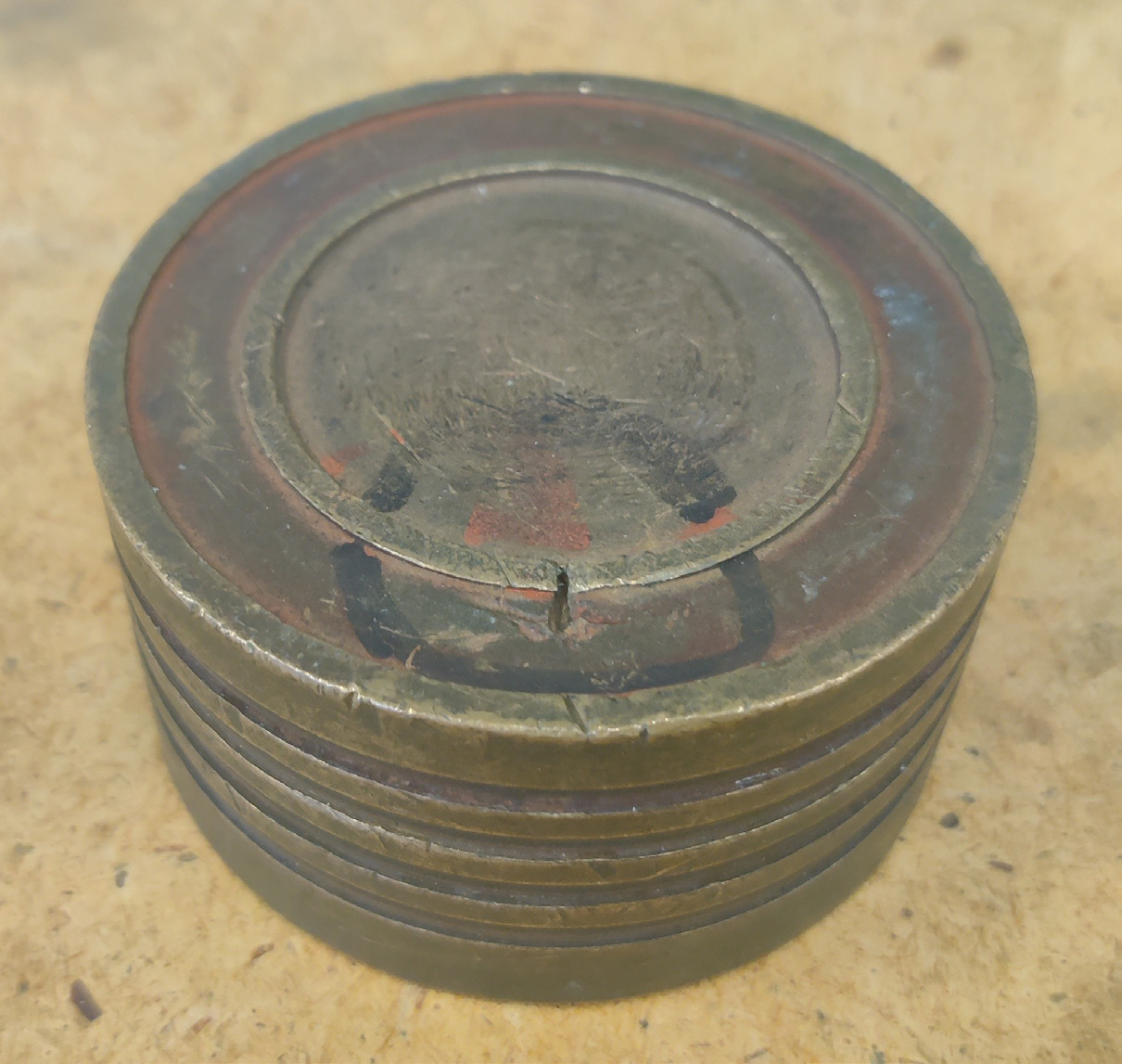
Steam cut pressure relief valve disc
Another common operator error that can lead to leaks and eventual steam cutting is the over-tightening of valves on closure. If a valve is overtightened, it can lead to internal damage of the seat or other components that will prevent complete closures in the future and allow for leakage.
For pressure relief valves, uneven seating will also lead to steam cutting. This is a reason why proper internal alignment and equal internal force distribution are so important. The internal alignment of a safety valve can be affected by many factors, such as excess clearances in guiding, a bent spindle, or spring deformation. When the valve’s seat is misaligned, the likelihood of a leak developing is very high. A permanently deformed spring will cause uneven application of forces in the valve’s seating surface, which can also lead to leakage. In both cases, once leakage starts, so does the risk of steam cutting of the seat. Internal alignment and uniform internal force distribution can be ensured by proper critical inspection during a repair. Spindle concentricity, spring squareness and coil spacing, and critical dimension checks are all key to preventing the development of leakage.
When damage does occur, addressing it quickly is crucial. Small damage to seats may be repairable. If cutting is caught early enough and the cut or groove is not too deep, and if the valve’s internal components are designed with excess material to allow for machining and restoration of dimensions, it could be possible to restore the seating surface by machining and lapping. While machining can restore the necessary dimensions and remove large defects, lapping of valve seats is necessary to remove very small defects and ensure a tight seal. Any time a repair is performed, the valve must be checked for leakage, and proper lapping of the seats is critical to ensure the valve meets the acceptance criteria.
If the damage to the components is too significant, repair will be impossible. Steam cut internal parts will need to be scrapped and replaced. Even if parts are replaced, it will still be necessary to lap the seats and verify the seat integrity by performing a leak test. For pressure relief valves, seat leak testing is required by code for both new construction and repaired valves. Taking the time to properly lap seats and ensure that the valve holds tight goes beyond just meeting a code requirement, though. If the valve does not seal properly, it can quickly lead to more problems. Leakage and steam cutting will quickly put the valve back on the repair bench, which can be costly not just in terms of parts, labor, and equipment cost, but also in lost time.
Leaks from steam cutting can affect downstream equipment as well. Even small leaks can lead to the accumulation of condensate in downstream piping that should be isolated, and when the condensate sits in the piping, it can cause corrosion. This will weaken the pipe walls and increase the likelihood of a steam leak in the piping when steam flow is opened to that part of the system. Ensuring that valves maintain their seal and do not leak is necessary to reduce the risk of steam cutting and the potential for more problems and expensive repairs down the line.