94th General Meeting Presentation
“In Defense of Quality”
Benjamin McKay and Stephen Kapnis
The following remarks were delivered at the General Session of the 94th General Meeting on May 11, 2026. It has been edited for content and phrasing.
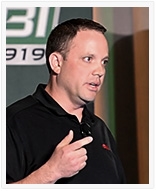 Benjamin McKay
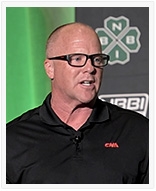 Stephen Kapnis
INTRODUCTION: Benjamin McKay, consulting director of risk control, and Stephen Kapnis, senior risk control consultant, both of CNA Insurance, have extensive experience in equipment breakdown risk management, loss prevention, and technical risk engineering.
McKay, who has more than 14 years of experience in equipment breakdown and property and casualty risk management, leads CNA’s risk control consulting operations. He has also been actively involved in industry standards development through committee work with the National Board, ASME, and state code authorities.
Kapnis has been with CNA since 2007, and his role also includes equipment breakdown risk management and infrared thermography. His background includes work in natural gas systems, industrial valve applications, and marine steam systems, with earlier service as a U.S. Coast Guard licensed engineer in the U.S Merchant Marine.
Their slide presentation can be found here.
MR. McKAY: Today, I want to speak about our quality journey. I say “journey” because it’s never-ending and continuously evolving with our approach. I’m going to share an approach, which is really one of many possible ways that what we have built has really helped us navigate this ever-changing compliance landscape. We’ll also walk through some of the key components of our quality program and how we have defined, managed, and sustained quality.
MR. KAPNIS: Thanks, Ben. For today’s presentation, Ben and I met with Ed Kawa (Massachusetts chief), Tom Clark (Oregon chief), and John Burpee (former Maine chief). And the purpose was to discuss quality, to get their insight after years of experience. On that note, I’d like to thank Ed, Tom and John. As Ben said, our presentation provides our approach to quality. We view our scenic quality program as a kind of living classroom – one that helps us learn, one that helps us adapt, and one that always helps us improve.
This slide here was taken from Ed. “Your inspection should mean something to you.” Years ago, Ed shared this quote with his team. And while we were talking, I asked him if we could steal it. Of course, he said, yes. This statement really captures the essence of what we’re trying to do through our inspection program. These words reinforce personal accountability and professional pride during each inspection.
As the saying goes, implementation is the form of flattery. Our goal is to integrate this quote into our program. Each and every inspection conducted by our team should have value.
MR. McKAY: It’s important to note that one of our top priorities is ensuring the safety of our inspectors. That’s rooted in a deep safety culture that we’ve been listening to all day today.
Two things that come to mind are maintaining a technical aptitude and disciplined inspection practices. We need a road to get there. And part of that road foundation is our NB-369 quality manual, but second to that are the codes and standards we use every day. And at the beginning of the National Board Inspection Code (NBIC) Part 2, Inspection, inside the Scope, it states, “Our purpose is promoting greater safety to life and property by secure and concerned action and maintain uniformity in post-construction activities.”
It’s a little long-winded. But our focus is on uniformity and quality, and how we strive to have a standardized, repeatable, defensible process. It’s not just Steve or me; this is a companywide effort built on years of trial and error and continuous improvement. Our findings have supported our efforts, and hopefully, today, we can have some thoughts on how we can improve quality across the in-service industry.
MR. KAPNIS: The sources that Ben just mentioned, along with other applicable NBIC standards and jurisdictions of codes, serve as a roadmap, right? One that helps us navigate this ever-changing compliance landscape. Chief Clark mentioned some other aspects he uses that we also incorporate. These include ongoing training, which consists of NBIC training, internal procedure training, code training, code reviews, new technologies, etc.
It’s a constant living classroom of what we do. Ride-alongs are critical to our philosophy. I would almost say it’s the most important. Inspector ride-alongs show a firsthand view of our inspector’s inspection procedure. This identifies their strengths and opportunities for improvement. Exposure to new equipment through equipment research, through teaming with new equipment. We make sure that when we do inspect, they’re operating safely, operating parameters are correct, and our inspection processes are proper.
Our management team has a 24/7 call-when-in-need approach. Obviously, safety is paramount, but being available to answer a field question in real time is critical to our philosophy. It’s really part of our CNA team culture.
Our quality program functions like a professional development ladder where each step requires time, experience, and growth. A journey begins with our recruitment process. Our noncommissioned inspectors complete the NB-380 program. This stage lays the foundation for what our inspection team will be.
Obviously, we all want candidates with strong technical aptitude, educational experience, and relevant field experience. We also use key intangibles, such as ethics, accountability, independent critical thinking, and professionalism. These qualities basically shape the core of our inspection team.
MR. McKAY: I have one comment on recruitment, because it’s the first step on our ladder and one of the most important steps. I remember being a newer in-service inspector in the field and having an owner-operator tell me, “Hey, the last inspector didn’t tell me that.”
Sometimes this can vary. It displays an intentional lack of diligence. These are real examples of the challenges that our new inspectors will face in the field. A good quality program must have countermeasures in place to weed out poor performance. It starts with recruitment and recruiting the right people and giving them the tools to become successful.
MR. KAPNIS: Balancing positive and negative reinforcement, this rung in the ladder is strategic in our approach. Naturally, it’s comfortable for both the inspector and the reviewer to receive and offer positive feedback.
By contrast, opportunities for improvement require a much more thoughtful and deliberate approach. We handle these conversations very carefully, with awareness of many factors that can influence how we deliver this message. We rely on emotional intelligence as a guiding tool.
For example, before we have a difficult conversation, we consider field experience. Is the inspector a new hire or a seasoned engineer? Both conversations are handled using different coaching styles. Is the inspector overextended? Excessive workload can create stress, distraction, and a decline in performance. What about the employee’s health and lifestyle? Is the inspector in the right frame of mind to have this conversation? And then the inspector’s personality. Make sure you know your team – understand what motivates them and what does not – so that when we have these conversations, they are never robotic. They’re tailored, they’re intentional, and they’re designed for personal growth.
MR. McKAY: The next one on the ladder is the shared ownership portion. The effectiveness of a quality program belongs to all of us, from our inspector-level roles all the way to our senior vice president level. Each of us has a role and a responsibility, because a system without these checks and balances will not deliver the results we expect.
Each of these roles consistently provides feedback. We use this feedback to recalculate and recalibrate our approach as needed, ensuring our program remains strong and effective. And it’s a collaborative effort between all the different roles.
The next is the effectiveness and efficiency curve. This helps us assess whether the quality-control process we use achieves the desired result while making appropriate use of our limited resources. Just because something has always been done a certain way in the past doesn’t make it the best way or the right way. Our goal is to maintain a strong, effective quality-control program and be efficient, sustainable, and aligned with our quality expectations.
At the top are the real-world results. It comes down to cost and exposure. Simply put, the cost of neglect in quality is far greater than any perceived risk or expense associated with maintaining it. By learning from past experiences, assessment prioritizes our quality system, which helps us reduce losses and potential exposures.
Now we’re going to break into some of the mechanics of our quality control program. Our first step is to categorize the five different types of reviews we do at CNA.
The far left one is the technical in-person field review. This review is probably the most common and widely known view because NB-263 has rules for commissioned inspectors; it’s an annual requirement that one in-person field review must be completed.
When we think about the in-person field review, it’s more than an annual requirement. We like to think of it as a quality requirement and an opportunity for training and to help build inspector skill sets, because in the same document, there’s a rule, there’s a requirement that inspectors should be assigned work appropriate for their skill level. We have our technical managers and supervisors leverage in-person field reviews to ensure we’re providing sufficient training and to assess the inspector. And because simply one may not be enough on an annual basis.
When inspectors come across something in the field they’re unfamiliar with or have never seen before, it’s important they know it’s OK to pause, stop, ask for help, and bring a buddy, so nobody should ever feel alone in the field. It’s on us, as technical managers and supervisors, to make sure it is communicated clearly.
MR. KAPNIS: While technical reviews are generally the most common, it’s important to recognize the other four types as essential parts of our program. A couple of examples: Administrative reviews focus on things like workload management, various tasks, and other business-related processes.
Overdue violations and inspections: Through JRS and JOL, we focus on territory management, overdue rates, compliance, violation follow-up, and violation completion.
Desktop reviews basically focus on data entry, timeliness, and other internal procedures.
And letter reviews focus on professionalism and timeliness, and we like to make sure our letters comply with our CNA guidelines.
MR. McKAY: After we categorize our reviews, we need to measure what matters. This means that the inspection itself was performed adequately, that the proper information was obtained, and that it was documented and processed correctly.
To do that, we use our standardized review questions. Basically, these are the checkboxes our reviewers must complete. Completing these review questions will help evaluate the consistency and quality of the inspection itself and the inspector. This chart shows the major categories of questions that we ask at CNA and the percentages each one represents.
And probably by no surprise, safety is the largest category, but next to that is technical identification, which is the core of what we do as in-service inspectors. And this is whether unsafe conditions were properly identified if they were present, safety valves were looked at, nameplates and data plates were reviewed, just as some examples.
MR. KAPNIS: From there, we move on to letter processing. Identifying an issue is only part of the job. What’s equally important is how well and how effectively that information is communicated. Were the findings correct? Were they clearly written? Did they get to the right person at the customer level? We all know it’s possible to find a problem in the field, but if it doesn’t reach the decision maker, that value is lost.
The remaining timeliness, writing quality, editing, documentation, and vendor inspections make up about a quarter of our total data points. In total, we’re talking about 150 quality review questions. Obviously, we don’t go through all of them in every case. That’s simply inefficient, but this slide is basically a snapshot of our quality focus that really helps us drive consistency across our program.
While developing this presentation, we collected data using an in-house tool, and we created a countrywide heat map. This map is in its infancy, but it shows where we collectively focused our quality checks. At the time we conducted these quality checks, we were in the middle of a hiring campaign and hired, I think, 10 military associates across the country. And quality checks focused on these orange hotspots, which were due to logistics, experience, and training.
MR. McKAY: This tool is awesome. Our operations team put this together. As Steve said, it was just a snapshot in time. It was a number of reviews completed. I think about being able to leverage this; we look at those review questions, and to be able to focus and, with the limited resources that we have, be able to use tools like this to visualize quality can set us to that next level when it comes to it. Again, this was a really cool thing to look at – anything with quality.
MR. KAPNIS: Closing the quality loop and providing timely feedback is critical to the success of our program. Again, feedback is part of our team culture. Our feedback loop is multifaceted. The slide shows various key elements we focus on. We offer real-time feedback during the inspection. This is for immediate adjustments for safety, No. 1, and learning opportunities.
Generally, we’ll hold an after-inspection completion meeting and a closeout meeting. These are good because they reinforce the positive actions of our inspectors, and they give us a chance to highlight areas for improvement. Therefore, by combining individual, real-time, and post-inspection feedback, we try to ensure that our inspectors are empowered, encouraged, and set up for continued success.
MR. McKAY: In addition to individual feedback, it also needs to be given at the regional and organizational levels to help improve inspection units. That’s especially true when we’re implementing new technologies and procedures. It’s important to conduct this feedback on new initiatives at this higher level. And whether it’s on a regional or nationwide basis, it’s equally important. Ultimately, effective feedback is rooted in clear communication. We convey our message to our inspectors, and the organization itself ensures that we’re upholding the inspection integrity and the expectations of the inspection process.
For this presentation, we wanted to put together a slide on results. We were a little torn on how we wanted to do it, because in one way, if we put up a bunch of high scores, you’d say that’s easy to do if you’re grading yourself, CNA. But on the other hand, we put up some lower scores; some say, well, CNA is not doing so great in terms of quality, but really, this slide isn’t about the scores themselves; it holds us accountable for the work we do. This accountability exists at the individual, regional, and organizational levels and is crucial to maintaining and improving our quality standards.
We touched on the real-world effectiveness and efficiency curve before. The slide shows an overall increase in quality, a rise in the number of inspections completed annually, and a reduction in average time per inspection. And this boost in efficiency is closely linked to increased accountability, process enhancements, and organizational improvements.
It’s important to note that while we see an overall increase in quality, we do have occasional dips. This exists at the individual level, but it is really at the organizational level. And paraphrasing a quote, kind of came to mind when I was thinking about this, it was from (former U.S. Secretary of Defense) Donald Rumsfeld years ago at a press briefing. He said, "The hardest problems are the ones we don’t yet know exist."
To put it more simply: If we don’t know there’s an issue, then how can we fix it? So strong scores are great, but low scores are areas for opportunity. And we really look for those areas to set us apart and become a better inspection unit.
This quote makes me laugh. It’s been kicked around for a long time. It’s an internal quote by our director, Vinny Scarcella. "The costliest inspection is the inspection that was not completed correctly."
I think about the word costly. It’s evolved over the years. It’s obvious. It’s the property damage or monetary side of it, but I think the cost can be far greater. Somebody is injured or, worse, loses their life. And to kind of piggyback off what Ed told us earlier, if an inspection does matter to you, I’m pretty sure it’s going to matter to somebody else. Protecting people is really the most important thing that we do. That’s rooted in the deep safety culture, as I said before, maintaining technical aptitude, upholding disciplined inspection practices.
MR. KAPNIS: So, what’s next for quality? Where do we go from here? Quality continues to evolve. As people, technology, and expectations evolve, our quality program must evolve with them. Tools support judgment; they do not replace it. Our goal is to leverage technology to improve quality. Systems like JRS and emergent AI tools help us identify trends, improve consistency, and focus reviews where they matter the most. We rely heavily on the ask-an-expert culture.
MR. McKAY: Inspectors should never hesitate to pause, ask questions, and escalate concerns because those early conversations really help prevent any late-stage failures. A clear escalation protects the integrity of the inspection process itself. Inspectors must know when and how to report critical conditions when they’re observed.
And lastly, our inspectors come from incredibly diverse backgrounds. You saw the picture earlier. While we may take a test to earn a commission, we bring a different set of experiences to this job. That’s why, as technical managers and supervisors, our role is so important. It’s on all of us to drive quality to ensure that we’re upholding inspection integrity across every site, every inspection, every time.
MR. KAPNIS: So just on that note, I just want to say thank you from all of us, our CNA leadership, our CNA team, and Ben and me. If you have questions now or later about quality, reach out to any member of our CNA team. We’re all on the same team. Thank you. We appreciate your time.