As we all know, to blave means to bluff; however, many people may not be familiar with the term “BLEVE.”
BLEVE is an acronym for a boiling liquid expanding vapor explosion, which refers to the catastrophic failure of pressure equipment when a pressurized fluid is heated to a high temperature and then allowed to depressurize to a point where the temperature exceeds the boiling point.
When people hear the term “boiling point,” they typically think of 212 degrees Fahrenheit. For water at normal atmospheric conditions at sea level, this is accurate. However, as the pressure of any fluid is changed, its boiling point will change. For example, cooking instructions on some products vary slightly for higher elevations. This is because at elevation, where there is less atmospheric pressure than at sea level, the temperature required to boil water decreases, and likewise cooking times and temperatures will have to be adjusted slightly to account for this.
A liquid’s boiling point can change from day to day in any location with changing weather conditions. For water, a change in barometric pressure of just 0.3 psi changes the boiling point by one degree. This amount of pressure change can easily occur over the course of the day as a weather front moves through an area.
As pressure increases further, the boiling point continues to increase. At 5 psig, the boiling point has been raised 15 degrees to 227. At 50 psig, the boiling point is nearly 300 degrees. By the time pressure reaches 150 psig, which is the maximum allowable working pressure of many residential hot-water heaters, the boiling point has been raised to 366 degrees. This means that water under 150 psi of pressure can be heated to 365 degrees before it starts turning to steam. If that water were somehow immediately exposed to atmospheric pressure, through a crack in the vessel wall, it would instantaneously flash into steam. The water at 365 degrees and atmospheric pressure expands violently and explosively to steam at 365 degrees at nearly 2,900 times the specific volume of the water. This is where the phenomenon of boiling liquid expanding vapor explosion, or BLEVE, comes from.
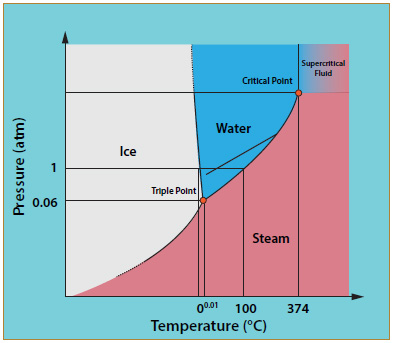
Figure 1: Pressure temperature chart for water
Temperature-and-pressure relief valves, referred to as T&P valves, are designed to relieve based on excess pressure and also temperature. This temperature relief function of a T&P valve is critical to preventing the possibility of a BLEVE incident. These valves are equipped with a probe that contains a wax-like substance that expands with increasing temperature. Once the temperature exceeds a specific limit (usually 210 degrees), the expansion of this substance causes the probe to contact and push up on the valve seat. Once this happens, hot water is discharged out of the valve and cool water will replace it in the tank, bringing the temperature back down to a safe range. By keeping the temperature at any point below atmospheric boiling, the risk of an explosion due to a BLEVE event can be eliminated. Other overpressure conditions can still occur, of course, and these can be relieved by the T&P valve’s pressure relief functionality.
Let’s suppose we have a 50-gallon residential water heater at 150 psi, which is equipped with a T&P valve with a malfunctioning temperature element. Now, let’s suppose that due to the malfunctioning temperature element, the temperature of the water was allowed to increase to 365 degrees, which, as mentioned earlier, is the saturation temperature of water at 150 psi. If the tank were to rupture, approximately 16% of the water would flash to steam. The volume of that water would go from just over one cubic foot of water to over 3,100 cubic feet of steam almost instantaneously. This is the equivalent of going from the size of a small milk crate to filling a 20- by 15 ½- by 10-foot room in the blink of an eye. This type of explosive power could turn the water heater into a missile and level the surrounding structure.
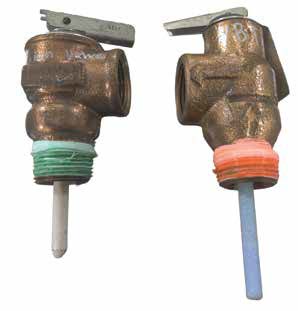
Figure 2: Temperature and pressure (T&P) relief valves
A tragic, real-world example of this can be seen in the water heater explosion that killed six children and one teacher and injured dozens at Star Elementary school in Spencer, Oklahoma, in 1982. A variety of factors contributed to the explosion, including an improperly installed pressure relief valve and the removal of a temperature probe. Due to the removal of the temperature probe, the temperature of the water was not prevented from exceeding boiling temperature. When the initial tank rupture decreased the pressure, the superheated water flashed to steam, rapidly expanding and causing the explosion.
So far, the discussion has been entirely limited to the thermodynamic properties of water and steam. Many other service fluids exist, however, and different fluids will have different thermodynamic properties, such as boiling point and expansion factors. Changes in fluid properties with pressure will need to be evaluated for the fluid that is being utilized. When analyzing overpressure scenarios, BLEVE events must be considered. Depending on the service fluid, the controls, temperature, and pressure limits will have to be adjusted to address the specific properties of that fluid. When multiple fluids undergo a mixing process, the individual properties, as well as the final properties of the mixture, must be evaluated. The possibility exists that one fluid may be at a temperature that is safe from boiling but comes in contact with a fluid with a lower boiling point, causing flashing of the second fluid. An example of this can be seen at home when cooking. When water comes in contact with hot cooking oil or grease, the water immediately flashes to steam and causes the familiar “grease popping,” where hot oil splashes out of the pan and can burn those close by. This is why you don't cook bacon with your shirt off!
In some cases, a BLEVE event can occur as a result of, or in conjunction with, the failure of normal safety measures, such as a vent being stuck closed or malfunctioning temperature sensors and controls. A recent, fatal industrial accident seems to have been due in part to a runaway temperature and pressure condition in conjunction with a vent that had failed closed. The runaway conditions occurred during a mixing process similar to what was described above. Had the vent been open, the accident most likely could have been avoided, but it also draws attention to the dangers that can be associated with mixing high-temperature fluids, especially under pressure. The resulting explosion caused two deaths, numerous injuries, and severe property damage.
The lesson to be learned from all this is that BLEVE events are a very real danger and must be considered at every step in the life of a vessel or system. From the start, proper consideration must be given during design to account for the potential of such an occurrence. Next, the methods and equipment used to prevent a BLEVE disaster, such as temperature sensors and controls or vent valves, must be installed and set properly.
Finally, thorough and frequent inspections must be conducted to ensure that the equipment is still operating correctly. Hopefully, by increasing understanding of how BLEVE events can occur and how devastating they can be, the need to take the necessary steps to prevent them will become clear, and future disasters can be prevented.