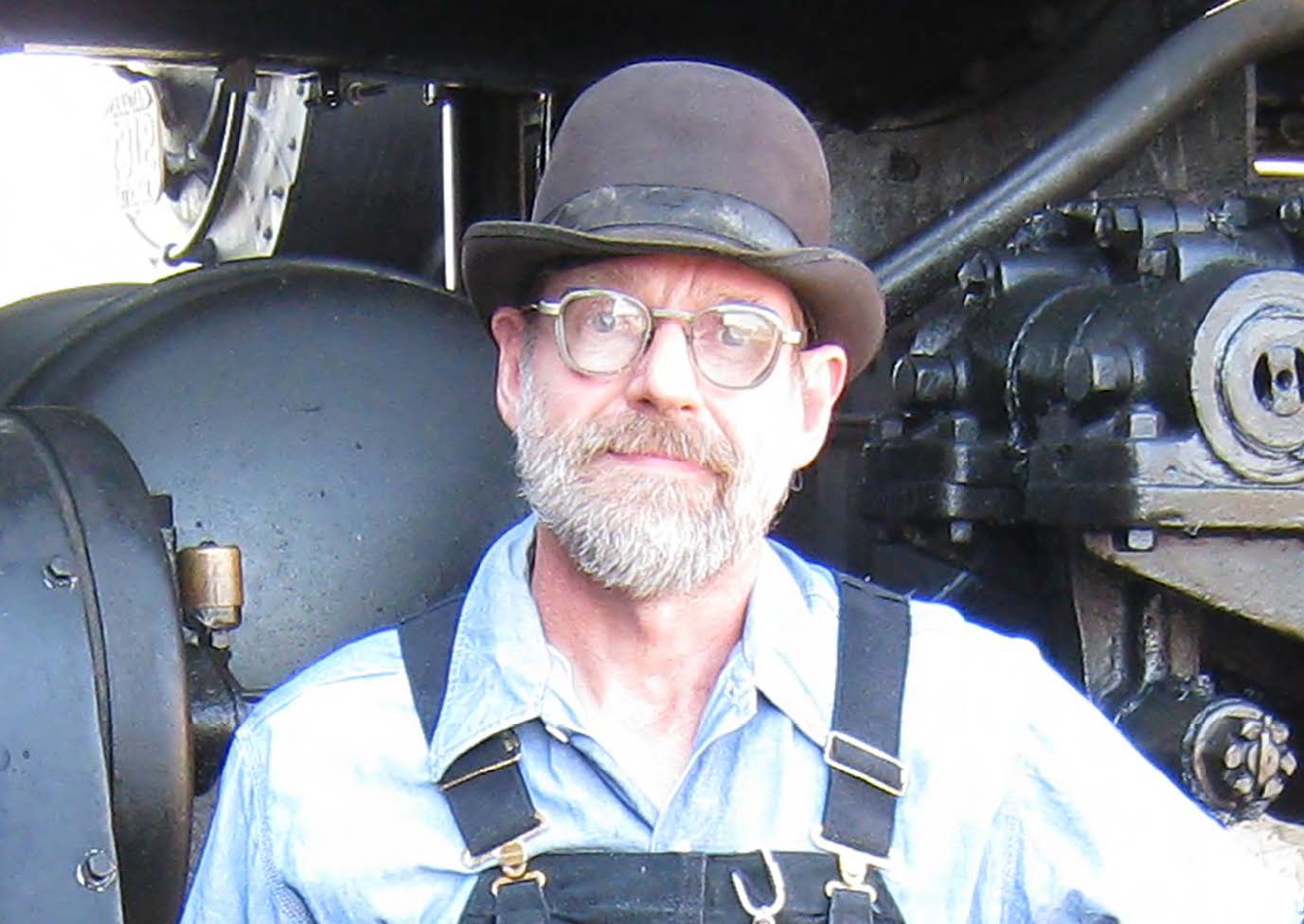
For decades, Linn Moedinger, former president and chief mechanical officer at Strasburg Rail Road, has played a leading role in advancing steam locomotive safety and preservation throughout the heritage railroad community.
Steam locomotives still move under their own power – not as relics of a vanished age, but as working machines carrying passengers, history, and public trust.
Their survival is neither accidental nor sentimental. It rests on a foundation of regulation, engineering discipline, and an uncompromising safety culture strong enough to carry 19th-century technology into the 21st century.
In the U.S. and Canada, approximately 1,800 steam locomotives remain, scattered among tourist railroads, museums, and park displays, according to estimates from the HeritageRail Alliance, the trade association for tourist railroads and railway museums.
Yet only about 185 remain operational, with another 50 to 60 undergoing restoration or heavy maintenance. Even when those active projects are counted, fewer than 250 engines could be considered capable of running in the modern era – a tiny living remnant of a technology that once powered a continent.
The landscape of preservation is just as varied. More than 200 museums and tourist railroads continue to operate trains, while another 500 locations preserve locomotives as static displays. Active steam operations exist at only 80 to 85 sites. Because restorations, retirements, and mechanical work continually shift the roster, these numbers represent informed estimates rather than fixed totals.
These figures also underscore a simple reality: every operating steam locomotive is both an engineering achievement and a responsibility. From the crowds that gather at grade crossings to watch a marvel like Union Pacific’s Big Boy No. 4014 or take a trip on a heritage line such as Black Hills Central Railroad, to the controlled precision of a shop floor at Strasburg Rail Road, a single truth connects every scene: Steam survives because safety makes it possible.
Operating a locomotive, many of which were built more than 100 years ago, is not an act of nostalgia alone. It is the result of rigorous inspection, disciplined maintenance, modern engineering analysis, and an uncompromising safety culture.
Without those elements, the living presence of steam would return to silence.
Instead, because of safety, the sound still rolls across our country.
Because of safety, children still look up in wonder and adults in awe.
Because of safety, history still moves under its own power.
The Turning Point: Gettysburg
If the crowds that gather to see Big Boy represent the emotional power of steam, the events on June 16, 1995, near Gettysburg, Pennsylvania, reveal the responsibility that comes with it.
Although no one was killed outright, three crew members suffered severe burns, and the boiler explosion of a tourist-line steam locomotive stunned both the preservation community and the railroad industry at large. Steam locomotives made up only a fraction of the nation’s operating boilers and pressure vessels, but the visibility of the incident and the number of passengers and spectators typically surrounding steam operations meant the consequences reached far beyond a single railroad.
The incident became a turning point. Investigations and subsequent discussions among regulatory agencies, insurers, and preservation organizations revealed inconsistencies in inspection practices, documentation, and engineering oversight that had developed over decades of uneven regulation.
What followed was not the end of steam, but the beginning of a more disciplined future.
After this incident, scrutiny intensified. The key players increasingly recognized that steam’s survival depended on demonstrable safety – clear inspection standards, documented engineering analysis, and accountability equal to any modern pressure-retaining system.
“Even though steam locomotives, in particular, make up a very small percentage of boilers and pressure vessels that are out there, the exposure is pretty great because of the number of people that come and ride behind steam locomotives and come to see steam locomotives on an annual basis,” said Brendan Zeigler, vice president and chief mechanical officer at Strasburg in Ronks, Pennsylvania. He’s also a member of the National Board Inspection Code (NBIC) Task Group Locomotive Boilers.
That visibility raised the stakes. Public trust, as well as the future of operating steam, would depend on proving that historic machinery could meet modern expectations.
The response to that challenge would soon take shape in a coordinated national effort to define, document, and enforce safe practices for steam locomotive operation – an effort that ultimately led to the creation of the Railroad Safety Advisory Committee’s (RSAC) Steam Locomotive Task Force in 1996 and the modern regulatory framework that governs steam today.
The Framework of Safety
Long before restoration teams returned giants like Big Boy to service, federal oversight of railroad safety had already been taking shape for over a century.
The Federal Railroad Administration (FRA) was created within the U.S. Department of Transportation in 1966, inheriting statutory authority that traces back to landmark laws such as the Safety Appliance Act (1893) and the Boiler Inspection Act (1911), which later expanded into the Locomotive Safety Act (1915). Those laws, first administered by the Interstate Commerce Commission (ICC), established the federal government’s responsibility to regulate locomotive safety across the nation’s railroads – authority that the FRA continues to exercise today.
Mike Ramsey, who spent 25 years at the FRA as an operating practices inspector, motive power and equipment inspector, and senior passenger railroad safety specialist, said the agency’s jurisdiction is defined not by the type of locomotive but by the railroad on which it operates.
“The FRA has the statutory authority from Congress to regulate – with one exception – essentially all railroads,” said Ramsey, who currently is the safety and compliance manager for American Heritage Railways. “They don’t regulate transit operations like streetcars and subways. But everything else, particularly what we call the general system of transportation, falls under their authority.”
That “general system” includes the interconnected standard-gauge rail network as well as certain tourist and museum railroads that interact with the public through highway grade crossings, proximity to mainline railroads, or physical connections to the broader system. Gauge is the distance between the inner faces of the two running rails of a railway track. Standard gauge is 4 feet, 8½ inches. The FRA does not regulate railroads with a gauge of less than 2 feet; backyard hobby operations and amusement- park lines typically fall outside its jurisdiction as well.

Brendan Zeigler, Strasburg Rail Road
vice president and chief mechanical
mechanical officer, said it’s important
to work closely with inspectors from
the Federal Railroad Administration.
Even within that framework, steam locomotives represent only a small portion of the FRA’s broader safety mission. Mechanical inspectors oversee steam alongside freight locomotives, passenger equipment, track, signals, hazardous materials, and operating practices – an organizational reality that preservation groups continue to navigate collaboratively.
“The number of steam-qualified inspectors is very small,” Zeigler said. “Most of the steam inspectors are not career steam experts … so working closely with them is important.”
Ensuring consistent oversight across a small, highly specialized field requires more than regulations; it also depends on training. In its early years, the FRA relied on partnerships with experienced operators to prepare inspectors, sending personnel to locations such as the Strasburg for hands-on instruction. That collaborative approach reflected both the scarcity of active steam expertise and the practical knowledge concentrated within heritage railroads.
Ramsey said that over the last decade, the FRA has moved toward an in-house training model. Working with experts from across the steam community, including Ramsey, the agency developed a formal curriculum while continuing to use major tourist railroads as field training sites. The result is a hybrid system that combines classroom instruction, real-world mechanical exposure, and cooperation between regulators and operators – an approach that mirrors the broader partnership sustaining steam locomotive safety today.
Before Part 230
The FRA’s regulations, 49 CRF Part 230, standardized the inspection, maintenance, and documentation of steam locomotives nationwide. Part 230 was issued by the Steam Locomotive Task Force in 1999, and the industry continued working into the early 2000s to implement and refine the new framework. Part 230 replaced ICC-era inspection requirements.
Before then, steam locomotive inspection practices varied widely. The FRA inherited rules and traditions from the ICC, but the decline of steam in common- carrier service and its later revival in tourist and museum operations left gaps in consistency, documentation, and engineering oversight.
The Gettysburg incident underscored those weaknesses and accelerated long-standing industry concerns. Fortunately, preservation leaders and regulators were already working toward reform.
The groundwork had been laid before the accident, according to Linn Moedinger, a longtime Strasburg executive and a member of the Engineering Standards Committee (ESC) since 1991.
“The ESC had already submitted a proposed rewrite of Part 230, and that’s pretty much what kicked it off. Then we rewrote the rules, which came out in 2001.”
The ESC was established through self-initiative rather than by a federal agency and brought together expertise from across the steam community to develop a modern, enforceable safety structure grounded in engineering evidence rather than tradition alone. A key factor the group focused on throughout the process was creating financial benefit from compliance. While not always possible, if a safer practice yields fiscal rewards, it is more likely to be complied with.
“We were afraid people weren’t really doing what they should be doing … sometimes out of ignorance, sometimes not,” said Moedinger, an influential figure in all areas of steam locomotive safety and preservation. “So we put together a group that covered most disciplines and phases of steam locomotive operation.”
The Making of Part 230
The modernization of federal steam locomotive regulation did not emerge solely from the government. Instead, it emerged from the combined efforts of two distinct but closely connected groups: the ESC and the RSAC.
The ESC formed first, arising from concern within the steam preservation and inspection community that inherited inspection practices no longer reflected sound engineering or consistent oversight. Comprised of steam operators, boiler inspectors, mechanical engineers, and preservation leaders, the committee undertook the technical work of defining what modern steam safety should look like. Their effort produced a comprehensive, engineering-based proposal that addressed inspection intervals, documentation, boiler calculations, and accountability – elements that would later define today’s regulatory framework.
Moedinger said the committee’s work was driven by a shared recognition that tradition alone could not sustain operating steam. In some cases, he said, proper practices were not being followed – sometimes due to a lack of knowledge, sometimes due to a lack of structure – making a unified technical standard essential for the future of the industry.
While the ESC supplied the technical foundation, the RSAC provided the formal pathway to federal regulation. Created to bring regulators, railroads, labor organizations, manufacturers, and technical experts into a consensus- driven rulemaking process, the RSAC became the forum for reviewing, refining, and advancing the ESC's proposals. Through that collaboration, engineering guidance was translated into enforceable national regulation, culminating in the comprehensive revision of 49 CFR Part 230.
The relationship between the two bodies was complementary rather than duplicative.
The ESC answered the question, “What should safe steam practice be?”
RSAC addressed, “How should those practices become federal law?”
Together, with final authority resting with the FRA, they transformed a patchwork of legacy rules into the modern safety framework that governs steam locomotive operation today.
What Part 230 Changed
Part 230 introduced defined inspection intervals, engineering-based boiler calculations documented in Form 4, and hydrostatic testing at 125% of maximum allowable working pressure.
Perhaps most significantly, the rule shifted inspection timing from calendar days to service days, aligning regulatory requirements with the frequency with which a locomotive operates. The new regulations require daily, 31-day, 92-day, annual, fiveyear, and 15-year or 1,472-service-day inspections. (See page 25)
“The service-day methodology gave a real economic incentive,” Moedinger said. “For outfits that don’t run very often, that could stretch to 15 years. But the daily inspection becomes critical.”
Ramsey said regulations are changed only when necessary.
“It hasn’t been updated significantly since it was revised in 1999,” he said. “Regulations are very seldom opened up for revision; it takes a lot to make that happen.”
Despite that stability, Part 230 remains the core national safety framework for steam locomotives operating under FRA jurisdiction, complemented by widely recognized best practices such as the NBIC. Part 230 did more than standardize inspections – it established public trust.
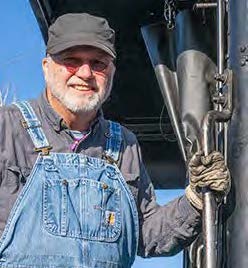
Mike Ramsey spent 25 years with the
Federal Railroad Administration and
now serves as safety and compliance
manager for American Heritage Railways,
applying decades of regulatory and
inspection experience to the operation
of historic steam locomotives.
The NBIC’s Role
If Part 230 set the regulatory framework for modern steam locomotive safety, the NBIC has provided much of the technical foundation for implementing those rules in practice.
Locomotive boilers first appeared formally within the NBIC in the 1993 addendum to the 1992 edition, introduced as “Appendix H: Steam Locomotive Firetube Boiler Inspection and Repair.” That inclusion marked an important recognition: historic steam equipment – although no longer mainstream – still demanded rigorous, standardized inspection and repair guidance consistent with modern pressure- retaining safety philosophy.
More than a decade later, NBBI deepened that commitment by creating the Task Group Locomotive Boilers in 2005, chaired by Bill Withuhn, who was transportation curator at the Smithsonian Institution for 27 years and a licensed locomotive engineer. Of the original 11 members, Moedinger, Steven Butler, David Conrad, Robert Franzen, and Steven Lee remain active in the task group, which now has 21 members and is led by Chair Mark Ray and Vice Chair Charlie Cross. Their continuing work reflects a broader shift: the preservation community and inspection authorities moving from informal tradition toward documented best practice.
Complementary Systems, Shared Purpose
The repair methods, welding standards, inspection philosophy, and documentation discipline embedded in Part 230 closely mirror NBIC principles. NBBI Commissioned Inspectors are frequently involved with non-FRA locomotives and shop work supporting FRA-regulated equipment, making the NBIC a technical reference point even where it is not legally enforceable.
Ramsey said that the alignment was not accidental.
“When you look at the prescriptive parts of the regulation … it’s all very similar to what you see in the NBIC,” he said. “Part 230 may require a repair to follow an accepted national standard, and the NBIC is an accepted national standard. So the operator opens the NBIC and says, ‘This is how I’m going to do the repair.’”
In that sense, Part 230 specifies what must be done, while the NBIC helps define how the work is properly accomplished. The relationship allows modern pressure vessel safety practices to be applied to 19th- and early 20th-century construction without forcing incompatible design rules.
Small Community, Large Responsibility
Within the steam world, the community shaping those standards is remarkably small.
“It’s a tight community. I know just about everyone,” Zeigler said, adding that NBIC locomotive supplements were intentionally developed to synchronize with federal requirements to reduce conflicting expectations.
That synchronization remains a goal. Many in the field hope for closer formal alignment between FRA regulation and NBIC technical standards so that decisions about repair and best practice draw more directly on specialized steam expertise.
“The National Board obviously has the rules for inservice inspections and repairs,” Moedinger said. “They’re absolutely key to our survival.”
Moedinger added that NBBI’s growing engagement with historic boilers reflects recognition of the unique public exposure to steam.
“Steam locomotives … aren’t mainstream. But if one of ours fails, many people could be affected. The National Board understands that and recognizes we need to be proactive about safety.”
Guidance in Practice
For operators and inspectors working closest to the machinery, the NBIC often serves as a daily reference.
While discussing his role as director of railroad operations in his office at Black Hills Central Railroad, Mike Grimm patted the well-worn version of NBIC Part 3, Repairs and Alterations, and said, “When it comes to boiler repairs, the NBIC is my absolute bible.”
Grimm also values the trust built through collaboration with South Dakota Chief Boiler Inspector Aaron Lorimor, whose perspective on repairs he seeks even when operating under FRA jurisdiction – an example of how NBBI Commissioned Inspectors can play a meaningful role across the preservation landscape for systems under FRA jurisdiction.
State oversight is essential for locomotives outside the FRA jurisdiction.
In Minnesota, Chief Boiler Inspector Howard Berny oversees a small number of full-size steam locomotives inspected under state law, which requires hydrostatic or ultrasonic examination every two years, along with operational check rides during public events. He said his focus remains on boiler and pressure-retaining components, whereas long-term reliability depends heavily on careful maintenance, cleaning, lubrication, and standardized operating practices performed by the volunteer teams that operate the engines.
ASME’s Role
While the NBIC provides the technical roadmap for inspection and repair of historic boilers, the broader framework of modern pressure-vessel engineering still shapes steam preservation in quieter ways – particularly through the ASME Boiler and Pressure Vessel Code (ASME BPVC).
ASME BPVC Section I establishes the overall construction rules for power boilers, while Part PL provides the locomotive-specific requirements contained within that section. Modern editions include locomotive-specific provisions intended primarily for new construction and major fabrication, not for regulating the day-to-day operation of historic steam locomotives in service.
Other BPVC sections function in supporting roles: Section II provides material properties and allowable stresses useful when original specifications are unknown or replacement materials are required; Section V establishes nondestructive examination methods such as ultrasonic testing; and Section IX governs welding qualifications and procedures commonly referenced during boiler repairs. Together, these standards help demonstrate sound engineering practice – but they do not constitute ASME code compliance for operating locomotives, nor do they replace federal oversight under Part 230.
Early ASME BPVC editions included locomotive provisions – sometimes organized within a dedicated section – but explicit coverage largely disappeared by the early 1950s. Not until the 2015 edition of Section I did ASME again introduce a standalone locomotive component, marking the first formal treatment in more than six decades. That modern inclusion, developed by the ASME Subgroup on Locomotive Boilers and chaired by Moedinger, created a contemporary engineering reference point for future fabrication and major reconstruction projects.
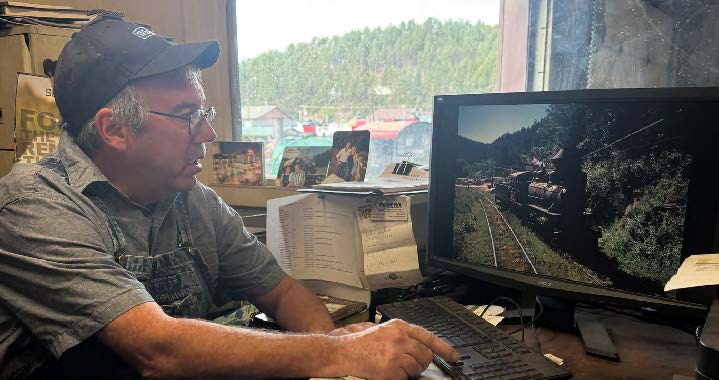
Mike Grimm, director of railroad operations at the Black
Hills Central Railroad, has spent decades operating and
maintaining historic steam locomotives.
Taken together, the FRA, NBIC, and ASME engineering framework form overlapping layers of protection rather than competing authorities.
For steam locomotives built in another century yet operating before modern crowds, that convergence of regulation, best practice, and engineering oversight is more than procedural alignment. It is the structure that allows historic power to remain credible, insurable, and above all – safe in the present day.
The Connector
Regulation, engineering standards, and inspection codes form the structural backbone of steam safety.
But the day-to-day reality of preservation depends just as much on communication between operators, regulators, suppliers, and volunteers spread across hundreds of organizations.
That connective role is filled by the HRA. Formed through the post-2000 merger of the Association of Railway Museums and the Tourist Railway Association, the organization emerged from a simple realization: the two groups shared members, challenges, and goals – and could speak more effectively with a single voice.
HRA has a 15-member board of directors, which includes Ramsey. Moedinger is a former vice president.
Today, HRA includes about 200 member railroads and museums, along with commercial suppliers supporting the industry.
Its mission centers on sharing best practices, representing preservation interests, and fostering collaboration across a field in which experience is often dispersed yet highly valuable. HRA editor and railroad historian Aaron Isaacs said much of that work happens through conversation as much as policy.
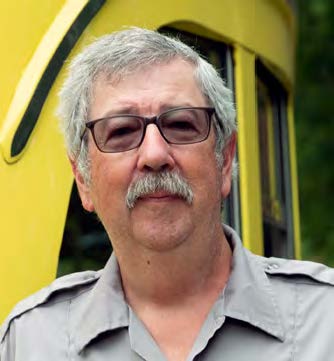
Aaron Isaacs is a railroad historian
and the editor for the HeritageRail
Alliance, trade association for tourist
railroads and railway museums.
“Anyone who goes to these conferences will tell you that it’s really the networking that is the valuable thing,” he said. “We’re like a big support group. If you’ve had a problem of any sort, somebody else has had that problem.”
Isaacs said the 2026 HRA conference is planned for November in York, Pennsylvania.
Through conferences, technical exchange, and participation in forums such as the RSAC, the HRA helps bridge the space between federal regulators, inspection authorities, and the preservation community itself.
In doing so, it reinforces a central truth of modern steam operation: safety is not maintained by rules alone, but by shared knowledge and collective responsibility.
The Future
Across North America, the sound of steam that once seemed destined to fade into memory is, against all expectations, growing louder again.
“We saw a lot of old steam locomotives sitting in parks, and we thought we’d never see those run again,” Ramsey said. “Well, damn, if they aren’t all out there running again.”
Behind those returns are not only benefactors and rebuild shops, but something less visible and more enduring: knowledge passed from one generation to the next.
Mentors teach the numerous mechanical details that extend far beyond the boiler itself. Decades of experience – sometimes a lifetime’s worth – are passed on so the machines and the skills to care for them do not disappear.
Moedinger spent 50 years at Strasburg, including the last 18 as president and chief mechanical officer before he retired in 2018. His retirement, however, has only modestly reduced his presence in the world of steam.
“Why do I stick with this?” he said. “Because I think it’s very critical that we keep the information alive and relevant so that people a generation or two generations from now will be able to benefit from all the technology my generation dug up.”
Yet preservation’s future is not guaranteed by passion alone.
The greatest threat to operating steam is not age, cost, or fading interest – but catastrophic failure, Moedinger said. A single major accident, he cautioned, could bring overwhelming political pressure to end public operation altogether.
“The best way to ensure there’s a good future is not to have an accident. If one would fail catastrophically and cause loss of life …,” he said as his voice trailed off for a few seconds before resuming.
“We’re a pretty tiny industry. I think it would be tough to survive that.”
As long as this discipline endures, the sound of steam will continue to cross fields, towns, and mountain valleys – not as nostalgia, but as proof that history can survive in motion. Every whistle, every excursion, every turning wheel is a reminder that preservation is not about the past alone. It is about responsibility in the present and the care required to carry living history safely into the future.
INSPECTION PROCESS
Federal Railroad Administration regulation, 49 CRF Part 230, standardized the inspection, maintenance, and documentation of steam locomotives and shifted the rules from calendar days to service days. These regulations require daily, 31-day, 92-day, annual, five-year, and 15-year, or 1,472-service-day inspections. A service day is any day the boiler has steam pressure above atmospheric pressure with fire in the firebox.
DAILY INSPECTION
Required before the locomotive is placed in service each day it operates. This inspection establishes baseline safety and must be recorded in the locomotive’s FRA daily inspection records.
REQUIREMENTS INCLUDE:
- Visual inspection of the entire locomotive, tender, and appurtenances
- Check for leaks, defects, or unsafe conditions
- Verify proper operation of water glasses and try cocks, injectors and feedwater systems, safety valves, and brakes and brake rigging
- Ensure boiler water level is visible and adequate
- Confirm no conditions exist that would make operation unsafe
31-SERVICE-DAY INSPECTION
Performed every 31 service days the locomotive actually operates. This also includes all daily inspection requirements. This is a more hands-on mechanical inspection but does not require disassembly.
REQUIREMENTS INCLUDE:
- Inspection of brake system components (more detailed than daily), safety appliances, steam and water piping, and running gear, rods, pins, and bushings (visual and mechanical condition
- Functional testing of injectors, water pumps, safety valves (operation confirmation, not removal), and all staybolts
- Washing of boiler; cleaning and inspection of water glass valves and gage cocks; cleaning, washing, and inspection of all washout and water tube plugs; removal, cleaning, and inspection of fusible plugs (if any)
- Review of maintenance and repair records
92-SERVICE-DAY INSPECTION
Performed every 92 service days, layered atop daily and 31-day inspections.
REQUIREMENTS INCLUDE:
- More detailed inspection of valve gear and motion, running gear wear, and brake rigging and components
- Removal, cleaning, and inspection of water glasses and gage cocks (if not otherwise addressed); removal and testing of all air and steam gages
- Renewal of tubular water glasses
- Testing and adjusting of safety relief valves; testing of main reservoir and brake cylinder leakage
- Internal inspection of dry pipe (where accessible) and tender tank
ANNUAL INSPECTION
Must be completed at least once every 365 calendar days, regardless of service days. This is layered on the 92-day requirements. The FRA must be notified at least 30 days in advance.
REQUIREMENTS INCLUDE:
- Hydrostatic pressure test: Boiler tested to 125% of MAWP
- Main reservoir hammer or UT testing and hydrostatic testing (for non-welded and drilled main reservoirs)
- Removal and inspection of safety valves, water glasses, and gage cocks
- Thickness verification of dry pipes; testing of thickness of arch and water bar tubes (arch brick to be removed)
- Internal boiler inspection of smokebox, firebox, sheets, stays, and braces
- Inspection of flexible staybolt caps, washout plugs and openings, and longitudinal lap joint boiler seams
- Removal and inspection of steam locomotive drawbar(s) and pins (NDE testing other than merely visual)
- Verification of boiler repairs and thickness data
5-YEAR / 15-YEAR / 1,472-SERVICE-DAY INSPECTION
This is commonly referred to as the “1472 inspection,” although time limits also apply. This inspection also effective resets the clock from the locomotive’s service life: 1,472 service days, 15 calendar years, or five years for certain flue-related and flexible staybolt work
REQUIREMENTS INCLUDE:
- Complete disassembly of the boiler
- Removal of all flues and tubes and superheater units (if applicable)
- Full internal and external boiler inspection
- Comprehensive thickness testing of pressure-retaining components
- Evaluation of stays and staybolt patterns, sheets and seams, and riveted or welded joints
- Hydrostatic test after reassembly
- FRA review and acceptance of inspection documentation