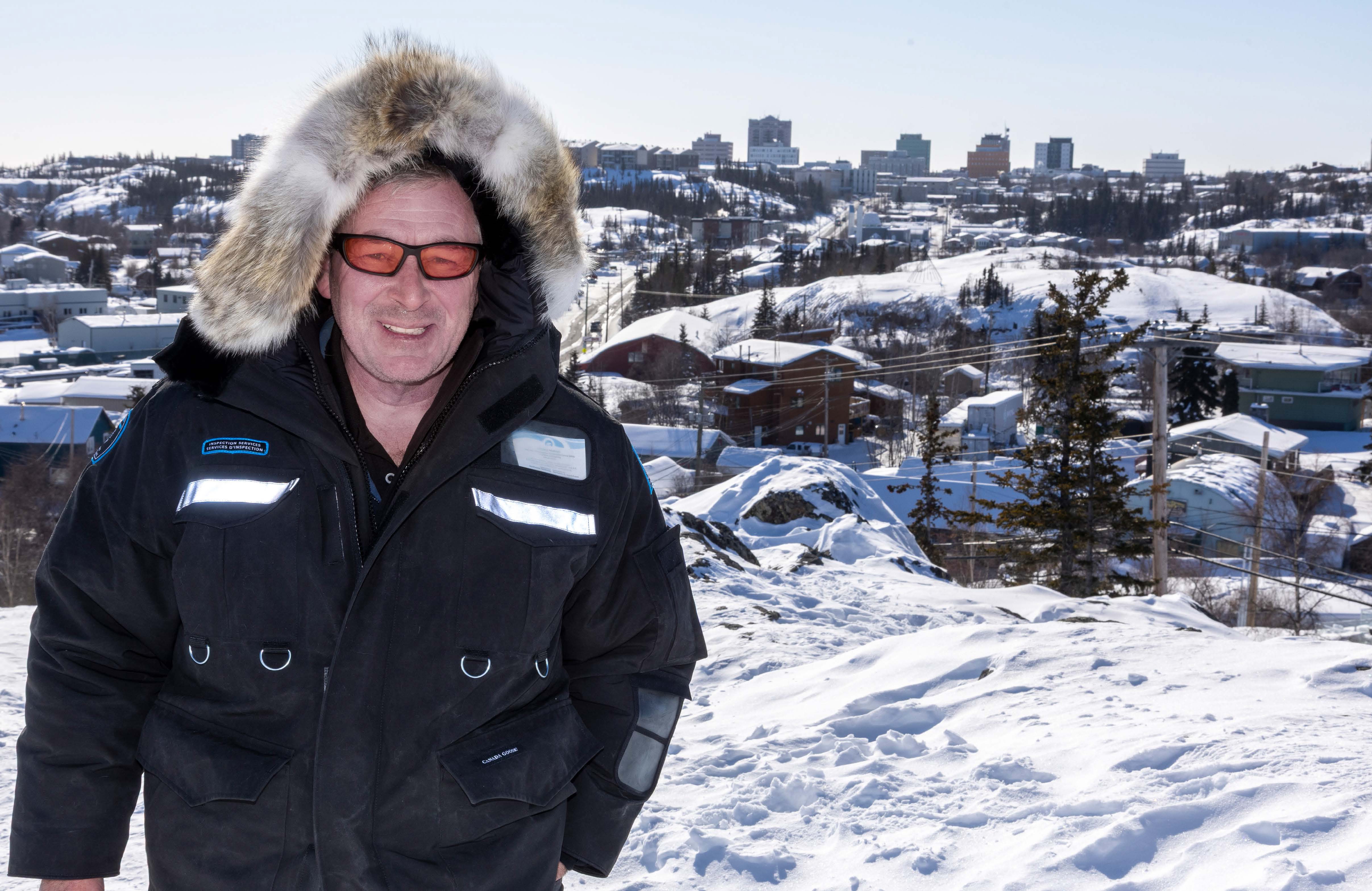
Matthias Mailman stands atop The Rock at the Bush Pilots Monument, which offers a panoramic view of Yellowknife and Great Slave Lake. Photo by billbradenphoto
Editor's Note: The BULLETIN visited Yellowknife, Northwest Territories, in March to learn more about Matthias Mailman’s work as a boiler inspector and the unique challenges of inspecting in Canada’s North. Matthias retired on September 1, 2026.
Matthias Mailman rarely stops observing.
Sitting inside a Tim Hortons in Yellowknife in Canada’s Northwest Territories, he scans the room with the same attentiveness he brings to an inspection.
His eyes drift from a group of regulars nursing their morning coffee to a familiar face waving from another table. Someone stops to chat; another receives a greeting by name.
Moments later, Matthias excuses himself to buy breakfast for someone who could use a helping hand. It’s a small gesture, one repeated often enough that no one seems to notice anymore because it’s simply Matthias being Matthias.
When he returns to the table, he resumes talking about inspections in one of the largest and most challenging jurisdictions in North America. His stories come naturally, whether sitting at a restaurant or driving around town; his humor surfaces just as easily as the conversation moves effortlessly from boilers to bush planes, frozen lakes to foxes, and National Board meetings to tiny houses.
Watching and listening to him during this morning in late March, it quickly becomes clear that Matthias isn’t just an inspector of boilers and pressure vessels. He notices what others might overlook – in equipment, in communities, and in people.
In a jurisdiction spanning more than 1.35 million square kilometers (521,000 square miles) – an area roughly twice the size of Texas – relationships often matter as much as regulations.
“If you build strong relationships in each community,” Matthias says, “it makes all the difference.”
Those relationships also taught him a simple lesson: In the North, inspections are never just inspections.
Where Roads End
For most inspectors, the workday begins with climbing into a government vehicle and driving to the next site. For Matthias, it might begin with a charter flight.
The Northwest Territories is unlike any jurisdiction most inspectors will ever experience. Roads connect only a fraction of its communities. Beyond them lies a landscape of forests, tundra, frozen lakes, and vast distances where the next inspection may require hours in the air rather than behind the wheel.
“Working in the Northwest Territories brings unique challenges – remote locations, extreme weather, and limited access to sites. Logistics require careful planning and adaptability,” he says.
Some communities have no permanent road access at all.
During winter, ice roads stretch across frozen lakes and rivers, providing seasonal access for only a few months each year. When those disappear, aircraft become the only practical way in or out.
“There are many challenges with bush planes,” Matthias says. “If it’s in a remote community, I’ve got to fly in. There's no other way.”
The flights may seem routine, but the destinations rarely are.
One day he may inspect equipment at a remote school or health center. Another may find him traveling to one of the territory's massive diamond mines, heading two to three miles underground. Some inspections last only a few hours before he's back aboard another aircraft. Others require week-long stays working 12-hour days.
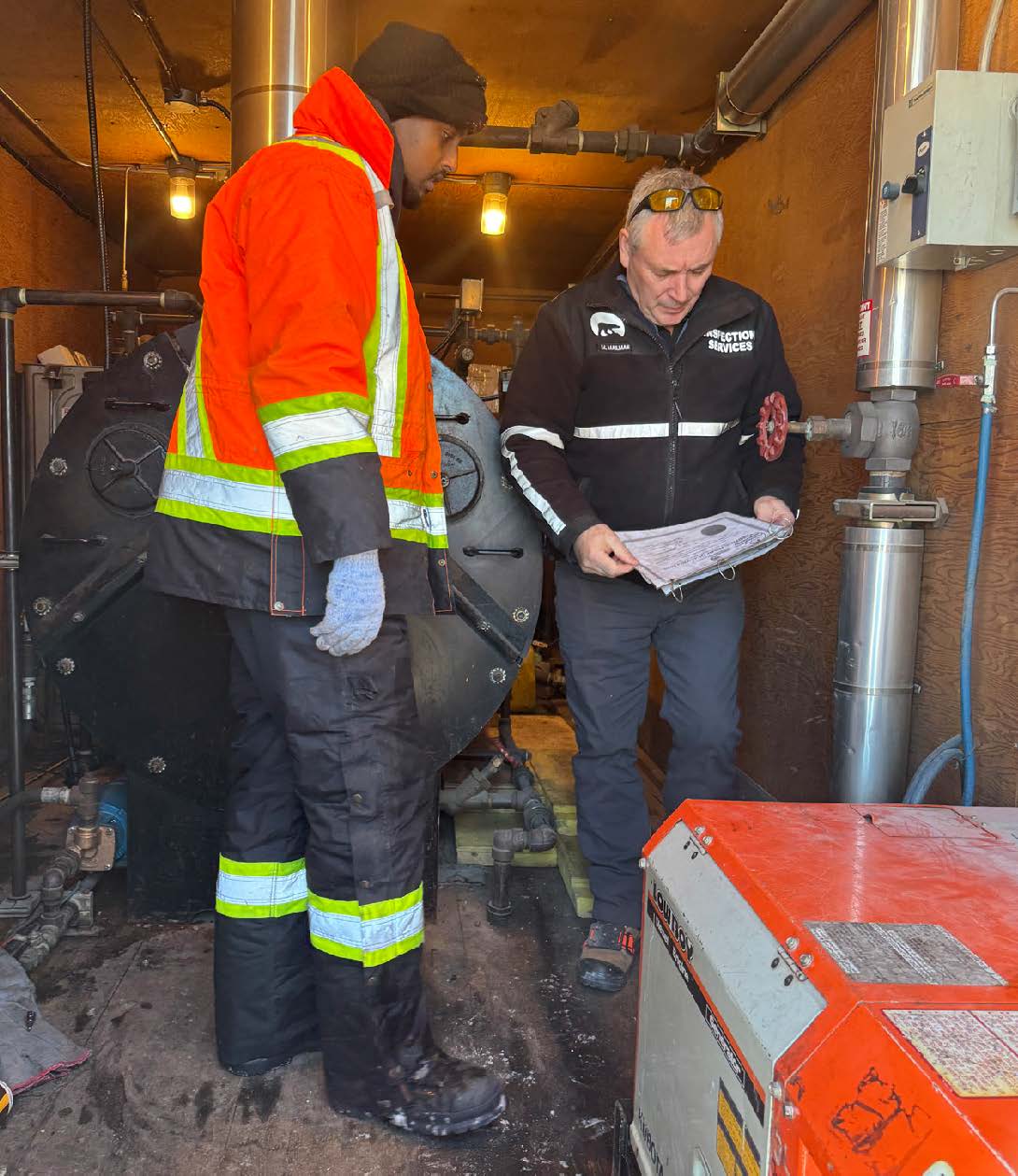
Matthias reviews the paperwork on a mobile
steam truck. Yellowknife uses these trucks to
thaw frozen infrastructure, such as culverts and
drains, using steam hoses to melt ice blockages.
Geography isn’t the only factor that dictates how Matthias works. The seasons do, too. Most days begin before daylight; other days have little daylight at all.
Winter brings long nights illuminated by the aurora borealis, when the average high temperature for December, January, and February does not climb past zero degrees Fahrenheit. Lows of 30 to 40 degrees below zero aren’t uncommon.
Government regulations require inspectors traveling into remote areas during winter to carry survival equipment: a sleeping bag rated for Arctic temperatures; emergency food; water; heat sources; extra clothing. If something happens, no one assumes help will arrive quickly. Self-reliance isn’t admired; it’s required.
“You do have to put up with the winter, but when summer comes, even though it’s only for six or eight weeks, it is so beautiful,” he says.
Summer brings days of nearly endless daylight, with temperatures averaging from the mid-60s to the low 70s Fahrenheit.
“You learn a lot during your first year,” he says. “After that, you know what to expect.”
It’s Not About the Doughnuts
In his cellphone, Matthias doesn’t store some contacts in the conventional way. He files them under whatever detail helps him remember them. Among them are John Doughnuts and Mike the Cabbie.
“When I fly into Whati,” he says, “I always call John Doughnuts before I leave. He always wants two boxes of doughnuts. He picks me up at the airport, drives me around town all day, and makes sure I get where I need to go.”
Elsewhere, someone requests Timbits; at another stop, Pepsi; and in one particularly isolated community, fresh vegetables are the preferred thank-you.
“It isn’t about the food,” Matthias explains. “It’s about respect.”
Even getting from the airport into town can become part of the adventure.
“Sometimes the airport is four or five miles outside the community, and there are no taxis,” he says. “You call the police. They show up in their pickup truck, and 10 guys jump in the back, and they drive you into town.”
Those who guide him from one inspection to another frequently invite him into their homes for a meal. Those invitations have given him a glimpse into a way of life few outsiders experience.
“I’ve eaten a lot of meals at people’s tables,” he says. “Sometimes you’ll walk into the living room and there’s a caribou hanging from the ceiling, or fish drying inside the house. It’s just a different way of life.”
Those have become some of his most treasured memories and serve as reminders that every community has its own traditions, challenges, and ways of solving problems.
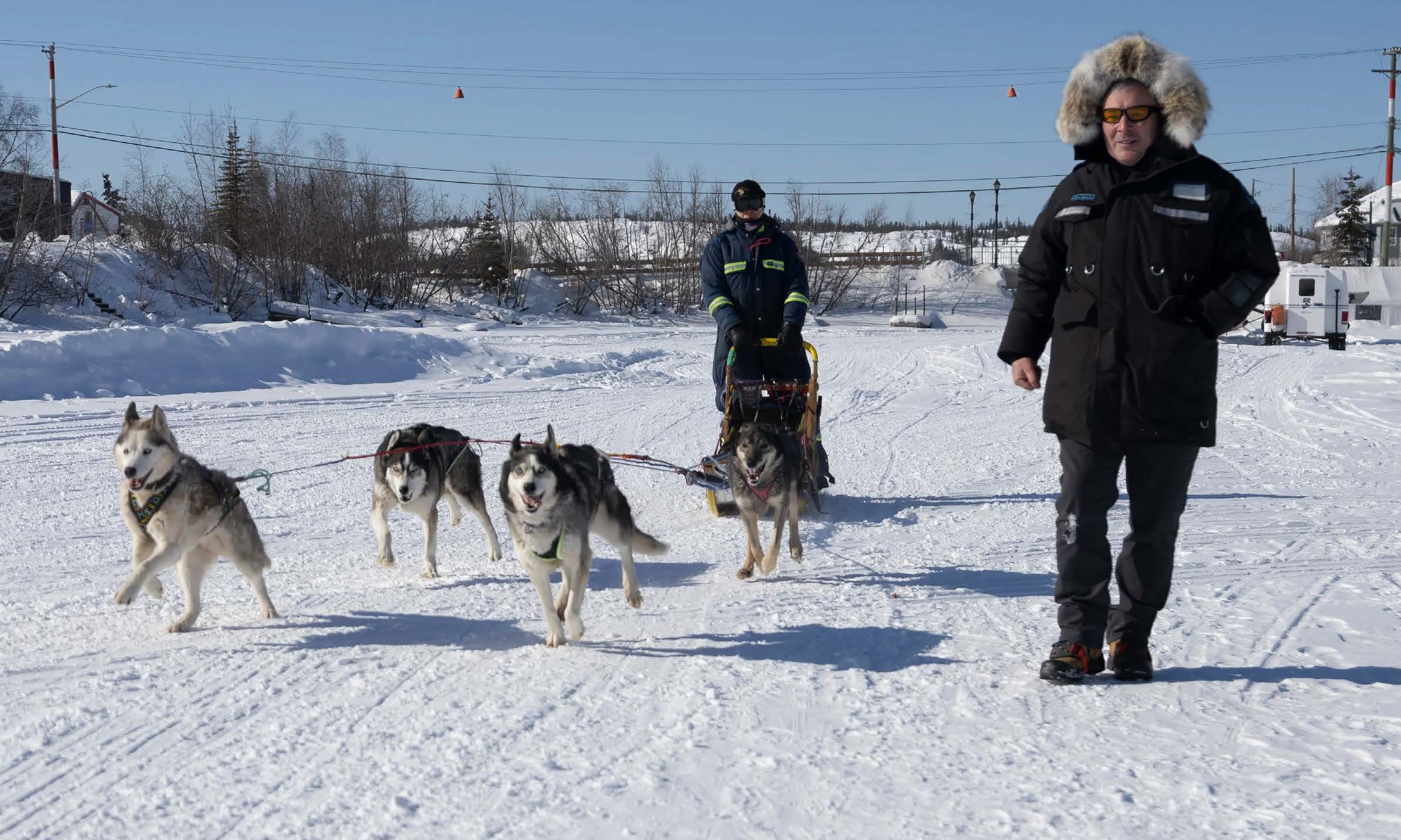
A dog sled team passes by as Matthias poses for a picture while standing on the frozen Back Bay at Great Slave Lake. Ice roads stretch across frozen lakes and rivers during the winter, providing temporary transportation routes to communities that may have no permanent road access. Photo by billbradenphoto
Respecting those differences has become just as important as understanding the National Board Inspection Code or territorial regulations.
“The relationships are everything.”
That philosophy explains why people throughout the Northwest Territories know him by name. It also explains why they trust him. But friendship doesn't mean looking the other way. Everyone understands that when he arrives for an inspection, he has a job to do.
“Inspections are inspections,” Matthias says.
That may be part of why those relationships have lasted. The residents know he will listen, help when he can, and treat them with respect – but they also know he won’t compromise safety.
When Failure Isn't an Option
The farther north Matthias travels, the less margin for error there is.
A malfunctioning low-water cutoff or defective safety valve may seem routine in a city where replacement parts and qualified technicians are only minutes away. In remote areas of the Northwest Territories, the equation changes dramatically.
Chartering a technician into a remote community can cost $5,000 to $7,000 before any work begins.
“In minus-40 temperatures, shutting down a heating system isn’t an option unless it's absolutely critical,” Matthias says.
When a problem arises, practical experience becomes as valuable as technical knowledge. While government policy prevents Matthias from actually making repairs, he will guide local maintenance staff through replacing defective parts.
“I often carry spare parts with me,” he says. “You can’t just walk away. If you’re in a northern community and find a low-water cutoff isn't working, they may not have anyone who knows how to fix it.”
These are opportunities to teach how to prevent tomorrow’s emergency. It’s the same philosophy he shares with the three inspectors he supervises.
“Ensuring inspections are thorough and consistent is critical,” he says. “Equally important is supporting inspectors in the field and making sure regulations are applied effectively to minimize risk.”
But supporting his inspectors across such a vast territory presents its own challenges.
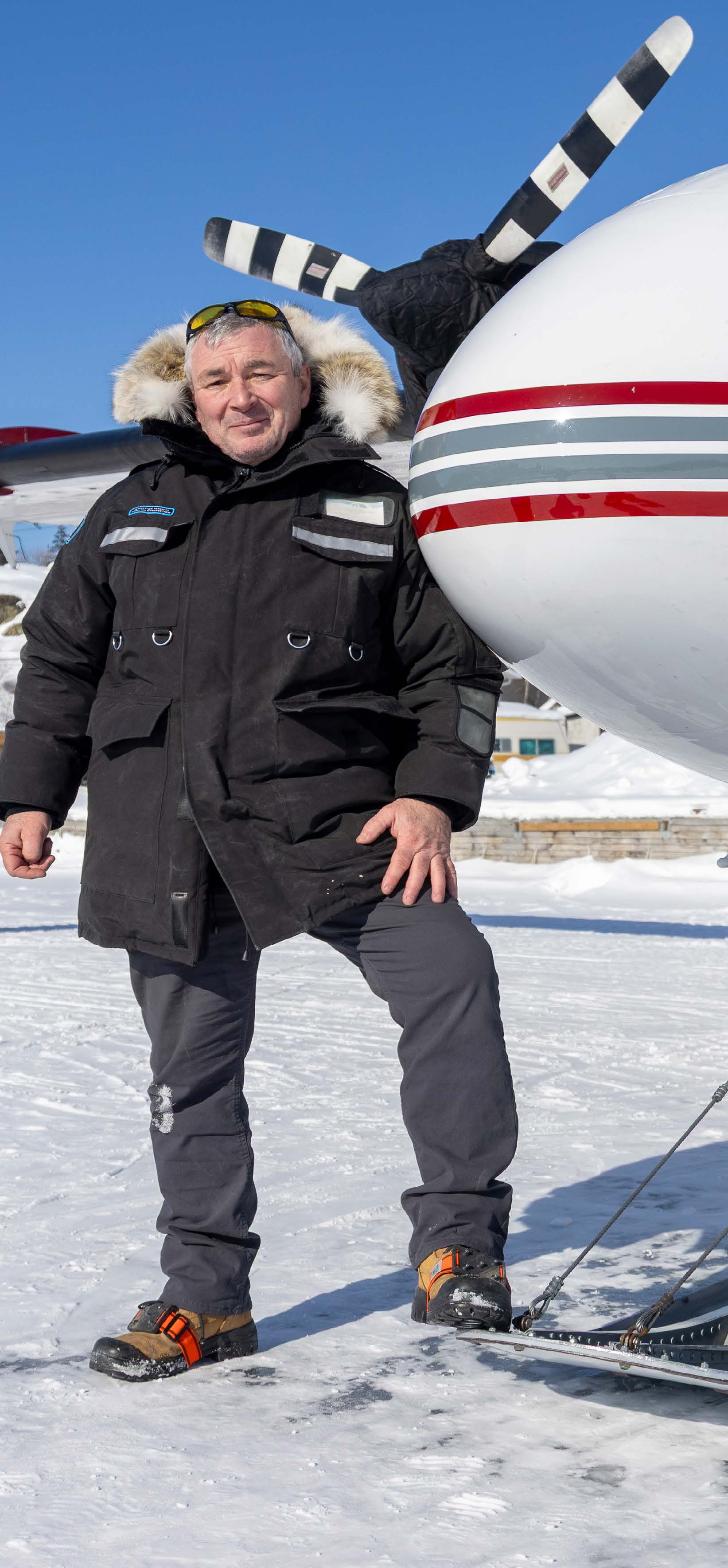
Matthias stands in front of one of the planes
at a Yellowknife operation. "If it's in a remote
community, I've got to fly in. There's no other
way of getting there."
“They’re spread across different regions,” he says. “Sometimes it can be months – or even a year – before we’re together in person.”
With much of Matthias' job done from a distance, phone calls and emails often fill the gaps between inspections or vice versa.
“On a really good day, I’ll finish eight or 10 inspections,” he says. “Sometimes I’ll only get one done because the phone and emails never stop.”
Built for the North
Matthias' ability to adapt didn't begin in Yellowknife.
It began in Port au Choix, a small fishing village on Newfoundland’s northern peninsula, where his mother, Stella, spent her entire life. His father, Delbert, was raised in Nova Scotia. Matthias and his three brothers grew up surrounded by fishing boats, hard winters, and the practical mindset common to rural coastal communities.
He worked as a commercial fisherman, but because fishing was seasonal, he had to find something else to do. He later spent time in steam plants as a third-class engineer, experiences that eventually led him to study power engineering at Holland College in Prince Edward Island, beginning a career that eventually took him to Yellowknife.
“My daughter Bianca moved out here,” he explains. “I decided to be closer to her, and there was work here.”
He worked as chief engineer at Gulf Shrimp Processing before accepting a position as Hospital Technician II at Stanton Territorial Hospital in Yellowknife. Working around critical building systems taught him lessons that would define the rest of his career.
At the urging of former chief Steve Donovan, Matthias earned his NBBI Inservice Inspector (IS) Commission and his Repair Inspector (R) Endorsement in September 2012 and became chief inspector the following month, overseeing about 6,000 pieces of equipment.
Since then, Matthias has visited nearly every community in the Northwest Territories and built relationships that stretch from the Arctic Ocean to the Alberta border.
A Different Kind of Community
Roughly half of the Northwest Territories’ nearly 50,000 residents live in Yellowknife, and the capital city retains a small-town feel. Matthias embraces that lifestyle, and his daily routine rarely changes.
Breakfast at Tim Hortons with one group. Lunch with another. Coffee later in the afternoon with a third. With his wife, Elizabeth, already living in Edmonton, an evening dinner at a pizza shop has been added to the schedule. Each gathering has developed naturally over the years.
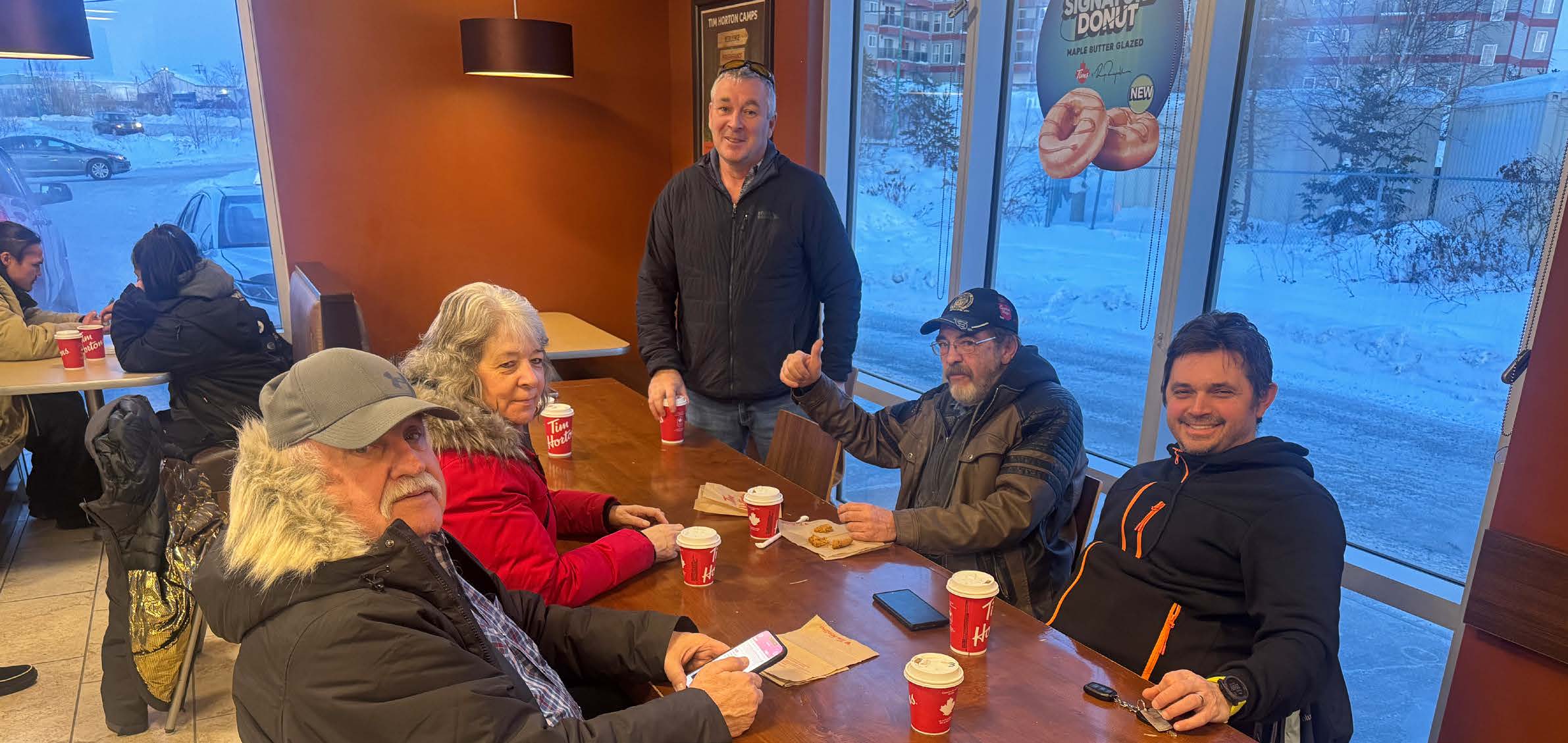
Matthias stands with one of the groups he visits with daily at Tim Hortons.
Among those longtime friendships is Mike the Cabbie.
For decades, Mike has driven visitors around Yellowknife while chasing another passion: photographing the aurora borealis. Matthias smiles as he tells the story of how he helped convince his Croatian friend to reconnect with the daughter he hadn't seen in more than half a century.
“He finally reached out,” Matthias says, “and she was so excited to hear from him.”
Matthias speaks with genuine joy, not because he helped encourage it, but because it reminds him why relationships matter. They’re worth the effort.
“I like helping people,” he says.
His kindness extends beyond people.
Foxes also wander freely and seemingly comfortably throughout Yellowknife.
“I’ll stop, roll down the window, and feed them,” he says.
Wild dogs are another matter.
“They’ll follow you, and they can be nasty,” he says. “That's why I carry frozen meat for the foxes – and a plate wrench for the dogs.”
Only here could that sentence sound perfectly reasonable.
Always Building Something
Matthias' curiosity doesn't end when the workday does because he usually has another project.
“If it’s old, strange, and nobody else wants it, I’m interested,” he says. “I enjoy rebuilding just about anything with an engine and tires. Over the years, I’ve collected some interesting projects – snow planes, Beetles, Model A cars, amphibious vehicles.”
For Matthias, keeping busy isn't just a hobby; it's a way of getting through the long Northern winters.
“You can’t sit in the house at 40 below zero all the time, or you’ll go crazy. So, it’s just something to keep me going constantly.”
Matthias also earned his scuba certification and eventually became an instructor, and he often helps recover vehicles that disappeared beneath the ice during the winter thaw.
That instinct to keep moving, building, and figuring things out isn’t limited to his own projects. Elizabeth eventually decided she wanted to join him.
“I told her she could pick anything she wanted – as long as it had wheels.”
Her choice of a tiny house surprised him, but they proceeded to design and build a 284-square-foot home. Matthias designed a solar power system, installed batteries, built a water storage system beneath the bed, and even constructed his own wastewater pumping system.
His daughter, Sara, suggested listing it as a rental for vacationers, and “we were booked solid for two years.”
When COVID halted travel, Matthias and Elizabeth moved into the house and “absolutely loved it,” he says.
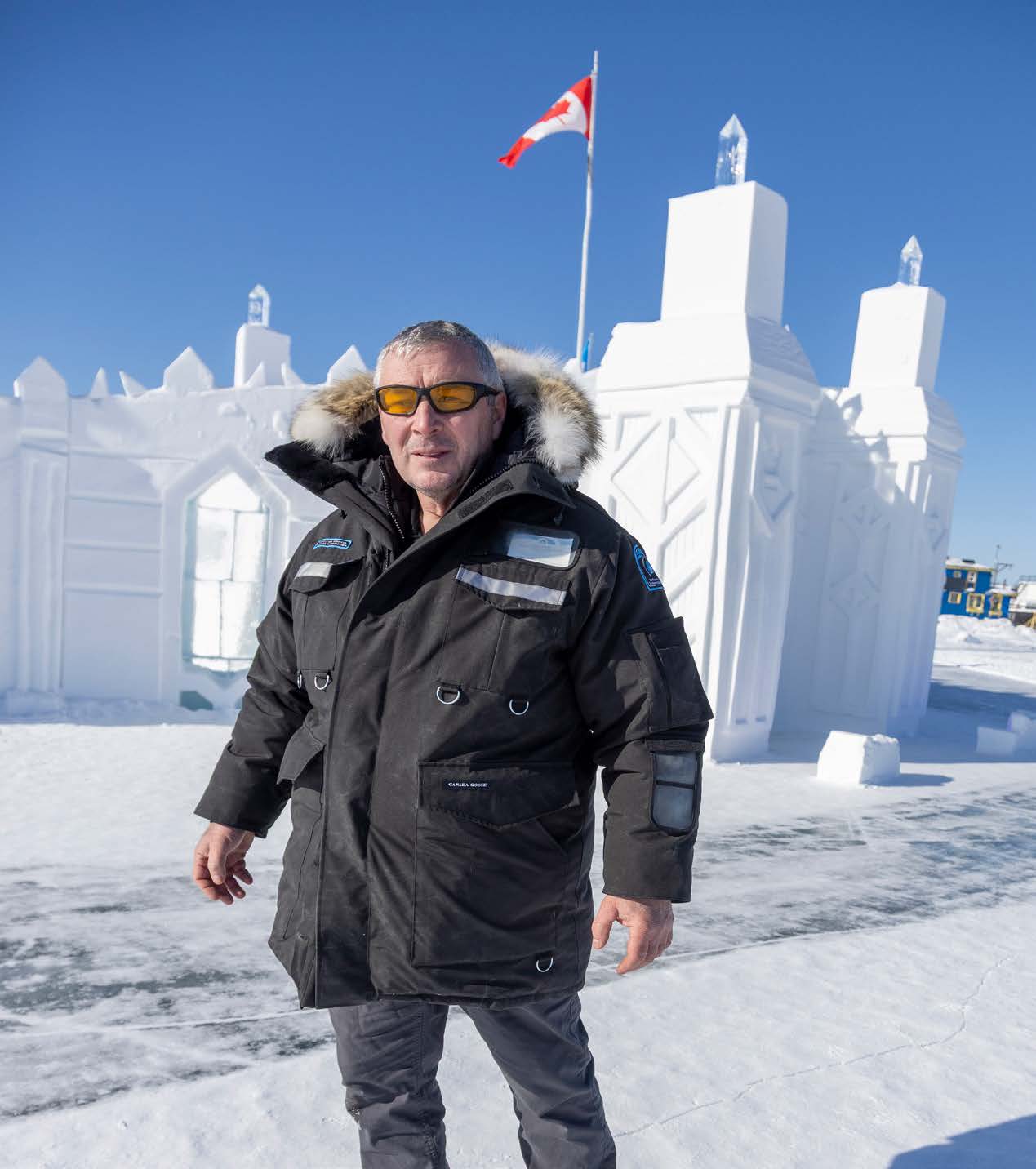
Matthias stands in front of the Snowkings'
Winter Festival castle on the frozen Yellowknife
Bay. The festival is held each March and features
sculptures, slides, music, and several other events.
Photo by billbradenphoto.
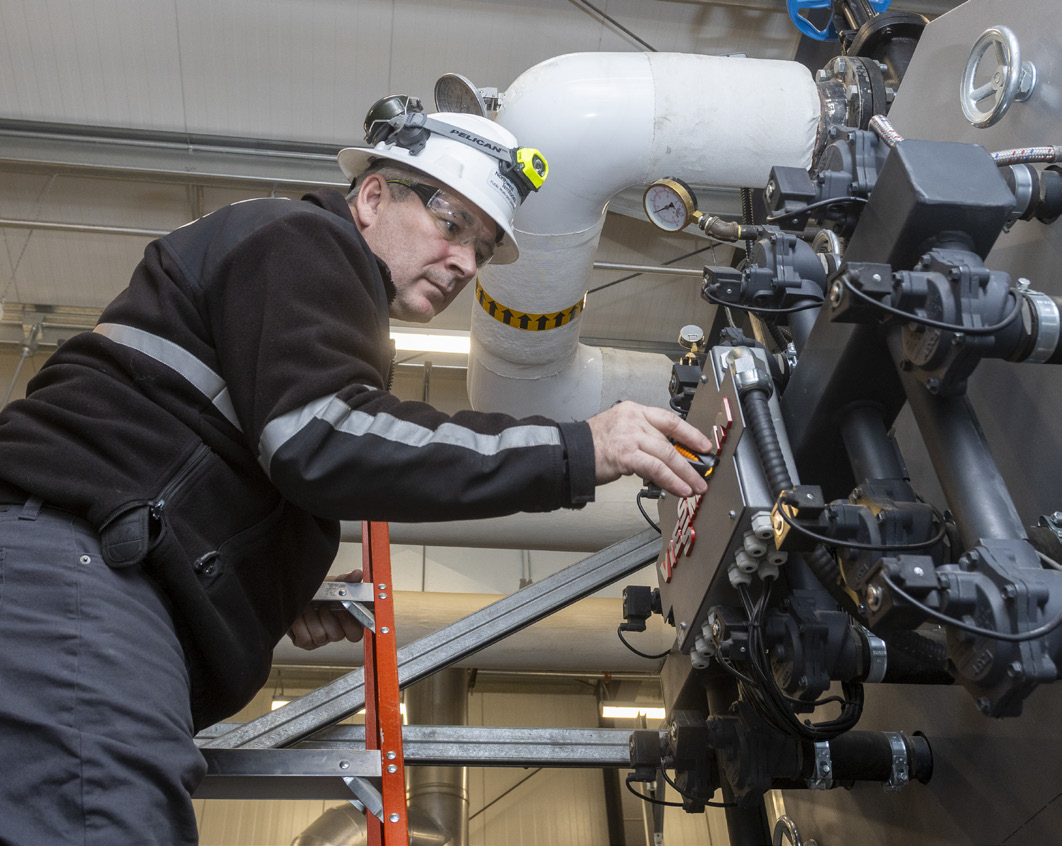
Matthias inspects a boiler at Legacy Stanton
Biomass in Yellowknife. Photo by billbradenphoto.
Eventually, they built a few more, not because they wanted another business, but because they enjoyed creating something together.
And without hesitation, Matthias credits Elizabeth as the greatest influence in his life.
“Whenever I found myself down,” he says, “she was always the one encouraging me to get back up and keep going.”
One Big Family
Matthias attended his first National Board Members' Meeting in October 2012, and his humor helped ease what could otherwise have been an intimidating experience.
“I didn’t know a soul," he says, "not even the Canadian chiefs.”
He remembers entering the meeting room at NBBI headquarters in Columbus, Ohio, looking around and trying to figure out where to sit. Across the room, a large man stood up and began walking toward him. It was Milton Washington, then the chief boiler inspector for New Jersey.
“I thought, ‘Sweet Jesus,’” Matthias says, laughing. “‘He’s coming over to kill me.’” Instead, Washington extended a rather large hand and introduced himself.
Without thinking, Matthias blurted out the first thing that entered his mind.
“Well, I’m glad you’re not my family doctor.”
The room exploded with laughter. The ice was broken, and within hours, chiefs from across Canada and the U.S. were inviting him to dinner and offering advice.
“By the third day, I probably had 20 personal cellphone numbers in my phone,” he says. “It was a very warm welcome. It was amazing.”
It was at that moment he also realized something important: Everyone wanted to help.
"It’s like one big family,” he says. “It means the world to me.”
The feeling hasn’t faded.
“The hardest part of retiring is all the friendships I’ve made at the National Board,” he says with his voice cracking, not for the first time, when discussing retirement.
Since becoming chief, Matthias says, whenever he has encountered an unfamiliar situation, someone has always answered the phone. Many times, that person has been New Brunswick Chief Eben Creaser, who is also NBBI Board of Trustees Chair.
“I’ve been fortunate to learn from many past and present chiefs across Canada and the United States. We all still keep in contact.
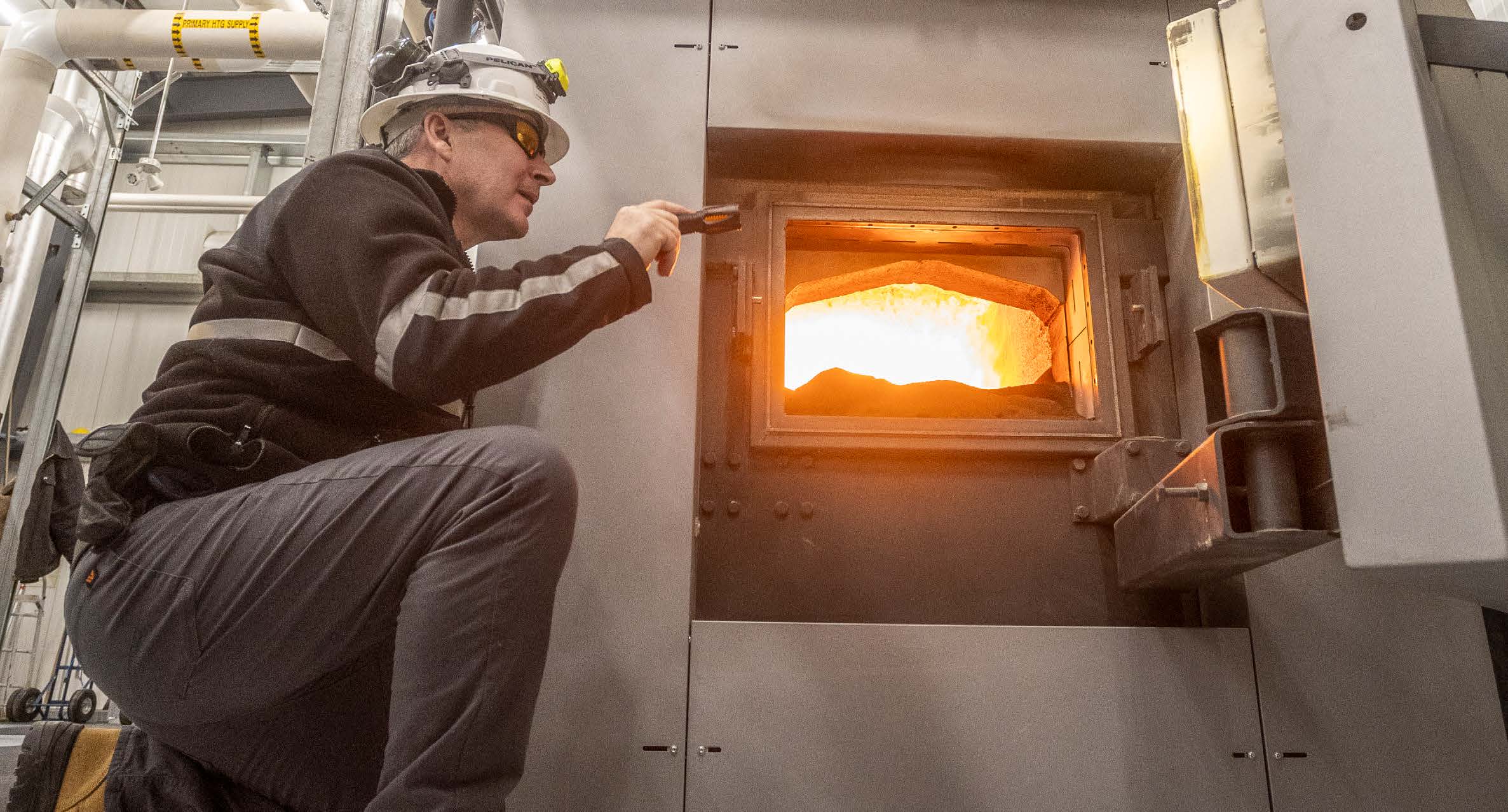
Matthias retired September 1, 2026, after 15 years as chief boiler inspector. "The hardest part of retiring is all the friendships I've made at the National Board." Photo by billbradenphoto
That said, Eben stands out as my biggest mentor. He has always been there, 24/7, to help guide me through my career. I’ve learned a lot from Eben,” Matthias says. "Not just technically, but how to treat people."
Those experiences shaped the kind of leader Matthias wanted to become.
Since then, when new chief inspectors attend their first Members’ Meeting, Matthias makes a point of introducing himself.
"I know exactly how they feel," he says, "and I want to make sure they feel welcome."
Retirement
After more than 15 years overseeing inspections across the territories, Matthias retired the first week of September.
In preparing for life after retirement, he and Elizabeth built a house in Edmonton to be closer to Bianca and her two children. Elizabeth relocated to the home when it was completed, while Matthias remained in Yellowknife until his retirement, visiting Edmonton about every other weekend.
With retirement behind him, Mailman isn’t counting inspections anymore. He’s thinking about experiences.
He and Elizabeth enjoyed an extended vacation earlier this year, which included visiting a few Asian countries. More travel is planned, as is spending time with their children and grandchildren.
“Our daughter, Sara, has already visited over 30 countries, so we’re hoping to catch up – and eventually beat her to 50,” Matthias says.
He and Elizabeth also have a son, Tyler.
Not surprisingly, retirement is unlikely to involve much idle time for Matthias, who jokes about becoming a Walmart greeter.
“If I can talk to people all day,” he says, “I’d probably enjoy it.”
Somehow that feels entirely believable because interacting with people has always been one of the enjoyable parts of his job.
A Legacy
Back at Tim Hortons, as Matthias heads toward the door, the scene resembles his entrance. Someone stops him for a quick conversation, and a few others wave.
Matthias waves back. He notices each one as he always has.
In the Northwest Territories, where relationships often begin with a shared cup of coffee or a box of doughnuts, Matthias Mailman has spent a career proving that the most enduring measure of an inspector isn’t simply the equipment he certifies.
It’s the trust he leaves behind.