In today’s increasingly complex fabrication and repair environments, welding is no longer a straightforward task delegated solely to field crews. It has evolved into a technically intensive, risk-sensitive discipline that serves as a critical bridge between engineering intent and operational execution. Despite this, persistent gaps remain in how welding is planned, understood, and implemented across organizational functions.
Although foundational welding practices, such as procedure development, material selection, and code compliance, are well-established across the industry, achieving consistent, high-integrity welds in production remains a persistent challenge. This article builds upon the presentation “Practical Approaches for Successful Production Welding,” delivered at the 2025 General Meeting, and the transcript and slides are available at nbbi.org.
Production welding presents a distinct set of challenges, largely due to the practical realities of executing intended weld designs. For those fortunate enough to work in a welloiled machine – pun intended – these fundamentals are likely second nature. However, many others operate in environments where the dance between paperwork and application is as tricky as figuring out how your ground clamp was disconnected while your buddy walks off laughing. The intersection of engineering design and field execution is often unclear, all while regulatory compliance looms overhead.
Although considerable emphasis is placed on welding procedure specifications (WPSs), procedure qualification records (PQRs), and welder performance qualifications (WPQs), comparatively little attention is given to how the welding will actually be executed in the field. This disconnect is noteworthy, as these important quality documents are typically developed under controlled, idealized conditions that rarely reflect the variable and often constrained environments encountered during fieldwork.
To address these challenges, three critical strategies can significantly enhance the consistency, quality, and efficiency of production welding:
- Educating non-field personnel on the practical constraints of field welding
- Developing welders as technical professionals rather than merely skilled tradespeople
- Integrating welding planning into project and asset management processes from the earliest stages
These initiatives are not isolated improvements; they represent interdependent elements of a system-level approach to welding excellence. This article explores how addressing these three areas can help organizations mitigate risk, enhance cross-functional collaboration, and elevate welding from a narrow-trade activity to a core function in delivering safe, reliable, and compliant assets.
Educating Non-Field Personnel on Field Limitations
In many project and maintenance environments, welding is treated primarily as an executional task, often considered only during the construction or repair phases. However, welding outcomes are frequently determined by decisions made much earlier – during design, procurement, and/or scheduling – long before arc initiation is ever considered. Addressing this disconnect is essential to improving field performance and overall asset reliability.
An important, yet often overlooked, aspect of welding lies with engineers and other non-field personnel. In many cases, these individuals receive limited education on the highly specialized nature of welding and the expertise required to perform it effectively. Simple integration and educational opportunities during project planning may offer the greatest benefit to successful production welding. For example, when engineers understand the basic characteristics and limitations of welding processes, much of the guesswork and logistical complexity during execution can be avoided.
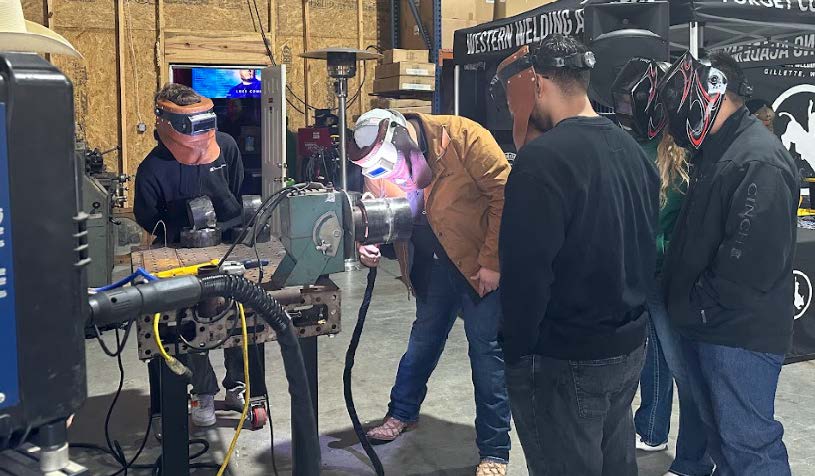
Juvenal Calvo, vice president at TIP TIG USA, demonstrates the TIP TIG welding process to students.
It is not uncommon to see inappropriate applications of welding methods, such as attempting submerged arc welding (SAW) in very unsuitable situations or shielding gas processes such as gas tungsten arc welding (GTAW) externally at the top of a flare stack during stormy conditions. By engaging with engineers and other non-field personnel early in the projects, teams can highlight practical limitations, such as the need for environmental protection (e.g., hoarding) or sufficient cable- and gas-line lengths. This can drastically increase the likelihood of producing timely, high-quality welds that meet both design intent and procedural compliance.
Those who lack field knowledge can benefit greatly from engaging directly with personnel who possess it. Encouraging engineers, planners, and other non-field personnel to learn the fundamentals of welding, question maintenance and execution teams, and observe field operations can significantly improve project outcomes. A foundational understanding of welding processes, including the setup, advantages, and limitations, not only enhances collaboration but also fosters informed decision-making during project design and execution.
One widely recognized resource to support this learning is the “American Petroleum Institute (API) Recommended Practice (RP) 577: Welding Processes, Inspection, and Metallurgy.” This document provides an accessible and technically robust introduction to welding principles and is often used as a foundational reference for engineers new to welding. However, welding processes alone are just one dimension of successful production welding. A comprehensive understanding of related planning, environmental, and operational factors is equally critical.
Developing Welders as Technical Professionals, Not Just Craft Laborers
Historically, welders have been regarded primarily as craft laborers responsible for executing welds according to drawings. However, the modern welding environment demands far more. Today’s welders are expected to meet stringent quality standards – often with rejection rates below 5% – while understanding and applying principles related to quality control, welding metallurgy, heat input, bead sequencing, procedural compliance, etc.
Despite these rising expectations, many welders receive limited access to formal training or technical development. Just as engineers are increasingly expected to understand welding fundamentals, welders must transition from purely execution-focused roles into technically informed professionals. However, this transition requires intentional support.
Most welders take tremendous pride in their craft. This pride – evident in the field and on welding-centric social-media platforms – often correlates with a strong desire for continuous improvement. Providing structured learning pathways can harness this motivation and support deeper engagement with welding science and standards.
Welders frequently require a broader range of technical knowledge than is often recognized, and engineers or quality assurance personnel are uniquely positioned to influence and elevate welders as professionals. Learning opportunities can take many forms – from formal resources, such as books, slide decks, and in-person or virtual lectures, to informal interactions, such as on-site discussions with cross-disciplinary colleagues.
In many cases, informal learning proves highly effective. Encouraging curiosity through questions like, “Why do we check the interpass temperature on stainless steel?” or “What happens if we don’t wait for the specified interpass temperature before welding the next pass?” can lead to deeper understanding. If responses are unclear or fall back on tradition alone, engaging others may yield better insights. Developing from a skilled welder to a welding professional requires more than repetition; it requires reflection, inquiry, and a growing knowledge base.
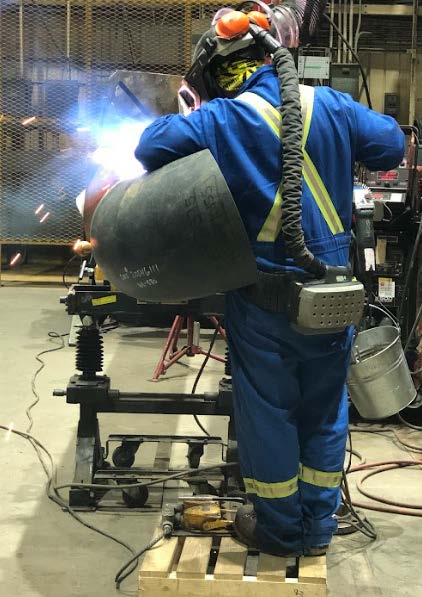
A pipeline welding professional works in
West Texas.
As welders increase their understanding of fabrication logic, weldability concerns (e.g., cracking risks), and inspection sequencing, they become better equipped to manage issues such as inspection hold points and scheduling pressures. This, in turn, reduces rework and enhances code compliance.
Supporting this advancement requires intentional frameworks. One effective approach is defining career stages, such as junior, intermediate, and senior welders, each with corresponding competencies that extend beyond welding technique to include blueprint/drawing reading, understanding process variables (e.g., preheat, interpass temperature, post-weld heat treatment), travel speed, and quality assurance expectations, among other things. Cross-functional training with inspectors or engineers can also be highly beneficial, often fostering natural, bidirectional learning and collaboration. This typically facilitates welding planning.
Positioning welding as a career path rather than merely a job fosters greater pride in workmanship, enhances cross-disciplinary collaboration, and supports a broader cultural shift in which welders are recognized as integral contributors to engineering outcomes and not just the hands behind the torch. Investing in the development of welding professionals contributes to the often-overlooked foundation of successful, reliable production welding.
Integrating Welding Planning into Project and Asset Management
Traditionally, welding has been treated as an isolated task executed during the construction or repair phases, often managed independently from broader project or asset strategies. However, in today’s environment, where integrity, reliability, and regulatory compliance are non-negotiable, this reactive approach is no longer sufficient.
Integrating welding planning into project and asset management involves incorporating welding-related decisions into the earliest stages of project development, including design reviews, procurement strategies, and long-term maintenance planning. This shift transforms welding from a reactive activity into a proactive discipline that supports asset integrity across the full lifecycle.
During the design or review phases, it’s critical to look beyond the presence of weld symbols and material callouts on documents. Instead, teams should visualize the complete welding process: how components will be cut, prepared, staged, fitted, and tacked, with or without the use of preheat equipment. This mindset helps illuminate the real-world constraints welders face. For example, suppose the design cannot accommodate a person without protective gear. In that case, it will likely be even more restrictive for a fully outfitted welder trying to strike an arc, manipulate the puddle, and maintain control, all without moving components out of tolerance or disrupting pre-heating systems. Designers and planners benefit from figuratively “putting themselves in the welder’s position” to anticipate execution challenges. This kind of scenario-based review can significantly reduce rework and improve execution success.
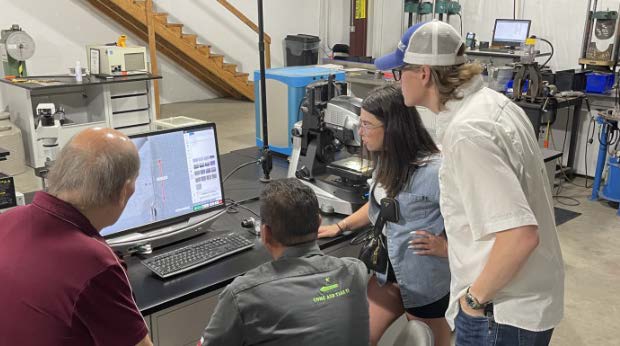
Charles Patrick of Republic Testing Labs & IWB (left), Guadalupe Perez Jr. of Republic Testing Labs, Paisley Witkowski of IWB, and James Johnson of Becht at Republic Testing Labs review microscopy of a weldment.
Two commonly overlooked aspects of welding planning are logistics and real estate. While they may seem peripheral, these elements are often critical when preparing for a job. Supporting welding operations requires careful coordination of laydown spaces for base materials, filler metals, power sources, cables, as well as shielding and/or backing gas cylinders or tanks. Ensuring the timely delivery and setup of these resources, along with qualified personnel, is essential. If even one element is missing, welding cannot proceed.
On many projects, this planning is often neglected until the moment welding is scheduled to begin, resulting in last-minute scrambling. This reactive approach introduces unnecessary pressure on execution teams and compromises welding integrity. Welders can’t perform their work effectively if cables are too short, backing gases are not properly purging the system, filler metals are unavailable, or base materials are not properly prepared.
Welding logistics are the backbone of successful execution. While WPSs and drawings define what and how to weld, logistics ensure when, where, and with what the work is actually performed. Poor logistical planning can lead to quality issues, production delays, or even code violations. Effective logistical coordination enhances productivity, minimizes risk, and ensures alignment with project schedules and specifications. Organizations that treat welding logistics with the same rigor as engineering design and inspection planning will be far better positioned to deliver safe, efficient, and high-integrity weldments, regardless of complexity or environment.
Conclusion
Successful production welding can’t be achieved through the isolated efforts of documentation, engineers, or welders alone. It requires a coordinated strategy that bridges the knowledge gap between design and execution, enhances the technical capabilities of welders, and integrates welding considerations into the broader context of the project and asset lifecycle planning. Educating office-based personnel on field conditions helps prevent impractical designs and reduces the likelihood of costly rework. Investing in the professional development of welders reinforces frontline quality assurance. Finally, integrating welding considerations early in the planning phase promotes alignment of procedures, workflows, and stakeholder expectations. Ultimately, excellence in welding begins not at the arc, but in the deliberate coordination of people, processes, and plans – well before the first spark flies.