The National Board of Boiler and Pressure Vessel Inspectors (NBBI) has unveiled the 2025 edition of NB-263, RCI-1: Rules for Commissioned Inspectors. This standard describes the requirements to become a National Board Commissioned Inspector. It presents the duties for National Board Commissioned Inspectors and Inspector Supervisors.
Effective January 1, 2025, with mandatory compliance beginning July 1, 2025, this update represents a significant milestone in inspection practices. This standard was developed and is maintained by NBBI’s Committee on Qualifications for Inspection (CQI).
“RCI-1 is one of the most important documents published by the National Board,” said Tom Clark, CQI chair and Oregon’s chief boiler inspector. “It is the primary standard by which we control the quality of inspectors working today. RCI-1 builds a strong foundation for inspectors through detailed experience, education, and examination requirements. The standard is then set even higher with clear and consistent duties and responsibilities for commissioned inspectors and supervisors. A code of ethics, a system for complaints and due process, and mandatory continuing education ensure inspectors maintain the highest level of quality and professionalism throughout their career.”
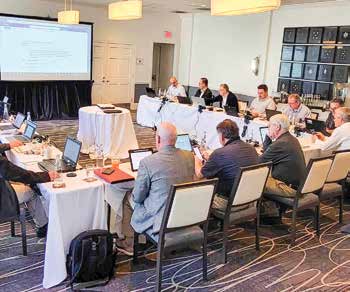
CQI members, shown at their March 2024
meeting, convene in person twice a year
and remotely as necessary.
This edition incorporates key technical and administrative revisions and marks a transition to digital accessibility. It is the first edition available exclusively in electronic format. This shift reflects a broader industry trend toward efficiency, accessibility, and environmental responsibility.
CQI members represent jurisdictions and Authorized Inspection Agencies across North America and Europe. They meet twice per year in person, as well as online, to develop and revise the NBBI standards related to inspector credentialing and qualification, primarily focusing on RCI-1. Revisions are presented to NBBI’s Board of Trustees for final approval.
“The volunteer members contribute countless hours to review and develop requirements, draft responses to inquiries, and carefully consider the impact and ramifications of proposed changes,” Clark said. “The committee’s work is ongoing – there’s always room for improvement when it comes to public safety standards.”
KEY REVISIONS IN THE 2025 EDITION
Structural and Technical Updates
- The “Foreword” section has been renamed “Introduction” to modernize the document’s tone and structure.
- References to physical commission cards have been removed in anticipation of electronic commission cards debuting in the 2026 renewal cycle.
Part 1: General Revisions
Significant changes were made to terminology and formatting to improve clarity and usability. Key updates include:
- Removal of references to the Federal Inspection Agency (FIA) as the program transitions to the Owner-User Inspection Organization (OUIO).
- Editorial changes to improve consistency, such as substituting “approved” with “accepted.”
- Clarifications on reinstatement procedures for inspectors maintaining Pressure Equipment Inspector credentials.
Changes to Tables
Several tables have been revised to better align with industry standards:
Table 1: Adjustments were made to commission qualification requirements, emphasizing on-the-job training and detailing trainee participation.
Table 2: Revisions clarify the expectations for diversified experience for Repair Inspector trainees.
Table 4: Minor editorial updates were made, including adding missing terminology.
Part 4: Supervision and Auditing
Changes address supervisory roles and ensure clear boundaries:
- Authorized Inspectors assigned multiple supervisors will have only one supervisor audit their performance, avoiding conflicts of interest.
- New rules prevent inspectors and supervisors from auditing each other, maintaining impartial oversight.
Part 5: Repair Inspection
Revisions in this section mirror those in Part 4, reinforcing the separation of duties between inspectors and supervisors. This section also clarifies the expectations for verifying defect resolutions.
Part 6: Inspector Diary, Monitoring, and Employment
A major overhaul is the introduction of a new focus on employment practices:
- New guidelines emphasize comprehensive documentation, including detailed entries in logbooks and clear rationales for decisions made during inspections.
- The monitoring frequency will depend on the amount of work performed under ASME standards, ensuring flexibility while maintaining oversight.
- Inspectors must be employed exclusively by one organization, whether full-time, part-time, or on a contractual basis. While already a requirement, this provision has been relocated from the glossary to Part 6 to strengthen its enforceability.
Glossary Updates
The glossary now includes updated definitions for endorsements and has removed the term “Federal Inspection Agency.” The revised definitions clarify the qualifications and roles of inspectors across various specializations.
About NB-263, RCI-1
A new edition of NB-263, RCI-1 is planned every two years, with the next edition effective January 1, 2027.
This standard describes the requirements for becoming a Commissioned Inspector and the representative duties of Commissioned Inspectors and Inspector Supervisors. NBBI offers two inspector commissions: the Inservice Inspector Commission (IS) and the Authorized Inspector Commission (AI).
The IS Commission is issued to individuals qualified to perform inspections related to installation and inservice, that is, the jurisdictionally required periodic inspections of boilers and pressure vessels in operation. In this standard, the holder of a Inservice Commission is referred to as an inspector.
The AI Commission is issued to individuals qualified to perform inspections of boilers and pressure vessels as required by the American Society of Mechanical Engineers Boiler and Pressure Vessel Code (ASME BPV Code). In this standard, the holder of an Authorized Inspector Commission is referred to as an Authorized Inspector.
NBBI also offers nine endorsements – Repair Inspector (R), Authorized Nuclear Inspector (N), Authorized Nuclear Inservice Inspector (I), Authorized Nuclear Inspector (Concrete) (C), Authorized Inspector Supervisor (B), Owner-User Inspector Supervisor (O), Authorized Nuclear Inspector Supervisor (NS), Authorized Nuclear Inservice Inspector Supervisor (NSI), Authorized Nuclear Inspector Supervisor (Concrete) (NSC).
The 2025 edition of NB-263, RCI-1 sets a new benchmark for inspection standards, focusing on digital accessibility, clear role definitions, and robust training. These updates ensure inspectors are prepared to meet modern industry demands, fostering innovation and excellence in inspection processes.
Organizations and inspectors should familiarize themselves with the changes and take proactive steps to ensure compliance by July.
“Without RCI-1, each jurisdiction and Authorized Inspection Agency would have to set their own standards for inspector qualifications, training, and duties and responsibilities," Clark said. "There would be little consistency between organizations, inspectors, and the work they perform. Truly, no one document is more critical to the National Board’s founding mission of: ‘One Code. One Inspector. One Stamp.’”
Inquiries related to NB-263, RCI-1 may be submitted by emailing secretaryCQI@nationalboard.org. The latest edition of NB-263, RCI-1 can be found at nbbi.org under the “Credentials” tab.