Graphite, a naturally occurring mineral, is more commonly encountered in daily life than one might expect.
One of my experiences with it occurred when I was unable to unlock the door of my 1983 Datsun. My father came to the rescue with a tube of graphite, and while I expected a greasy substance to emerge, I was surprised to see a fine powder instead. Initially, I was puzzled as to how this would solve the issue, but to my amazement, it immediately freed my stuck lock.
More than 20 years later, I was reminded of graphite's unique properties when my son participated in the Boy Scouts Pinewood Derby. I overheard several parents discussing applying graphite to car axles to improve speed. Sure enough, it worked; he finished in third place!
What Exactly is Graphite?
What is it about graphite’s properties that enables it to function as a lubricant while also serving as the core material in pencils? What exactly is graphite? How can a substance that feels soft and slippery, like a lubricant, also excel in heat transfer, serve as an excellent conductor of electricity, and exhibit corrosion resistance?
To fully understand graphite, it is essential to examine its chemical composition. Like diamonds, graphite is composed entirely of carbon atoms, and both are considered allotropes of carbon. However, graphite is the more stable of the two. The key difference between graphite and diamond lies in the arrangement of their carbon atoms, which results in distinct properties. Each carbon atom possesses four valence electrons in its outer shell, allowing it to form four covalent bonds with other atoms. In contrast to diamond, where each carbon atom bonds with four others, graphite forms bonds with only three neighboring carbon atoms, creating flat layers. These layers are loosely held together by weak van der Waals forces, allowing graphite to slide easily, a property that contributes to its lubricating qualities and facilitates the free movement of electrons.
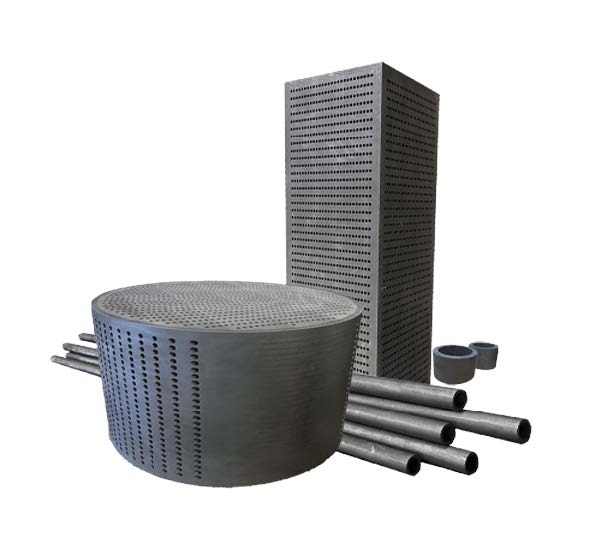
Photo courtesy of CG Thermal
Graphite components are available in a variety
of shapes and sizes, including blocks, cylinders,
tubes, and machined sections.
Graphite is the only common non-metal that exhibits high electrical conductivity. It possesses both metallic and non-metallic characteristics, efficiently conducting heat and electricity, while being resistant to high temperatures and chemical reactions. Although graphite is weaker than metals at room temperature, its strength increases significantly at temperatures ranging from 1800°F-4500°F (about 980°C-2480°C). Additionally, graphite has a low thermal expansion rate and remarkable resistance to thermal shock.
These characteristics make graphite a highly effective heat-transfer medium, offering several advantages in heat exchangers, such as ease of machinability, superior resistance to chemical reactions and corrosion, high operational safety, resistance to creep, and long service life. Furthermore, its low X-ray absorption makes graphite particularly valuable in nuclear applications. In addition to these qualities, graphite pressure equipment is commonly used in corrosive environments, including those involving hazardous chemicals, highlighting its critical role in environments where safety and durability are paramount.
When a heat exchanger is required for corrosive processes such as steel pickling, fertilizer production, petrochemical processing, pharmaceutical production, or the chlor-alkali process, graphite is an excellent choice for internal tubes, plates, or blocks because of its unique properties.
However, because of its porous, layered structure, graphite must be “impregnated” with another compound to reduce or eliminate its porosity. This impregnation process offers the advantage of tailoring the material to meet the specific requirements of its intended application.
Natural Vs. Synthetic Graphite
To better understand graphite’s properties and applications, it's important to examine its origins. Graphite is a versatile material that exists in two primary forms: natural graphite, which is mined from the earth, and synthetic graphite, which is produced through a high-temperature manufacturing process. Natural graphite is valued for its availability in three distinct forms: amorphous graphite, flake graphite, and high crystalline graphite. Each type has different carbon content and is suited for various applications, with flake graphite being the most valuable. However, the supply of natural graphite is limited, and mining can be challenging due to environmental concerns and the need for specialized extraction techniques.
As a result, synthetic graphite has become an important alternative for applications requiring consistent purity and material properties.
Synthetic graphite is produced by heating carbon-rich materials, such as petroleum coke and needle coke, at temperatures exceeding 4350°F (about 2400°C) in a process called graphitization. During this process, the carbon atoms align into a highly ordered crystalline structure, resulting in a material with exceptional thermal conductivity and a low thermal coefficient of expansion. The production process typically begins with crushing and grinding raw materials into fine powders, which are then mixed with binders such as coal tar pitch or synthetic resins. This mixture is then shaped using techniques such as cold isostatic pressing or extrusion, before being subjected to high-temperature treatment to convert it into crystalline graphite. The result is a highly pure product with a highly uniform crystalline structure. Synthetic graphite’s high purity and uniform structure make it ideal for heat exchangers, where both thermal conductivity and structural integrity are critical.
Compared with natural graphite, synthetic grades often exhibit superior heat-transfer performance due to their controlled microstructure, higher density, and fewer defects. While thermal conductivity varies widely depending on the specific grade, orientation, and form, synthetic graphite is generally better suited for demanding applications where efficiency and durability are essential. The trade-offs are cost and energy: producing synthetic graphite is more expensive and energy-intensive than mining natural graphite, and its higher environmental footprint can limit broader adoption despite its superior performance.
Whether a manufacturer uses natural or synthetic graphite, the inherent porosity of graphite allows it to absorb substances such as water, albeit slowly, which can limit its suitability for certain applications. To address this, the graphite's pores are typically filled with a thermosetting resin, making it impervious to liquids and gases. This not only enhances graphite’s performance and suitability but can also nearly double its strength, making it ideal for heat exchanger applications.
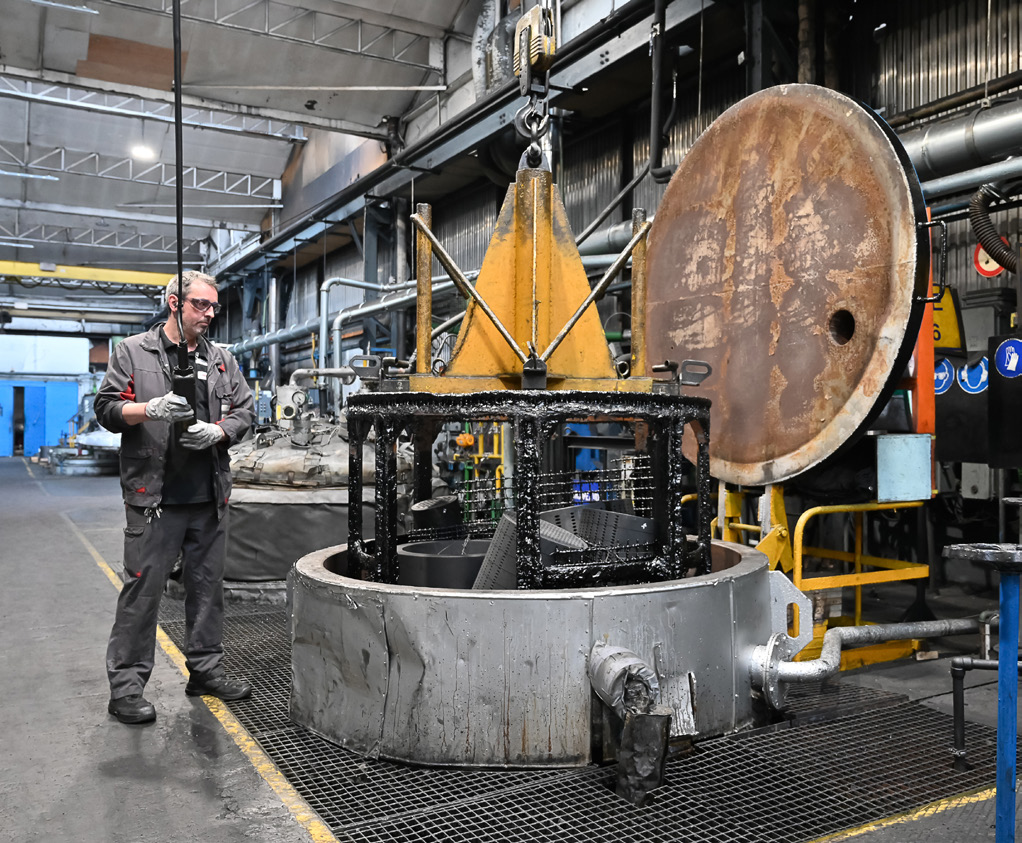
Photo courtesy of Mersen;
photograph by Séverine Kichenbrand
Graphite components are immersed in a resin bath
during impregnation. The resin penetrates the pores
of the graphite, helping to seal the material and
improve its resistance to fluid penetration.
The choice of resin depends directly on the intended application of the heat exchanger, as it plays a crucial role in determining the maximum operating temperature of an impervious graphite heat exchanger and the chemicals to which it can be exposed. The most commonly used resins for impregnating graphite in heat exchangers are phenolic and furan resins, though others are also used.
Phenolic resin is a synthetic polymer, typically petroleum-based, that can provide completely closed porosity. It is recognized for its exceptional strength, heat resistance, and chemical durability. Furan resin also offers good heat resistance, has higher chemical resistance than phenolic resin in slightly oxidizing environments, and has good adhesion to various surfaces. Other impregnation compounds include polyester resin, epoxy resin, polyurethane resin, oil, babbitt, and even salts such as borates and phosphates. Each resin or compound possesses distinct characteristics that make it ideally suited for specific applications, whether for structural reinforcement or corrosion protection.
Code Requirements for Graphite Pressure Vessels
Graphite pressure vessels were first introduced into code requirements in the 1998 Edition of the National Board Inspection Code (NBIC) Part 2, with the addition of Appendix 8 in the 2000 Addenda, which provided specific inspection guidelines. Later, ASME followed by including graphite construction requirements into Section VIII, Division 1, with the introduction of Part UIG in the 2007 Edition and its 2009 Addenda. These additions established a clear framework for the safe design, construction, and inspection of graphite pressure vessels. This is important knowledge, particularly for inspectors and engineers who may be more familiar with traditional metallic pressure equipment.
An Inservice Inspector (IS) should possess a fundamental understanding of the construction and composition of the core of a graphite pressure vessel. Specifically, the inspector should be knowledgeable about the resins used in impregnated graphite, including their chemical properties and performance parameters. Additionally, the inspector should be mindful of the service conditions under which the vessel is operating, including the specific operating parameters relevant to the application. Familiarity with the NBIC, Part 2, Section 6, Supplement 3, titled “Inspection of Graphite Pressure Equipment,” is essential for conducting thorough and compliant inspections.
As with any pressure vessel, the IS must evaluate the external surface of a graphite heat exchanger for signs of damage, such as leaks, cracks, bulges, spalling, or excessive erosion. In addition to visual inspection, reviewing operating logs is crucial to identify any irregularities, including excessive pressure drops or temperature fluctuations. While pressure drops may suggest fouling, elevated temperatures can degrade both graphite and metal components, potentially compromising vessel integrity.
Beyond the visual inspection, the IS must also follow the guidelines outlined in NBIC Part 2, Section 1, which emphasizes a comprehensive review of operational history, safety requirements, and jurisdictional compliance. This includes reviewing prior inspection reports, maintenance logs, repair or alteration records, and manufacturer’s data sheets to confirm that the vessel remains within its intended service parameters. Where internal access is possible, inspectors should assess for conditions not visible externally, such as resin degradation or internal delamination. Finally, the IS should verify that safety devices, such as relief valves and isolation valves, are present, correctly installed, and properly maintained.
An Authorized Inspector (AI) is responsible for verifying that the construction of a graphite pressure vessel complies with ASME Section VIII, Division 1, Part UIG (2025 edition), and that all required inspections and documentation are properly completed. The AI must be familiar with its production process and the characteristics of vessel imperfections. The AI plays a key role in ensuring product integrity by closely monitoring the manufacturer's Quality Control Program, observing visual inspections conducted by the manufacturer's personnel and verifying acceptance testing where required. A major part of their responsibility involves reviewing the manufacturer’s records, such as continuity logs for cementing technicians, which document dates, test results, and assigned identification marks. These records must be certified and easily accessible for inspection.
In addition to monitoring the manufacturing process, the AI’s responsibilities include reviewing and approving repair procedures for certified graphite materials and ensuring that any rework meets established specifications before proceeding.
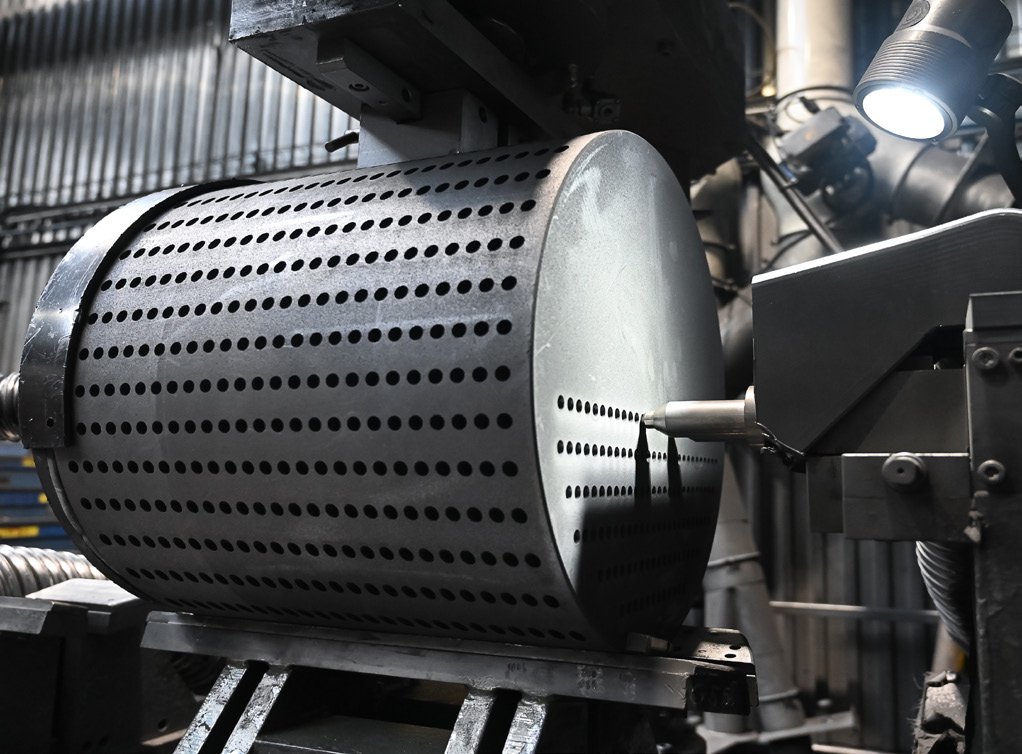
Photo courtesy of Mersen;
photograph by Séverine Kichenbrand
A block of graphite is precision-drilled to create the
numerous passages needed for heat transfer. The
resulting perforated graphite block is used in heat
exchangers where graphite’s excellent heat-transfer
properties and corrosion resistance are advantageous.
If defects found in the material can’t be satisfactorily repaired, those materials shall be rejected. The manufacturer is responsible for preparing and qualifying a written procedure that meets the requirements of Section V, Article 9 for Visual Examination.
This written procedure qualification shall be demonstrated to the AI. While the AI is not required to witness every test, such as pressure tests on heat exchanger tubes, they must ensure that procedures are properly documented and that qualification standards are met. Furthermore, the AI may, when warranted, require requalification of procedures or personnel involved in fabrication. Each graphite pressure vessel part requiring inspection shall be marked in accordance with the applicable requirements of UG-116, with the AI witnessing these key markings and certification steps.
Ultimately, the AI must verify and sign the completed Form U-1B Data Report for each graphite vessel or part marked with the Certification Mark, affirming that all manufacturing and documentation requirements have been satisfied in accordance with the Code.
Given the unique properties of graphite, which often make it suitable for applications involving hazardous, toxic, or lethal substances, all inspectors must exercise heightened caution during inspections. Strict adherence to established safety protocols for handling and inspecting vessels in such critical services is imperative to ensure both personnel safety and equipment integrity.
Advantages and Limitations of Graphite Heat Exchangers
Graphite is a highly effective material for constructing heat exchangers, offering excellent chemical resistance and thermal conductivity, and can have a service life of more than 20 years when properly installed and maintained. Despite these advantages, graphite has notable drawbacks that must be considered when determining its suitability for a facility. Key concerns include the relatively high initial cost, material strength, and the need to avoid upset process conditions.
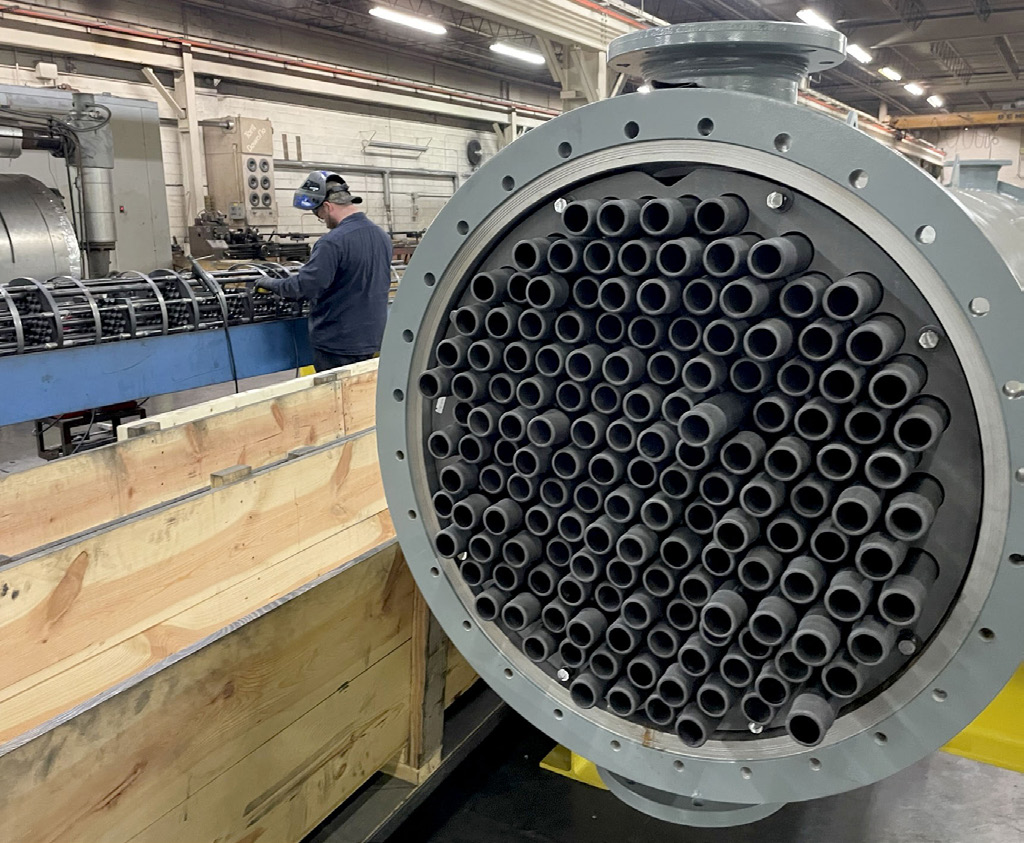
Photo courtesy of CG Thermal
A graphite heat exchanger showing the numerous
graphite tubes that provide the heat-transfer
surface within the unit.
Graphite heat exchangers represent a substantial initial investment. Since manufacturing a graphite heat exchanger is more cost-intensive, the purchase price will naturally be higher. The installation of these systems is often more complex, resulting in higher prices for end-users. Over the long term, however, they are energy-efficient and can provide cost savings. Another concern is that graphite’s inherent brittleness makes it prone to breaking, especially when under mechanical stress or impact.
It is critical that the vessels are handled with care during installation, maintenance, and operation, as improper handling may cause cracks or fractures, compromising the heat exchanger's structural integrity and performance. Even impregnated graphite remains susceptible to cracking, especially when improperly processed or when exposed to rapid thermal fluctuations or other extreme conditions.
Once cracked or broken, graphite heat exchangers are difficult and costly to repair, with maintenance often more complex and expensive than that of traditional metal exchangers. These are factors that may deter some companies from choosing graphite heat exchanger systems. However, when installed and used properly, graphite heat exchangers require low maintenance and have a long lifespan.
Environmental Considerations and Rising Demand
The global demand for graphite is increasing rapidly. Electric vehicle batteries, renewable energy systems, and industrial decarbonization efforts primarily drive this demand. Therefore, the competition for this increasingly vital industrial resource is intensifying, placing pressure on supply chains and raising concerns about sustained supply and cost management across diverse markets. Since most natural graphite comes from a limited number of countries, and producing synthetic graphite is both energy-intensive and costly, concerns about long-term pricing and availability are mounting across industries.
As regulatory demands for energy efficiency and environmental compliance grow, graphite’s inherent thermal properties and durability will remain key factors in advancing its use and encouraging technological innovation.
A Material with an Expanding Role
From unlocking a stubborn Datsun door to giving a Pinewood Derby car a competitive edge, graphite has long proven its value. It has evolved over the past several decades from a simple household lubricant to becoming a critical material in everything from electronics to high-efficiency heat exchangers. Its advanced applications are driving progress toward cleaner, safer, and more efficient industrial solutions.
Graphite’s importance is not in question; it’s how the engineering sector will respond to drive the next generation of clean, high-performance systems and ensure the material’s responsible and sustainable use in a rapidly changing world.