94th General Meeting Presentation
“Steam and Spirit: Inspecting the Past to Power the Future”
Kory Anderson
The following remarks were delivered at the General Session of the 94th General Meeting on May 11, 2026. It has been edited for content and phrasing.
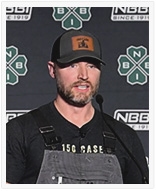 INTRODUCTION: Kory Anderson is an award-winning entrepreneur with expertise in engineering, manufacturing, casting, and welding. He rose to fame for building the world’s largest steam traction engine, the 150-horsepower Case.
But his achievements go far beyond that feat. Anderson is the CEO of Made By Anderson Brands, Anderson Industries, and Dakota Foundry. Anderson Industries is renowned for its innovative engineering and manufacturing solutions, and Dakota Foundry is one of the few U.S. foundries specializing in grey and ductile iron castings weighing up to 5,000 pounds. In addition, Dakota Foundry was recently named one of the top 100 small businesses by the U.S. Chamber of Commerce.
Anderson is also the author of “The 150 Difference,” which chronicles the historical significance of the Case steam engine and his remarkable journey to resurrect it.
Their slide presentation can be found here.
MR. ANDERSON: What an honor it is to be in a room filled with not only people who are passionate about steam, like I am, but people who are passionate about having respect for steam. Your career revolves around preservation and keeping everything – our industry, our steam, and our people – safe. And that's extremely important, because none of us can go on without the work that you do.
A lot of people don't realize how important inspectors' work is until something goes wrong. The work you do to keep everybody safe, to preserve steam as a legacy, and to preserve steam as an amazing source of power is extremely important.
So, I just wanted to start off by saying thank you. Thank you to all of you who are committed to keeping steam alive, to keeping our public and everybody safe, and to promoting this industry. It's really, really important.
I have a mission that's kind of threefold: Made in America, American-Made Life Strengthening, and the Preservation of American Manufacturing. We do this through our iron and aluminum foundries, as well as our machining and welding businesses. We are very passionate about bringing manufacturing back to the U.S.A. and continuing to build things here. And we can't do that without skilled tradespeople.
I have another mission where we're developing the next generation of skilled tradespeople. We do that through our nonprofit called the Iron Warrior Academy. In the Iron Warrior Academy, we're introducing young people to the trades and giving them exposure and opportunities to find a path, whether it's welding, machining, construction, or boiler inspection – anything in our industry. We need people in the trades. We need young people to be interested and pushed into this development, because we're going to have a huge shortage by 2030, probably about three million people short in our trades workforce. So, this is a big mission of ours.
This is my daily work. My passion and my hobby that led me to those two were all about steam. I was first introduced to steam when I was 5 days old. My parents took me out of the hospital as a 5-day-old baby and brought me to a small town called Rollag, Minnesota, with a population of about nine people. And every Labor Day weekend, about 150,000 people come to this little community just to relive and experience the power of steam and the legacy of American innovation and history.
So, I was 5 days old when I came to the Western Minnesota Steam Threshers Reunion for the first time and have been coming ever since. Every year of my life, I've been to steam shows. Steam was basically injected into my veins as a young boy. As many of you know, steam is something that gets into you, and it flows into you. It's something that just becomes a passion and a part of us.
When I was 9 years old, at the same show in Rollag, I learned about the largest steam tractor ever produced. This was originally built from 1905 to 1907, by the J.I. Case Company. They built nine and called them the 150 Case Road Locomotive. I learned about this when an old guy brought this big boiler on a trailer to the show because they were featuring Case. I thought, what's unique about this? Why is he bringing just a boiler to this show? Then I learned this boiler was the only remaining piece of these nine original tractors.
As a 9-year-old, that really piqued my interest, and ultimately, it became my dream to see this tractor come back to life one day. That was really what inspired me to embark on my journey to learn the skilled trades and to start manufacturing companies. Ultimately, I started a welding and machine shop because I had to build the means and team to take on a project like this. In 2014, I acquired an iron foundry. One, because it was a good business, but mainly because it was needed for my dream to move forward to cast all the parts it was going to take to bring this tractor back to life.
Nothing existed of this tractor. I had originally gone to the J.I. Case Company headquarters in Racine, Wisconsin, and told them, " Hey, I want to build this tractor.” And I got a copy of the blueprints. I took those blueprints, reengineered them, and had to learn and understand the whole process that had been lost over 100 years of how we build steam engines, from the riveting of wheels and fabrication of the boilers, and the whole process.
The first and most important step to make this successful was to have a new boiler built, and that was the first piece that we built. We got a company out of Ohio that builds new boilers for traction engines and hired them. It's designed to the original blueprints, but according to the ASME current code.
OK, we had a boiler. Then, after acquiring the foundry, we started casting parts. I started in April 2017, and we basically worked full time building this tractor. It's about 75,000 pounds of iron and steel with 250 unique castings. We built this tractor in 18 months from start to finish.
In 2018, we first unveiled it to the public. This wouldn’t have been possible without someone willing to sign off on it being safe for us to do this and to operate this boiler. So, we needed a boiler inspector. In the state of South Dakota, we have a great chief, Aaron (Lorimor). Aaron had to sign off to make sure that it’s OK to run the engine in public.
And in 2018, when we unveiled this tractor to the public, we had 8,000 people not just looking at it on YouTube or Facebook; we had 8,000 people physically present around this legendary tractor to see it come back to life. This tractor has a 50-horse boiler, and it creates 1.5 million foot-pounds of work per minute. There's a lot of energy. There's a lot of force inside this boiler, and we're running 180 pounds of steam pressure.
The connection to steam is really important. And that's why I want to talk about how steam really connects us all.
The work you guys do with modern steam applications in hospitals, plants, refineries, and electricity generation is extremely important, but a lot of people aren't connected to it anymore. How many people, when they go to bed at night and plug their iPhone into their charger, are thinking, “I'm sure thankful for that steam turbine that's generating the electricity for my phone to be charging,” or “I'm thankful for the inspector who's making sure that the continuity of electricity in these systems and everything is safe and operating.”
Most of the general public no longer has any connection to steam because we don't see it. It's all behind the scenes. It's all in the infrastructure. It's important for us to talk about the historical aspect of steam, not only for preserving the legacy of steam and where we came from, but also because the boilers you guys inspect today are direct descendants of all the machines that built this country. But it also creates an opportunity for us to connect people back to steam.
Steam still matters today. It wasn't just powering an industry; it really built America. In the late 1800s, steam was the most powerful idea in the world. It completely changed how everything was built in this country. We were farming with horses. Our manufacturing consisted of small blacksmith shops that just banged stuff out, but nothing was at scale because there was no mechanical means of doing anything in a mass scale.
Steam transformed and mechanized work. It allowed us to farm larger areas much faster with stream tractors. It allowed us to move goods, materials, and people. Most people never traveled more than five miles from their homes before the steam locomotives were introduced.
We moved goods and materials, built railroads and infrastructure, and manufactured with steam engines powering line shafts that ran multiple lathes and drill presses. It allowed us, as a country, to start building and doing things on a mass scale. And that's extremely important.
Today, steam is still working; 80% of our electricity is still generated through steam. A lot of manufacturing and history are still connected to steam. But where we can connect back to the public, to the general people, for an appreciation of this power and the steam is really in what we do through the historical side, and getting people this exposure to the old tractors, the locomotives, the steam cranes, and the road rollers that built roads. For them to get an experience and an opportunity to connect with this, because going back to the 150 Case, when those people are standing there, we ended up pulling 51 bottoms with that single tractor. About 80,000 pounds of force is required to pull 51 14-inch bottoms, allowing us to plow 60 feet of soil in one pass.
When that steam is coming out of the boiler at 180 pounds per square inch, it passes through the steam valve, the main steam line, goes through the throttle, which we've got wide open, and goes through the governor, where we're running balls out. The term "balls out" came from our old steam engines.
The governor balls being wide out, that means we're running wide open. It comes down into the steam chest, and then the steam goes on – there's a slide valve that goes back and forth that just lets the steam on each side of a piston. When that steam goes into that cylinder, it's only pushing one piston. In the 150 Case, there's a 14-inch piston, one cylinder, one piston, and that steam is hitting it at 180 pounds per square inch of pressure. It's creating 8,000 foot-pounds of torque with that one cylinder and that one piston.
By comparison, it takes two 600-horsepower quad-track bottom tractors today to generate that amount of torque. For people to be there physically, it's something you smell, and then for those of you who have been around the steam tractors and some of you guys who rode on the 150, it's something you feel. You feel it in your chest when that engine is exhausting. You feel the real power of the steam.
And for the general public, it also connects the industry. It connects the mechanics of everything, because in a steam engine, you get to see the whole engine operating, the connecting rod turning the crank disk, and the flywheel turning. You're seeing the immense power that steam has and how it is mechanizing and turning that into work, versus a car going down the road. We don't see the cylinders pumping in the engine. You don't see anything happening. People have no connection to what it's taking to actually power that. But when they see a steam tractor or a steam locomotive chugging down the track, you see that steam in its raw form pushing and mechanically turning that into work, which is extremely impressive.
All this is not possible, though, without the role of inspectors and the importance of preserving steam and respecting it, because steam is extremely powerful. It requires discipline; it requires respect. Complacency and pressure don't coexist for very long. That’s why it is so important for the role that we have with our inspectors.
What I want to try to inspire some of you to get more connected to the historical side. The National Board has a tremendous task group – the National Board Inspection Code (NBIC) Task Group Historical Boilers. If you're not involved or don't know much about that task group or if you're interested in getting connected with the historical side of things, it's a great way to learn.
We need the safe continuity of these tractors and engines to continue operating. One, to preserve the legacy and remember the historical application of steam and what got us to where we are today, and two, to connect people to the work you do, so they have an appreciation and a connection. They understand the power of steam and the importance of operating it safely, as well as the role of inspection, following the codes and rules, and everything that goes into making it happen.
The reason it's important is because steam doesn't get a second chance in public opinion. One mistake or one accident, and steam is out of here. Today, we have thousands of steam tractors operating every year throughout the country. The National Board is doing a phenomenal job of trying to establish consistency.
We have the ASME code, the NBIC, and the standards; the standards exist. The biggest thing is just getting alignment between the standards and the engines that are operating. When it comes to the historical side, every state is managed differently. We need a good process in place and consistency in everything we do from that aspect.
Again, I just encourage you, if you are interested, to connect with some of the guys here – Trevor (Seime, North Dakota chief and task group chair) and Howard (Berny, Minnesota chief and task group member).
The only time the 150 Case broke down, Bob (Bunte, Iowa chief) was riding on it. So, we still give him a hard time. But just get involved. There are many good local shows around the country. Go and meet the operators and connect with people. You don't have to go as an inspector; just go as someone interested in learning about the historical side of steam and how you can support it.
The biggest thing is that owner-operators like myself have a mission to preserve these machines and this legacy and history. And the inspectors have a mission to preserve life and everything else to ensure safe operation. We can't have these two missions be enemies. If we're going to continue to have steam exist at the level that we want to and that we do currently, those two missions have to be aligned.
It takes inspectors who want to help and who want to communicate expectations, processes, and code, because many of our steam guys are not code guys. And we don't want to try to train 5,000 steam owner-operators to be boiler inspectors, because we already have educated, trained people to do that. So, we really need that alignment.
So, back to the 150 Case story. Just building this tractor was proof that something from the past could exist in the present, and it could exist safely. That's a big deal when it comes to having to build a new boiler, having to have that inspected, having to follow a process so that they can guarantee and ensure a safe operation of this tractor, because the other thing is I spend a lot of my time in this hobby and in the historical side. I see my own journey, which I shared with you, and steam led me into the trades and led me into manufacturing.
One thing we've noticed with the 150 Case is that we have 70 million views on YouTube, mostly of young people watching this tractor. This is generating interest in steam that hadn't existed before. We also bring a group of people into this community and teach them about steam. They get to experience steam, and what it does is it also inspires them to learn trades, because steam is all connected to the trades. I have a lot of kids who will come and say I just came to see the 150 Case and now I want to be a welder, or some of them even want to be a boiler inspector. It's a lot of that; it's all about connection. The steam engines and the tractors, putting all that together from the trades and the craftsmanship and the welding and the fabrication and the foundry work and everything that goes into building one of those machines, that's why it's important that we preserve it. Kids are not so inspired just by reading a textbook, but when they can see a living machine they can smell, feel, and hear, that's going to inspire them to do something and get on the right path.
I want to close by saying thank you guys again for the work you do. Inspecting these boilers really does matter, not just for today, so that we can continue to operate the historical side of tractors and continue to give people exposure to the power of steam, but to teach them where we came from. One of the old steam locomotive guys always told me, "You don't know where you're going unless you know where you've been."
And keeping this history alive also enables us to teach and inspire future generations, many of whom would otherwise never have that experience. They would never get this experience of steam unless you guys and we all do this right together, bringing together the passion for the preservation, alongside the passion for safety and for doing it right. I want to thank you guys for that.
At the end of the day, a steam boiler requires the same thing that it requires to be a good person. It requires discipline, humility, patience, and respect for power. Steam is a great teaching tool for younger generations to have to learn to respect the power, to learn to respect and have pride in the craftsmanship that it took to build that and what it takes to learn and operate it, because when these machines go into museums and quit operating, we don't just lose the machine, we lose the knowledge and we lose all the understanding and we lose all that, which really made it something important.
Thank you, guys, for being in that fight and for continuing to keep steam prevalent and safe.
Our show is always the weekend after Labor Day in Andover, South Dakota. We also take the Case 150 on tour to different states, and this year we're going to be in Missouri. If you're attending a show, go and hang around steam. Come up to Andover, and we'll put you on a steam engine. We'll give you the opportunity to learn how to run them. You don't have to become a steam expert, but just understanding enough to be a partner in the preservation movement is what it's going to take for us to continue this hobby and the legacy of steam.
If you want to check out 150case.com, we update our tour schedules, but I'm giving you all a personal invitation. If you're ever around the shows we're at, we'll get you up there and give you a ride on that tractor. I have a few minutes left if there are any questions from the audience.
MR. SEIME: One thing Kory didn't tell you guys was really cool that he never talks about. Cars didn't get power steering until sometime in the '50s. This is a 1905 steam Case engine. If you look at it, there's no steering wheel. The steam locomotive has power steering.
MR. ANDERSON: This tractor, designed in 1905, obviously is heavy enough that you couldn't manually steer it by hand, so they had to design a power steering unit. The power steering unit was originally designed for the steam engine. A lot of technology that exists today was invented back in the days of steam engines, because they had to invent power steering. They had to invent steam injectors.
Think about a steam injector and how it takes pressure, picks up water, and puts it back into a boiler. It's an incredible innovation. That’s the other thing we preserve, just that American innovation in the early 1900s, where so many of these things were invented, that we still utilize and led us to where we are today. So, thanks for that, Trevor.
MEMBER: Where do you find the inspection requirements for historical boilers?
MR. ANDERSON: A lot of that exists; there's (the NBIC). We work with our state inspectors, too. It depends on what we're doing as well. There are all sorts of alteration and repair codes that have to be followed. If it's just a standard inspection, then there's really a definition. This is what's a little bit different, state by state. Some states require a hydrostatic test every other year. Some require it every year, then an ultrasound inspection the following year, then a running and operation inspection. Every state has a different process it follows.
With the historical task group, we’re trying to get some consistency and also reciprocity. For example, with the 150, if we’re doing a hydro in Kansas one year and taking it to Wisconsin the next year, does it really make sense to do another full hydro, or can we use reciprocity and a common agreement as far as the inspection?
MEMBER: I noticed you said "foundries." Are all your parts cast, or are you casting and forging, or doing mixed, or what?
MR. ANDERSON: Everything that we made on the 150 was cast. And it's mostly cast iron and cast ductile iron – everything that wasn't a steel prefabrication.
MEMBER: I'm looking at the picture of it. I haven't had the pleasure of seeing one of these in person. I'm wondering how you move it around state to state. It looks wider than what should be going up and down the road.
MR. ANDERSON: We definitely get wide-load permits. We have a unique trail that we have to follow around all the construction and everything else. RDL Equipment, which is the big John Deere dealer, they're good friends of mine, and they haul that wherever we want to go. It’s kind of a joke that the John Deere dealer hauls the Case around.
MEMBER: What's it weigh?
MR. ANDERSON: Fully loaded with water and coal, it's 75,000 pounds.
MEMBER: What is the outside width for the back tires from edge to edge?
MR. ANDERSON: It's just over 14 feet; 14 feet, 2 inches.
MEMBER: And front to back?
MR. ANDERSON: It's about 26 feet long.
MEMBER: So, you don't turn on a dime then?
MR. ANDERSON: No, you don't turn on a dime. That's another really important point, coming back to this question about inspection. One thing many states have implemented is that it's not enough to inspect whether the boiler is operationally safe; the rest of the machine and the operators must also be operationally safe. In a lot of states, like Minnesota, North Dakota, and South Dakota, we have an operating inspection.
Part of that protocol is that every so many years, there's an operating inspection where the inspectors go, see the engines running, have the operators test whether there is a redundant means of putting water into the boiler, and confirm that both of those means work. And does the safety valve work? Does the operator know how to shut off the water, the gauge glass, and the water column if it breaks, and shut off the steam?
There's an important aspect of the operational side of these as well, because these engines existed before many of the safety features we're used to on modern engines – low-water detectors and stuff like that. These require a high level of skill, a lot of discipline, and respect to operate them. So that inspection encompassing the operational running of these is extremely important as well.
MEMBER: Kory, you named off some of the dimensions, and most people have a pretty good idea how big that is, but really drive it home, that back wheel, how tall is that?
MR. ANDERSON: The back wheel on the engine is 8 feet in diameter. And each one of those wheels has about 853 quarter-inch rivets that we had to put in to build each one of those wheels. That was a test of how many friends I had when we had to hammer in all those rivets.
Well, I really appreciate the opportunity to come here and visit with and meet you all. Again, thank you for the work you do, and I hope you leave a little bit encouraged. If nothing else, I hope you know a little bit more about the historical side of steam, and I really want to encourage you to learn more about it and be part of this journey of preservation and the legacy of steam. Thank you all.